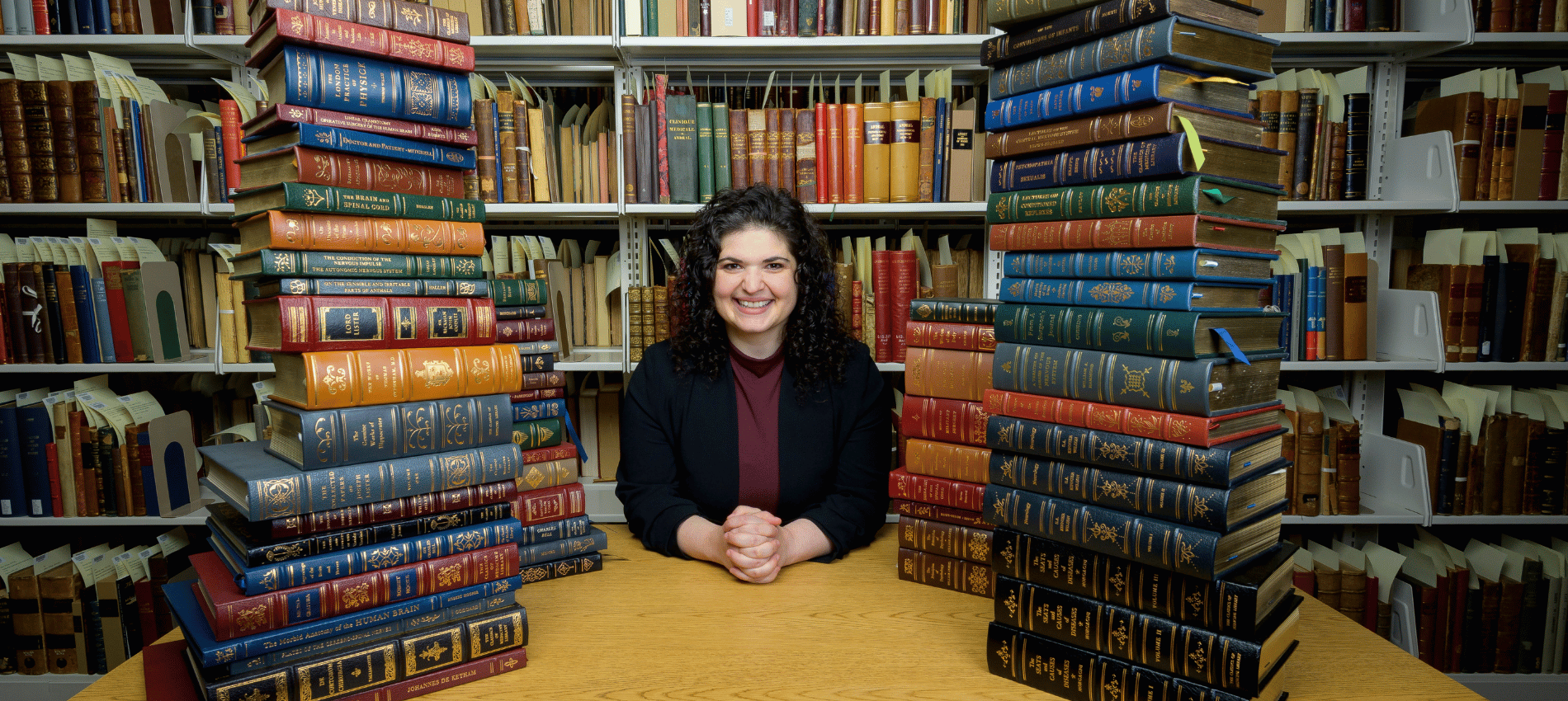
We are told that monsters live in the dark of our closets, under our beds, and in the shadows of the woods. However, at one point in American medicine, “monsters” were born in homes and labor wards.
A new book by a University of Texas Medical Branch professor traces how doctors in the 19th century labeled certain congenital anomalies as “monstrosities,” using science to justify social prejudice, political control, and medical harm.
Monstrous Conceptions: A History of Race, Disability, and Reproductive Medicine in the United States by Dr. Miriam Rich, the James Wade Rockwell assistant professor in the Philosophy of Medicine at UTMB’s Institute for Bioethics & Health Humanities, will be published in July with Columbia University Press. In the book, Rich works to share the stories of women who gave birth to so-called monsters while exploring how the practice of labeling abnormalities monstrous is linked to harmful ideas like eugenics, which argued for controlled breeding of humans, and restrictions on a woman’s bodily autonomy.
Rich’s research focuses on the early 19th century when doctors classified severe congenital conditions, such as anencephaly, as medical monstrosities. Anencephaly, which occurs in roughly one in 1,000 pregnancies, prevents the full development of the brain and skull. To physicians of the time, such infants were seen as inhuman deviations rather than patients.
This classification did more than describe physical difference. It provided justification for prejudice, while simultaneously shifting blame onto pregnant women.
“Medical advice books from the 19th century used to warn women that if they behaved incorrectly while pregnant, they would create a monstrosity,” Rich says.
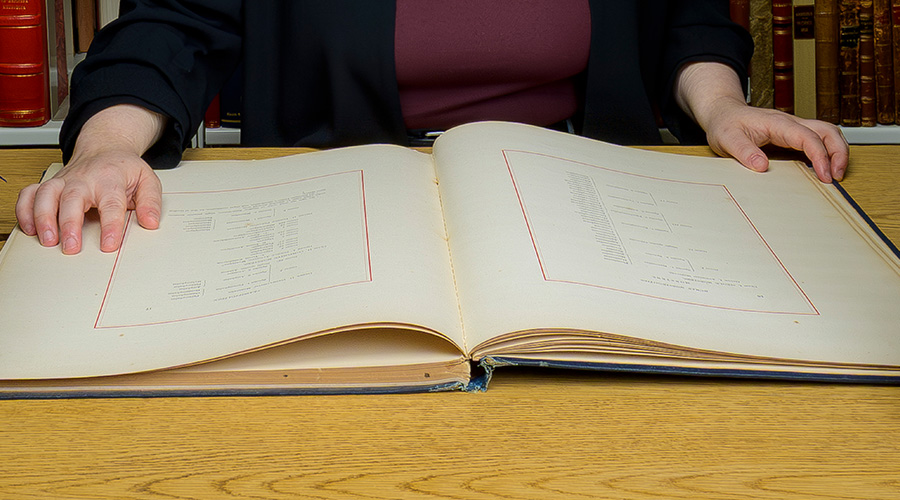
Rich looked at an extensive catalog of historical records that showed her the medical practices and beliefs surrounding monstrous births. However, these histories are from the practitioners’ perspective, not the patients’.
“There’s actually very sparse information about their origins, their lives, who they were, and who their families were,”
Rich says.
When possible, Rich read the personal letters and writings from women who experienced what doctors labeled monstrous births. In other cases, she analyzed omissions and moments of tension in physician-authored case histories where, for example, doctors expressed frustration when families refused to allow dissection of a deceased infant. Evidence, Rich argues, of the emotional bonds and parental agency that went unrecorded.
Rich made sure to bring the voices and stories of these women to the forefront in her book.
“I start every chapter with narrative vignettes where I reconstruct the perspectives of these unnamed childbearing women in the historical records,” Rich says.
While doctors no longer talk about “monsters” when discussing congenital anomalies, those early beliefs have impacted how we perceive biological “defects” and disabilities, Rich says. These remnants can appear as biases that perpetuate the belief that certain bodies are worth more than others.
In her role as a professor, Rich teaches medical students to recognize how past biases can echo in present-day care.
“It’s cautionary histories like the eugenics movement that we so clearly recognize today as absolutely horrifying,” says Rich. “But if we want to avoid repeating these histories, then it’s really important to understand how these prejudices could have been so widely accepted in mainstream politics, science, and culture in this time period.”