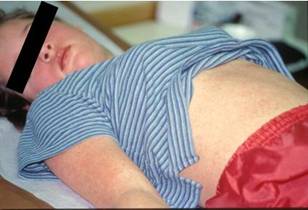
The most common drugs implicated for morbilliform drug reactions include antibiotics, antifungals, anticonvulsants, and non-steroidal anti-inflammatory drugs (NSAIDs). Specific drugs with the highest frequencies of morbilliform rash include cefaclor, sulfonamides, penicillins, and other cephalosporins.
Treatment of children with infectious mononucleosis with ampicillin, penicillin, and azithromycin results in an increase in incidence of morbilliform eruption in up to 80% of patients. Just to muddy the waters, a morbilliform drug eruption can be difficult to distinguish from a viral exanthem.