.png?sfvrsn=ef58dc55_1 "UTMB Division of Infectious Diseases (7)")
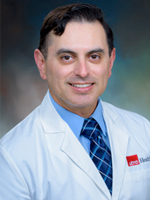
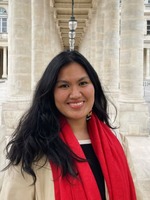
Dr. Guerra's T32 Experience
There are truly very few places in the USA where physicians and scientists collaborate to detect emerging infections arising from anywhere in the world using a One Health approach, are able to study such diseases in secure and highly advanced labs, and can then create new technologies ranging from diagnostics to therapeutics (such as monoclonal antibodies and antiviral drugs). UTMB and the Galveston National Laboratory situated on the UTMB campus is one place where such pivotal research takes place. For physician scientists looking to start their careers, this is an ideal place to start, learn, and collaborate. For example, a typical day of clinic (seeing patients with AIDS, MDR TB, or murine Typhus) could be followed by a lecture from a researcher about their work surveilling an outbreak of Ebola or Oropouche viruses.
Biography
Dr. Francisco Guerra, Jr. is committed to bridging biomedical research with the practice of medicine, bringing scientific advances closer to practical medical applications that address important public health priorities. He draws on a broad and interdisciplinary background in drug discovery, bioengineering, biophysics, computational biology, physical chemistry, structural biology, spectroscopy, computational modeling, enzyme kinetics, thermodynamics, quantum mechanics, molecular and cellular biology, organic synthesis, global health, and the social determinants of health to develop pioneering therapeutics against emerging infectious diseases.
Dr. Guerra has collaborated with researchers using a One Health approach to detect zoonotic spillover events. His recent work has focused on developing antimalarials with novel mechanisms of action against proven essential Plasmodium spp. targets—an increasingly urgent need as artemisinin resistance spreads throughout Southeast Asia.
At the University of Texas Medical Branch (UTMB), Dr. Guerra has redirected his research to target respiratory viruses, recognizing their universal impact and the profound societal disruptions they can cause, as demonstrated by the COVID-19 pandemic. His current research focuses on two main areas: (1) developing therapeutics for Influenza and other respiratory viruses, and (2) detecting emerging respiratory virus spillover and spillback events—particularly Influenza—through a One Health approach.
Education
- B.S Bioengineering – University of California San Diego
- EMT training – San Diego Miramar College
- Ph.D. in Biophysics and Computational Biology – University of Illinois at Urbana-Champaign
- M.D. – University of Illinois at Urbana-Champaign
- Graduate Minor in Latina/Latino Studies – University of Illinois at Urbana-Champaign
- Internal Medicine Residency – Jackson Memorial Hospital / University of Miami
- Infectious Diseases Fellowship – University of California San Diego
- T32 Research Fellowship - University of Texas Medical Branch