
Childhood obesity continues to be a growing concern across the United States, with long-term health implications that can follow children into adulthood. Through efforts in its Pediatric Endocrinology clinic and the state-funded Bright Bodies program, UTMB is helping children, adolescents, and young adults take charge of their health from an early age.
Mahwish Khan, DO, a fellowship-trained pediatric endocrinologist, recently joined UTMB from UT Health San Antonio, bringing with her a deep commitment to addressing pediatric obesity.
“It’s something I’ve been interested in throughout my fellowship,” she says. “GLP-1 agonists have been in the news and have been part of our discussions for a few years, but lifestyle modification remains the cornerstone of treatment.”
Dr. Khan sees pediatric patients as young as 2 years old. She focuses on both simple and complex obesity cases, offering structured lifestyle interventions and, when appropriate, medical therapies. A key component of this effort is the integration of Bright Bodies, a comprehensive, evidence-based pediatric weight management program, involving caregivers.
“The hope is for my clinic and the Bright Bodies program to work together to offer this as a structured lifestyle intervention,” Dr. Khan says.
The program serves children ages 7 to 17 with a BMI above the 85th percentile and consists of twice-weekly sessions over 12 weeks. Led by certified coaches, the sessions integrate physical activity, nutrition education, and behavior modification strategies for both children and caregivers.
UTMB recently completed its first two Bright Bodies cohorts in Galveston. Participants who wish to continue the program can re-enroll as Level 2 participants. Plans are under way to serve even more children with an additional program site in League City.
Bright Bodies is one of UTMB’s evidence-based Patient Education Programs, led by Hani Serag, MD, MPH, and Hanaa Sallam, MD, PhD, in the Department of Population Health and Health Disparities at the School of Public and Population Health. The program is supported by the Texas Department of State Health Services and the U.S. Department of Health and Human Services’ Administration for Community Living.
“Our Patient Education Programs are designed to enhance the healthcare system’s responsiveness by empowering individuals at risk for, or living with, chronic diseases to adopt healthier lifestyles. Bright Bodies exemplifies this vision in action. It also serves as an amplifier, enabling early intervention, starting with children,” says Dr. Serag.
Dr. Sallam adds, “We are proud to be the first academic institution to bring Bright Bodies to our region.”
To demonstrate long-term impact, UTMB aims to integrate medical follow-up for these patients, tracking metabolic markers like hemoglobin A1C, blood pressure, and lipid profiles, to name a few.
Manuela Murray, MD, Vice Chair for Clinical Operations in the Department of Pediatrics, highlighted how Bright Bodies fits into UTMB’s broader pediatric strategy.
“We’re expanding behavioral health services, hiring psychiatric nurse practitioners, and recruiting psychologists. These resources can complement Bright Bodies, especially as we work to bring the program to more locations,” Dr. Murray says.
Engaging children in weight management can be challenging, especially when long-term consequences feel abstract. For this reason, Dr. Khan focuses on immediate benefits. She emphasizes that parental involvement is crucial – from the clinic visit to putting daily lifestyle changes into action.
“I prefer having parents in the room. Even older teens aren’t fully independent with food choices,” she says. “Whatever changes I recommend, I want the whole house to do it. It’s not fair for the 12-year-old to be eating healthier while the rest of the family isn’t participating. Having a partner in the journey makes a big difference.”
For general pediatricians caring for patients with obesity, well-child visits offer an opportunity to introduce the conversation about healthy habits, such as reducing intake of sugary beverages. But Dr. Khan acknowledges that a thorough conversation on the subject with patients requires more time and effort, a limiting factor for general pediatricians.
“There’s no need to wait until a child has prediabetes or meets a specific BMI threshold,” Dr. Khan says. “If a pediatrician identifies a concern and feels the family could benefit from more structured support, they can refer immediately.”
Dr. Murray adds, “This is the perfect time of year to raise awareness. As families meet with pediatricians after the holidays, we want them to know that help is available and effective.”
Learn more about the Bright Bodies program and register.
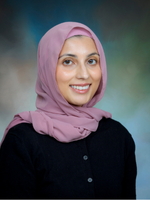 | Mahwish Khan, DO, sees patients at the UTMB Health Pediatric Endocrinology clinics at Bay Colony and the Primary Care Pavilion in Galveston. Learn more about Pediatric Endocrinology services at UTMB Health. |