
Osteoporosis is often called a “silent disease,” progressing without symptoms until a fracture occurs. During Osteoporosis Awareness and Prevention Month, UTMB clinicians are emphasizing the importance of early screening, prevention, and coordinated care to protect patients’ bone health.
Osteoporosis is commonly associated with older women, but experts stress that it affects a broader population. The 2026 theme, “Building Better Bones Together,” highlights the need for widespread awareness.
“It’s not women only,” says Megan Sorich, DO, FAAOS, FACS, an orthopedic surgeon whose practice focuses on geriatric patients. “Our gentlemen also need more awareness – really to try to prevent fractures before they happen.”
Adults 60 and up, especially those with a history of fractures, should be evaluated carefully. Other at-risk groups include individuals with metabolic or absorption issues, such as those who have undergone gastric bypass, as well as patients experiencing unexplained height loss – an early indicator of potential bone loss.
Even younger individuals may present with osteopenia, reinforcing the importance of awareness and timely screening.
One of the most significant challenges in osteoporosis care is under-screening. Primary care clinicians play a vital role in closing this gap. When appropriate, referral to specialty care ensures patients receive comprehensive evaluation and treatment.
“A lot of patients, even at age 85, have never had a bone density test,” says Shibi Kunjumon, DNP, APRN, FNP-C, an orthopedic nurse practitioner. “We have to raise awareness among our clinicians to make sure they do the bone density scan on at-risk patients, especially postmenopausal women and men over 70.”
Other warning signs are loss of height, stooped posture, vertebral fracture and fracture after a low energy fall.
Although therapies are available, prevention remains the foundation of osteoporosis care. Adequate calcium and vitamin D intake, along with fall prevention strategies, further reduce risk. Dr. Sorich and Dr. Kunjumon stress that successful care is a shared responsibility.
“Everybody should be doing weight-bearing exercises to support and strengthen their bones,” Dr. Sorich says.
“I tell my patients, ‘While medications help treat bone loss, patients also need to do their part by engaging in weight-bearing and strength-training exercises, taking recommended supplements, and keeping up with regular bone health follow-up appointments,’” Dr. Kunjumon says.
When osteoporosis is more advanced, treatment is tailored based on bone density results, laboratory findings, severity of disease, and patient preference. Oral medications may be appropriate for mild to moderate disease. For people with very high fracture risk, injectable therapies and anabolic agents help the body to form new bones, followed by antiresorptive agents to maintain gains. Also, hormone replacement therapies are also considered for select postmenopausal women for osteopenia/osteoporosis management.
Dr. Kunjumon notes that the UTMB Health Friendswood Primary and Specialty Care Clinic, which opened last year, now provides lower-cost access to the injectable medication Prolia through its outpatient pharmacy. She hopes to see another medication, Evenity, also become available this way, improving access for more patients.
The central goal of osteoporosis care is preserving independence and mobility, but bone health optimization is also increasingly important in surgical care.
“Most of our patients are referred by Family Medicine or Internal Medicine, but we also get referrals from Neurosurgery and Orthopedic Surgery,” Dr. Kunjumon says. “That’s so we can work with the patient to optimize their bone health before spine and joint replacement surgery.”
Fortunately for patients ready to take control of their bone health, DEXA scanning is readily available at UTMB, typically with minimal wait times. Scanners are available at the League City, Angleton, and Galveston campuses.
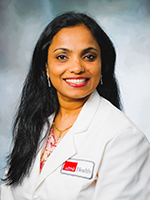 | 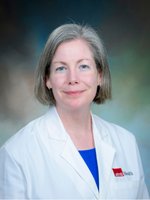 | Shibi Kunjumon, DNP, APRN, FNP-C works diligently to educate patients about all aspects of bone health at dedicated clinics across UTMB locations. Megan Sorich, DO, FAAOS, FACS, who is fellowship trained in geriatric orthopedic trauma, sees patients for bone health concerns on Thursdays in Friendswood. Learn about bone health and fracture prevention services. |