
Marino Lab

Advancing Drug Discovery for Alzheimer’s Disease

About Marino Lab

Our Goals

We strive to understand underlying biophysical, biomolecular, and physiological mechanisms involved in the prevention and progression of neurodegenerative disorders, with a primary emphasis on Alzheimer’s disease (AD).

Our laboratory aims to translate these mechanistic insights into the development of novel, disease-modifying therapies for AD and related neurodegenerative conditions.

Key areas of investigation

Mechanisms of Resilience: Marino’s lab investigates the biological mechanisms that confer resilience and/or resistance against the neuropathology of Alzheimer’s disease.

Drug Target Discovery and Therapeutic development: Our research proposes novel druggable targets relevant to Alzheimer’s disease, particularly those that mimic natural resilience mechanisms.

Translational Approaches: We aim to move discoveries from basic science into potential clinical applications, focusing on disease-modifying therapies using biophysical, biomolecular and in vivo approaches.
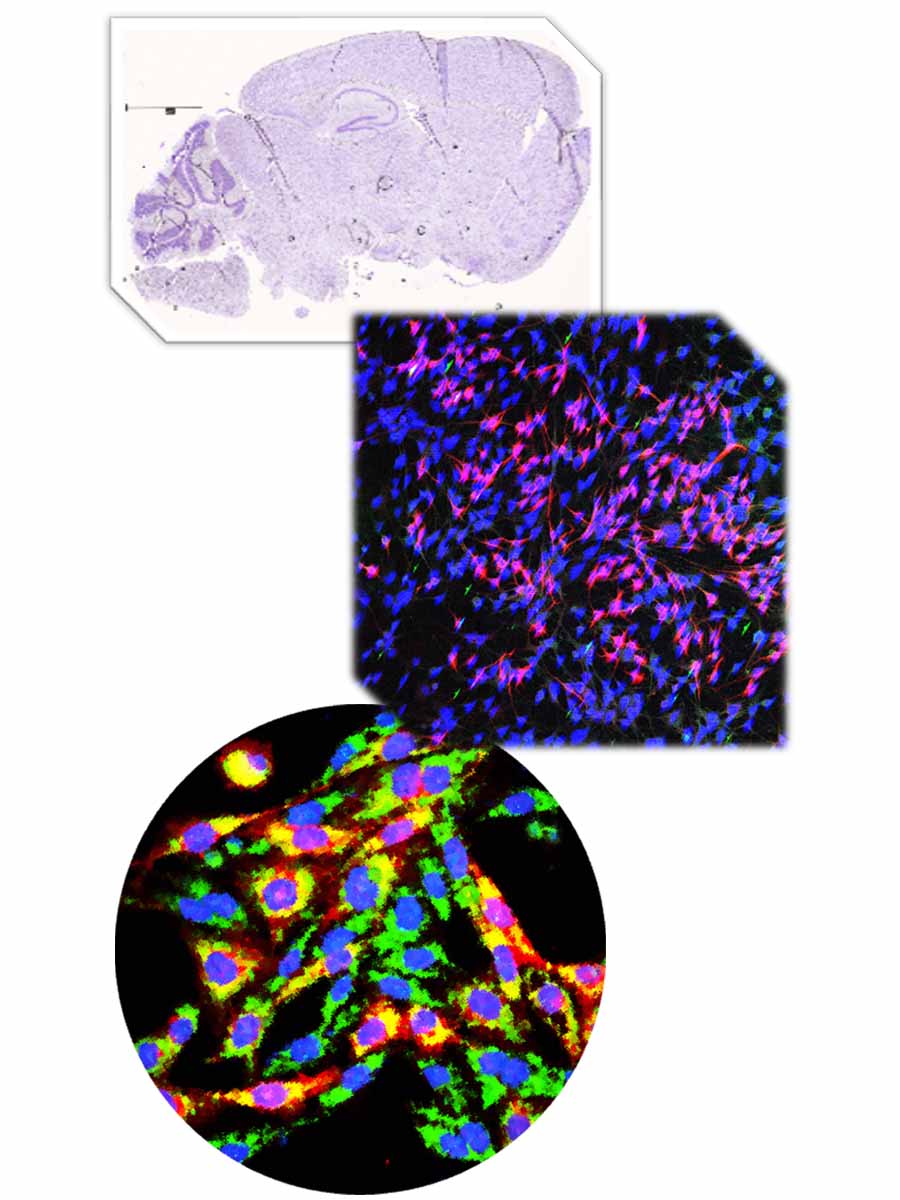
image of mouse brain, section neurons and cell transfection

Meet the Team

Claudia Marino, Ph.D.

 Principal Investigator, Assistant Professor (Tenure Track)

About Me

Dr. Marino is a tenure-track Assistant Professor at the Neurology Department and Sealy Institute for Drug Discovery. She has a background in Pharmacy and in Neuroscience. Her research focuses on underlying biophysical, biomolecular, and physiological mechanisms for either preventing or halting neurodegenerative disorders such as Alzheimer's disease (AD) and translating these findings into novel disease-modifying therapies. During her postdoctoral studies, dr. Marino contributed to the discovery of the effect of the homozygous mutation in the APOE gene, known as the APOE3 Christchurch mutation, in delaying the onset by up to three decades in an individual carrying a very aggressive form of Autosomal Dominant Alzheimer's Disease. The subsequent characterization of novel antibodies capable of mimicking the mechanism of action of this mutation, allowed her to propose ApoE interactions as attractive targets for effective disease-modifying therapies for AD. In parallel work, Dr. Marino's research contributed to the characterization of a second protective genetic variant against familial Alzheimer's disease, the RELN-COLBOS variant, which will contribute to a better understanding of biomolecular mechanisms of resilience against AD and to the design of novel therapeutic interventions that mimic such resilience.

Publications

Targeting Runt-Related Transcription Factor 1 Prevents Pulmonary Fibrosis and Reduces Expression of Severe Acute Respiratory Syndrome Coronavirus 2 Host Mediators

O'Hare, M., Amarnani, D., Whitmore, H. A. B., An, M., Marino, C., Ramos, L., Delgado-Tirado, S., Hu, X., Chmielewska, N., Chandrahas, A., Fitzek, A., Heinrich, F., Steurer, S., Ondruschka, B., Glatzel, M., Krasemann, S., Sepulveda-Falla, D., Lagares, D., Pedron, J. & Bushweller, J. H. & 3 others, Liu, P., Arboleda-Velasquez, J. F. & Kim, L. A., Jul 2021, In: American Journal of Pathology. 191, 7, p. 1193-1208 16 p.

Research output: Contribution to journalArticlepeer-review

Resistance to autosomal dominant Alzheimer’s disease in an APOE3 Christchurch homozygote: a case report

Arboleda-Velasquez, J. F., Lopera, F., O’Hare, M., Delgado-Tirado, S., Marino, C., Chmielewska, N., Saez-Torres, K. L., Amarnani, D., Schultz, A. P., Sperling, R. A., Leyton-Cifuentes, D., Chen, K., Baena, A., Aguillon, D., Rios-Romenets, S., Giraldo, M., Guzmán-Vélez, E., Norton, D. J., Pardilla-Delgado, E. & Artola, A. & 24 others, Sanchez, J. S., Acosta-Uribe, J., Lalli, M., Kosik, K. S., Huentelman, M. J., Zetterberg, H., Blennow, K., Reiman, R. A., Luo, J., Chen, Y., Thiyyagura, P., Su, Y., Jun, G. R., Naymik, M., Gai, X., Bootwalla, M., Ji, J., Shen, L., Miller, J. B., Kim, L. A., Tariot, P. N., Johnson, K. A., Reiman, E. M. & Quiroz, Y. T., Nov 1 2019, In: Nature Medicine. 25, 11, p. 1680-1683 4 p.

Research output: Contribution to journalArticlepeer-review

Resistance to autosomal dominant Alzheimer’s disease in an APOE3 Christchurch homozygote: a case report

Arboleda-Velasquez, J. F., Lopera, F., O’Hare, M., Delgado-Tirado, S., Marino, C., Chmielewska, N., Saez-Torres, K. L., Amarnani, D., Schultz, A. P., Sperling, R. A., Leyton-Cifuentes, D., Chen, K., Baena, A., Aguillon, D., Rios-Romenets, S., Giraldo, M., Guzmán-Vélez, E., Norton, D. J., Pardilla-Delgado, E. & Artola, A. & 24 others, Sanchez, J. S., Acosta-Uribe, J., Lalli, M., Kosik, K. S., Huentelman, M. J., Zetterberg, H., Blennow, K., Reiman, R. A., Luo, J., Chen, Y., Thiyyagura, P., Su, Y., Jun, G. R., Naymik, M., Gai, X., Bootwalla, M., Ji, J., Shen, L., Miller, J. B., Kim, L. A., Tariot, P. N., Johnson, K. A., Reiman, E. M. & Quiroz, Y. T., Nov 1 2019, In: Nature Medicine. 25, 11, p. 1680-1683 4 p.

Research output: Contribution to journalArticlepeer-review

Contact us

If you are interested in joining our team, or if you want to know more about our work, feel free to contact us.

Contact us