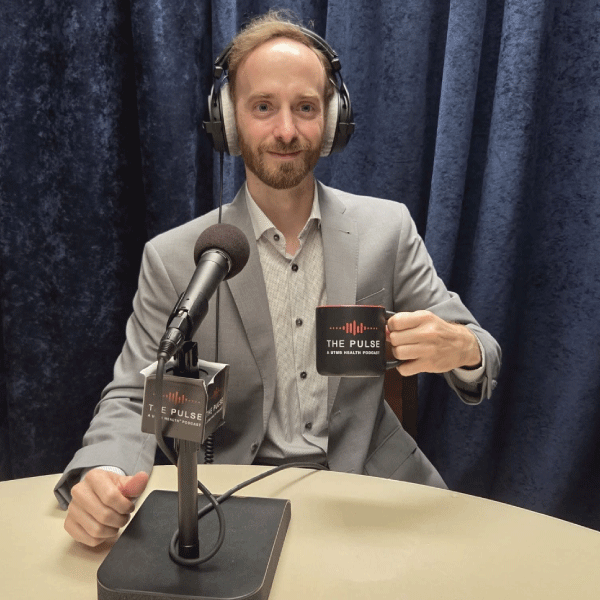
Preparedness in Action: How UTMB Manages Emergencies
- When emergencies strike, preparation makes all the difference. In this episode of The Pulse, UTMB Health System’s COO Wayne Keathley speaks with Dylan Lancaster, AVP of Institutional Preparedness, about how UTMB prepares for and responds to critical incidents. From hurricanes and chemical spills to cyber threats and workplace violence, they explore the planning, training, and resources that help safeguard our patients, employees, and community. The conversation highlights how the incident command system works during a crisis, the importance of risk assessments and communication tools like Everbridge, and the personal steps each of us can take to be ready at home and on campus. Tune in to learn how UTMB’s culture of preparedness ensures we can continue to provide care, protect our people, and fulfill our mission—no matter the challenge.
- 100:00:00,840 --> 00:00:09,570[Auto-generated transcript. Edits may have been applied for clarity.]Welcome to The Pulse UTMB Health podcast, your gateway to the latest insights, ideas and innovations shaping our community and beyond.200:00:10,200 --> 00:00:16,500Stay tuned for engaging discussions, compelling stories, and the information you need to stay informed and connected.300:00:16,800 --> 00:00:24,110Right here on The Pulse. Welcome to the latest episode of The Pulse.400:00:24,140 --> 00:00:30,710I'm Wayne Keathley, executive vice president and chief operating officer of UTMB Health System, and I'll be the host for this episode.500:00:31,250 --> 00:00:35,720Today I'm joined by Dylan Lancaster, who will be discussing emergency management at UTMB.600:00:35,780 --> 00:00:36,260Thank you.700:00:36,290 --> 00:00:42,740I'm Dylan Lancaster, currently the interim director of emergency management institutional preparedness at the University of Texas Medical Branch,800:00:43,100 --> 00:00:48,560and I will be pretty soon the associate vice president for institutional preparedness and emergency management.900:00:48,960 --> 00:00:55,790Dylan, welcome to The Pulse. So this is your season coming up as the exciting time of year for you and for us, I'm afraid.1000:00:55,790 --> 00:00:57,480So. Let's start with the basics.1100:00:57,500 --> 00:01:03,860Can you walk us through how UTMB activates and operates its incident command system during major emergencies or disruptions such as hurricanes,1200:01:03,860 --> 00:01:11,209fires, floods, and... unbelievably for me, freezes. Folks like myself or Dr. Chubinskaya, uh, from the various, uh,1300:01:11,210 --> 00:01:16,490enterprises that UTMB can make a recommendation. You will be the one that will be calling,... convening the command team.1400:01:16,850 --> 00:01:20,600And we have various levels... We have the institutional level, we have... health system has their own version.1500:01:20,600 --> 00:01:24,020Academic and the Research Enterprise has their own version as well.1600:01:24,680 --> 00:01:29,060But when it comes to certain disasters, you have "notice" versus "no notice" incidents.1700:01:29,210 --> 00:01:34,790So if it's something like an active shooter on campus, we don't want to wait for, uh, the command team to be convened.1800:01:34,790 --> 00:01:38,450So the chief of police will start addressing the issue right away.1900:01:38,750 --> 00:01:41,899If it's something like a cyber attack. Again, we don't want the command team waiting.2000:01:41,900 --> 00:01:44,510We're still going to meet, but it takes us a little bit to get everyone convened.2100:01:44,870 --> 00:01:48,169But our cyber security folks will handle that incident. When it's something2200:01:48,170 --> 00:01:51,440that's a notice incident where we have some time, let's say hurricane season.2300:01:51,680 --> 00:01:54,530So we have, you know, several days notice that a hurricane's coming up.2400:01:54,800 --> 00:02:00,230We have very objective measures that are talking about the probability of wind impact, the worst case scenario planning.2500:02:00,500 --> 00:02:04,760And so that allows us to put objective measures on top of our own subjective experience of2600:02:04,760 --> 00:02:09,330what we're seeing the storm doing from the various weather forecast to make that decision.2700:02:09,350 --> 00:02:13,399So like a trigger four on our ten trigger list would be okay.2800:02:13,400 --> 00:02:16,790Now the command team is to consider do we partially evacuate, fully evacuate,2900:02:17,000 --> 00:02:21,079shelter in place? Is it not a huge storm? Are we going to wait it out a little bit and wait and see approach?3000:02:21,080 --> 00:02:24,080So that's a long answer to a very short question.3100:02:24,350 --> 00:02:27,110Well, it's a complex question right. As we all understand.3200:02:27,110 --> 00:02:32,060So there's a broad range of threats to the organization that you outlined and to the community, frankly.3300:02:32,450 --> 00:02:36,440Um, is it possible, frankly, to identify those that you consider to be the most serious?3400:02:36,590 --> 00:02:39,110That's something we do every year. We do our risk assessment.3500:02:39,110 --> 00:02:46,310And obviously, number one, for probably ever at UTMB history is going to be your extreme weather, which is particularly your hurricanes.3600:02:46,820 --> 00:02:53,150Uh, next, anyone who's driving down south on I45 is going to see all that chemical industry right there in Texas City and along the bay.3700:02:53,150 --> 00:02:55,969So chemical is number two. Cyber attacks.3800:02:55,970 --> 00:03:02,870While we haven't been directly hit with a major cyber attack lately, um, that activity is increasing around the world.3900:03:03,110 --> 00:03:09,380Um, we are a major topic being an academic medical center, as well as our research and all the various enterprises that we have.4000:03:09,560 --> 00:03:13,459So cyber is number three, disease is number four. Disease used to be a little bit higher.4100:03:13,460 --> 00:03:20,480But then we all got familiar with COVID. And so we've been addressing those types of outbreaks uh... flu cold all of that stuff.4200:03:21,020 --> 00:03:26,150Uh, workplace violence would be the next one. And then a little bit further down the list, you get into your regular utilities outages.4300:03:26,300 --> 00:03:30,500You know, it's a perfectly beautiful blue sky day, and then suddenly you're losing power for who knows what.4400:03:30,740 --> 00:03:33,860So we're gonna deal with that. Sure. We've had those experiences just recently. Right.4500:03:34,190 --> 00:03:41,480So one topic that gets a lot of attention by employees and faculty, and I've heard this discussed many times, is bring your own device, BYOD program.4600:03:41,960 --> 00:03:45,680Can you talk a little bit about what that means to us, why that's important to,4700:03:45,830 --> 00:03:50,240uh, the institution and how staff and faculty can respond to it and be helpful.4800:03:50,450 --> 00:03:54,230Bring your own device. That is, uh, right now it's focused on your cell phone.4900:03:54,240 --> 00:03:58,520So I have my home computer has outlook email that has my work email there.5000:03:58,700 --> 00:04:02,930It's not affecting my home computer. Now. Not everyone wants that. So we have our cell phones.5100:04:03,470 --> 00:04:10,490Intune... I was a little bit resistant at first, but it really isn't doing much in terms of it's just segmenting your phone very slightly,5200:04:10,640 --> 00:04:13,640and they're not getting a lot of information from us by any means.5300:04:13,640 --> 00:04:17,930You can look at the list of like five items that it had a bullet points of what they were able to access,5400:04:18,350 --> 00:04:26,570but basically it's going to create a separate little application for Microsoft Teams, Microsoft Outlook and like SharePoint and OneDrive.5500:04:26,750 --> 00:04:29,420So on my phone, I just, you know, if I swipe left from the home screen,5600:04:29,420 --> 00:04:33,140that's where my UTMB apps are by swipe right, that's where my main apps are.5700:04:33,530 --> 00:04:36,920Um, and so if you have a bunch of Gmail accounts, Yahoo, whatever you're using,5800:04:37,100 --> 00:04:41,930you'll have a version of outlook that has that, and you'll have a version of outlook that has a little briefcase symbol.5900:04:41,930 --> 00:04:47,540That's your work version that will pull up your work. To me, it... it was, you know, or... a little bit of resistance to doing it.6000:04:47,540 --> 00:04:52,070But once I got on, it's turned out to be no big deal. It's nice to have work communications on my phone.6100:04:52,310 --> 00:04:57,080So I'm not going, you know, on commutes or during emergencies, on weekends, not getting any information from work,6200:04:57,380 --> 00:05:02,930which is especially important during, uh, hurricane season, or any type of disaster, because you need that communication.6300:05:03,470 --> 00:05:08,629And so other ways that we will be communicating with folks will be a lot of the things you're already used to.6400:05:08,630 --> 00:05:12,140So you have your socials, your Facebooks, your Twitters, all of that.6500:05:12,320 --> 00:05:16,610You have your UTMB alerts websites, you have your backup alert website.6600:05:16,610 --> 00:05:20,830That'd be utmbinfo.com. We have our public facing alert.6700:05:20,940 --> 00:05:23,940Sites again. A lot of these, you can just Google. It'll pop it up there.6800:05:24,330 --> 00:05:29,490Everyone's familiar with the text messages you get, and then the phone calls on your, um, from Everbridge alert system.6900:05:29,970 --> 00:05:33,810And those are going to continue to be used because of the text limit.7000:05:34,290 --> 00:05:41,519That information will be sent to you with a link and it'll say it'll a message basically saying check your work email because you can't put a whole,7100:05:41,520 --> 00:05:50,100you know, one page message into text. So what steps should employees take now to make sure that they're set up properly to take advantage of this?7200:05:50,520 --> 00:05:54,120We are rolling out and this is the cybersecurity folks expertise.7300:05:54,120 --> 00:05:59,309But from my understanding we are rolling it out in phases. Institutional support was addressed first.7400:05:59,310 --> 00:06:03,030That's why I've already onboarded to the whole process. They have a nice little walkthrough guide.7500:06:03,030 --> 00:06:06,389It's pretty straightforward. Just save yourself 20, 30 minutes to walk through it.7600:06:06,390 --> 00:06:11,280Get your phone set up. It really wasn't that difficult. And so other things you can do.7700:06:11,280 --> 00:06:14,580So for your UTMB alerts like your Everbridge text messaging.7800:06:15,630 --> 00:06:19,530If you're already getting those alerts on the occasion that they get sent out, then you're good.7900:06:19,650 --> 00:06:23,190You already have your information there, but let's say you're not or you want to double check.8000:06:23,400 --> 00:06:27,120So the easiest way I find is to go to the UTM directory.8100:06:27,450 --> 00:06:31,980And so you'll need to either be on VPN or you'll need to be at office to access the directory that way.8200:06:32,340 --> 00:06:35,760And then type in your name and hit search. It's going to show you there.8300:06:35,760 --> 00:06:39,090You'll select your name. And then at the very top of that there's going to be two options.8400:06:39,270 --> 00:06:46,860One is going to be edit my UTMB information. So that's if you're updating your... like your phone number, your office phone... uh and additional email address.8500:06:47,070 --> 00:06:48,150We want to have that up to date.8600:06:48,150 --> 00:06:53,880Because if there's an emergency or just in your regular business work functions so others know who to contact... how to get ahold of you,8700:06:54,480 --> 00:06:59,430the other button at the top of that page, once you search for yourself in the directory, is going to be edit my alert information.8800:06:59,730 --> 00:07:04,800That's where you're going to update the information about who Everbridge alert texting is going to send the message to,8900:07:05,010 --> 00:07:09,000whether it's your home phone, your work phone, office phone.9000:07:09,330 --> 00:07:12,059Uh, do you have an alternate email address you want to use?9100:07:12,060 --> 00:07:17,219So if you're, you know, struggling with the decision about installing Intune on your phone and you're leaning toward no...Well,9200:07:17,220 --> 00:07:24,270then please at the very least, put up, uh, an emergency alternate email account on that alert system so that Everbridge can contact you there.9300:07:24,270 --> 00:07:29,370So you're at least getting some messaging. Um, by default, push from UTMB so that you're not having to go and Google.9400:07:29,520 --> 00:07:31,170Okay, what's going on with UTMB now?9500:07:31,740 --> 00:07:38,670So the expectation is that every employee who has a UTMB email address or account would take advantage of this program, correct.9600:07:39,240 --> 00:07:42,420And they have an option if they choose not to, which you just described.9700:07:43,080 --> 00:07:50,040One question I've been asked before is whether or not this provides any, um, collateral benefit with respect to personal email accounts.9800:07:50,040 --> 00:07:51,479It's also on that same device.9900:07:51,480 --> 00:07:58,139In other words, is it an expectation that Intune... Intune would provide any protection and that or is this for UTMB work related activities only?10000:07:58,140 --> 00:08:01,950For my understanding and what I've seen on my own using the phone, it is UTMB10100:08:01,950 --> 00:08:04,950specific. It basically segments your phone.10200:08:04,950 --> 00:08:08,040I mean it's seamless on your phone. You don't know. I just happened to do everything.10300:08:08,040 --> 00:08:16,110Swipe left is the UTMB apps, but it just creates a specific instance for work for your UTMB email, for SharePoint, OneDrive, and Microsoft Teams.10400:08:16,230 --> 00:08:21,030All right. So the good news is this has no effect whatsoever on your personal accounts or any other activity on your phone.10500:08:21,360 --> 00:08:24,719The bad news is it provides no protection for those devices as well.10600:08:24,720 --> 00:08:27,990So you have to practice good, uh, email hygiene, email hygiene as well.10700:08:27,990 --> 00:08:34,860Correct. Okay. Thank you. Um, so what are some things faculty, staff and students can do right now to prepare before an emergency?10800:08:34,860 --> 00:08:37,950And I, you know, recognize that UTMB has so much experience with this.10900:08:37,950 --> 00:08:42,389I suspect there are a lot of people here who've had a lot of experience already in all these domains.11000:08:42,390 --> 00:08:44,880But having said that, we have some new employees, of course.11100:08:45,390 --> 00:08:49,800Um, and as we've already discovered, we think we know about one threat, but something new emerges.11200:08:49,980 --> 00:08:57,270So what do we do right now? So the number one thing I will ask, and I know it's very difficult when it comes to disasters, hurricanes,11300:08:57,270 --> 00:09:03,180tornadoes, active shooters, chemical, all these doom and gloom topics is we have to remain flexible.11400:09:03,330 --> 00:09:06,959Of course, all the various departments. The enterprise is an institution.11500:09:06,960 --> 00:09:13,710You yourselves should have plans in place. But the best part about a plan is remaining some having some flexibility or a checklist.11600:09:14,070 --> 00:09:16,770You know, it helps you remember to do all the things that you need to do.11700:09:17,610 --> 00:09:22,770But you know a lot of what's happening if you're used to being here, if you're new here, you're learning these things.11800:09:23,070 --> 00:09:27,150So from a work perspective just right away, and I'll get to personal here in a little bit.11900:09:27,390 --> 00:09:33,900But from a work every year around January time, we send out the employee demographic and emergency classification form.12000:09:34,110 --> 00:09:37,890On top of that, you should be meeting with your supervisor to go over what is your emergency role.12100:09:38,220 --> 00:09:44,010For most of us that you're just normal. Daily job is your emergency role, but some of us are going to have a backup or a,12200:09:44,010 --> 00:09:47,069um, an additional role, whether it's an incident command team member.12300:09:47,070 --> 00:09:51,270Okay, Wayne, you're the incident commander. You know, Dylan, you're going to be liaison in the incident command.12400:09:51,660 --> 00:09:59,790Uh, some of it is, you know, if your job function changes because you're not needed, you know, to do that specific task during a hurricane.12500:10:00,270 --> 00:10:02,879Well, then you might be able to help on the emergency labor pool.12600:10:02,880 --> 00:10:08,280You might be a a sitter for, you know, patients at the electronic communications go out because of a cyber attack.12700:10:08,550 --> 00:10:13,290Or you might be a runner because if we lose communications, we'll need some communication between departments.12800:10:13,290 --> 00:10:18,870And sometimes it's, you know, here's a paper in your hand. I'm going to go walk down to the next unit over or down a floor and hand that off.12900:10:19,320 --> 00:10:24,160So that's part of that. Uh. Emergency classification process that you meet with your supervisor about.13000:10:24,340 --> 00:10:28,660To make sure that you, yourself, and your supervisor know what your role is, what you're going to be doing.13100:10:29,410 --> 00:10:33,490Because if someone just disappears, hey, you know, I'm out of here for something that's coming down.13200:10:33,850 --> 00:10:42,280Not only are UTMB worried about your safety, but then we're also trying to fill gaps that could impact a patient's safety.13300:10:42,490 --> 00:10:47,410Uh, a student's ability to get information or resources, uh, during or after an incident.13400:10:47,620 --> 00:10:55,269So the lot of reasons that we need to track, you know, make sure we're checking in other things that we want to do is, uh, VPN capability.13500:10:55,270 --> 00:10:59,980So a lot of times, whenever a hurricane's coming in, it's not looking like a bad one, you know?13600:11:00,190 --> 00:11:05,769And I always like to remind folks that whenever you see the, uh, cone of uncertainty, uh, storms coming in.13700:11:05,770 --> 00:11:09,190And like with Hurricane Beryl, UTMB was outside of the cone of uncertainty.13800:11:09,520 --> 00:11:13,870Remember, the cone of uncertainty is a two thirds chance that storms tracking in that cone.13900:11:14,080 --> 00:11:17,830There is still a one third, 33% chance that that storm goes outside that cone.14000:11:18,040 --> 00:11:25,089That's what happened with Beryl. And whenever that happens, we need to make sure that we have ah, one like I said the directory updated.14100:11:25,090 --> 00:11:30,760So we have our emergency contact information there so we can be communicated with from UTMB, from the incident command team,14200:11:30,760 --> 00:11:35,620globals that go out, from the text messaging from Everbridge emergency alerts.14300:11:36,020 --> 00:11:40,480Um, but also make sure that you have VPN capabilities to be able to access if you are working from home.14400:11:40,990 --> 00:11:44,680But keep in mind that even if it's a smaller storm, sometimes it can knock out your power.14500:11:44,680 --> 00:11:46,150So if you are planning to work from home,14600:11:46,360 --> 00:11:53,440you also need to make sure that you have a place to go to be able to access internet, power, and those types of capabilities.14700:11:53,770 --> 00:11:57,640And then the last thing I was going to talk about, because I mentioned it earlier, is your own personal plan.14800:11:57,820 --> 00:12:04,210So if you have pets, you have children. If you... depending on where you live, if you live in a floodplain... or all these things,14900:12:04,720 --> 00:12:10,240you want to be taking care of these in advance of any type of, uh, incident, whether it's,15000:12:10,240 --> 00:12:12,670you know, winter freeze, the National Weather Service always, you know,15100:12:12,670 --> 00:12:17,709puts out the information about protect your pipes, your pets, the people, all this information.15200:12:17,710 --> 00:12:23,080So you get a lot of good information from National Weather Service, NOAA, your newscasters on your evening news.15300:12:23,290 --> 00:12:27,070So follow that advice as well. UTMB will put out advice additionally.15400:12:27,370 --> 00:12:29,650But because when it comes to working,15500:12:30,010 --> 00:12:38,140you have various responsibilities that you'll be responsible for in with a disaster like a hurricane coming in advance,15600:12:38,560 --> 00:12:42,160you also want to make sure that you've planned for your family, because you don't want to wait till the last second,15700:12:42,160 --> 00:12:46,479and now you're trying to juggle both your family responsibilities and your work responsibilities.15800:12:46,480 --> 00:12:50,470So you have to have a plan for both. And it doesn't hurt. All the departments have an emergency plan.15900:12:50,500 --> 00:12:55,569While you're not going to remember everything, just make sure you go and check on those things occasionally.16000:12:55,570 --> 00:12:56,350Just read through them.16100:12:56,350 --> 00:13:02,110Glance around so you have some familiarity with what you yourself plus your department are going to be doing when a disaster is coming.16200:13:02,800 --> 00:13:04,570That great answer. Thank you for all that information.16300:13:04,570 --> 00:13:09,130So we only have a couple of minutes left, but I have what I consider to be one of the most difficult questions to answer,16400:13:09,430 --> 00:13:16,510because I know this from personal experience working with you. So how do we coordinate and time sending information out to employees and faculty?16500:13:17,020 --> 00:13:19,299One of the challenges we face previously, as you recall,16600:13:19,300 --> 00:13:26,080is the information from the National Weather Service does not coordinate nicely with when we feel that we should notify our staff,16700:13:26,230 --> 00:13:32,110employees, faculty what they should do, students, what they should do next. So what are the guiding principles around that?16800:13:32,110 --> 00:13:38,740I know you know, early and often, right, is good advice, but sometimes early and often doesn't really reveal very much.16900:13:38,950 --> 00:13:44,820One of the things you learn in emergency management is the first reports are usually the least accurate, whether it's a chemical spill addition.17000:13:44,870 --> 00:13:49,029Uh, especially same with hurricanes. Where is this thing going to go? Is it Beryl going into Mexico?17100:13:49,030 --> 00:13:59,350But then it changes to the north. So what we really want to pay attention to is.. not only... are various weathers, because...uh... let me backtrack a little bit.17200:13:59,530 --> 00:14:03,610One of the things that the command team is weighing is especially when you're dealing with patient lives,17300:14:04,090 --> 00:14:08,499if you evacuate too soon, like let's say with... with Rita.17400:14:08,500 --> 00:14:14,319And I would say Rita was a big, uh, issue, but Rita was a category five in the Gulf.17500:14:14,320 --> 00:14:18,970It became a category three. Hurricane Katrina had just hit and devastated New Orleans.17600:14:19,240 --> 00:14:22,600So we made the safe call to go ahead and evacuate. It was the first time.17700:14:23,020 --> 00:14:29,229And so sometimes you have to err on the side of caution. But what you have to keep in mind is when it comes to patients is lives are on the line.17800:14:29,230 --> 00:14:33,879If you take them out of their stable hospital room and then move them through the halls of the hospital,17900:14:33,880 --> 00:14:37,780put them on an ambulance, you know, say, hey, we're going to this hospital in Austin or wherever.18000:14:37,900 --> 00:14:41,470Do they even end up there? Maybe they end up at another hospital because of traffic or some issue.18100:14:41,770 --> 00:14:46,240So you're risking them there. Now, if you don't make the call and you should have patients lives are also on the line.18200:14:46,420 --> 00:14:52,989And then you get into research. We have multi-year, multi-decade multimillion dollar projects that you can't just shut down on a whim.18300:14:52,990 --> 00:14:57,790You know, you need to wait a little bit. So these are the things that we're always juggling.18400:14:57,790 --> 00:15:03,130The timelines don't align for all of our enterprises... health system, research, uh, academic.18500:15:03,310 --> 00:15:07,780And so whenever the command team at the institutional levels meeting, we're trying to juggle these as best we can.18600:15:07,960 --> 00:15:13,090But that's why I really ask folks to please have some flexibility. We're going to try and communicate a little bit more quickly.18700:15:13,300 --> 00:15:18,280Uh, when these things are happening, just say, hey, here's a heads up. Uh, we're monitoring the weather.18800:15:18,280 --> 00:15:23,640We'll get back with you as soon as we can. And then also again, as with both Winter Storm Enzo and Hurricane Beryl.18900:15:23,660 --> 00:15:26,989Sometimes these things happen over holiday weekends. We're doing our best.19000:15:26,990 --> 00:15:32,030We have improvements we're going to make, and we're still making them. But you know, please have some flexibility.19100:15:32,030 --> 00:15:37,280Bear with us. Um. Thank you. Well, thanks. That's a great answer to a difficult question, as I know from experience.19200:15:37,280 --> 00:15:42,349And I guess the punch line here is that even though UTMB has a lot of experience in this area,19300:15:42,350 --> 00:15:47,069and we were seen widely as national experts, frankly, in emergency preparedness, disaster planning.19400:15:47,070 --> 00:15:50,630And there are people here who've been through more than anyone we know in this field.19500:15:51,050 --> 00:15:55,100But in spite of that, you've seen one, you've seen one. Basically, they're not all the same.19600:15:55,100 --> 00:15:57,690And we learn from each experience and we adapt each experience.19700:15:57,710 --> 00:16:01,610I think you once said to me that the most important quality from this work is adaptability.19800:16:01,790 --> 00:16:07,160Right. And so that's something we really want to emphasize in our training and also in the way we respond to these things.19900:16:07,670 --> 00:16:10,790Well thank you. This has been very instructive and we appreciate it.20000:16:10,790 --> 00:16:15,200And I think it's fair to say congratulations on this new responsibility.20100:16:15,230 --> 00:16:20,389Yep. Thank you very much. And before we end just one point, just Google UTMB emergency management.20200:16:20,390 --> 00:16:24,799You'll have all the hurricane plans, all the various documents, everything I've discussed here is on that website.20300:16:24,800 --> 00:16:28,160So if you have some leisure time, please go check that out. That'll make you more prepared as well.20400:16:28,250 --> 00:16:31,430Great. Dylan, thank you so much. And thanks for joining us. Thank you, Wayne. Y'all have a good one.20500:16:33,110 --> 00:16:34,430Thank you for tuning in to the Pulse.20600:16:34,940 --> 00:16:40,160We hope you've gained valuable insights, discover new perspectives, and feel inspired by the stories shared today.20700:16:41,480 --> 00:16:44,660Please join us for future episodes to stay informed and connected.20800:16:44,840 --> 00:16:46,310Right here on The Pulse.
More Information
Speakers:
Wayne Keathley, EVP and UTMB Health System’s Chief Operating Officer, and Dylan Lancaster, AVP of Institutional Preparedness.
Lancaster oversees the institution’s readiness for a wide range of threats, from natural disasters to security events, ensuring response plans are current and effective. Keathley provides executive insight into why preparedness is essential to UTMB’s ability to serve patients and protect employees during crises.
Learn more: Explore emergency resources, sign up for UTMB alerts via Everbridge, and review personal preparedness tips at https://www.utmb.edu/emergency_plan/.