History & Timeline
Take a walk through time and revisit the history of The University of Texas Medical Branch (UTMB) over a span of 135 years.
-
1881
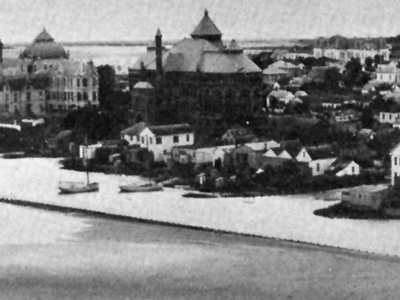
In a statewide referendum, 70 percent of Texas voters chose Galveston over Houston as the site of the future Medical Department of The University of Texas.
-
1884
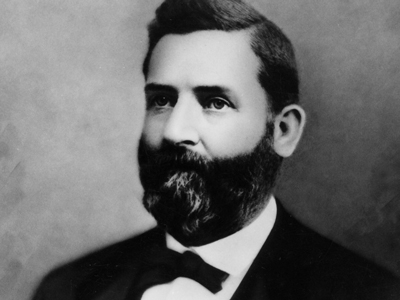
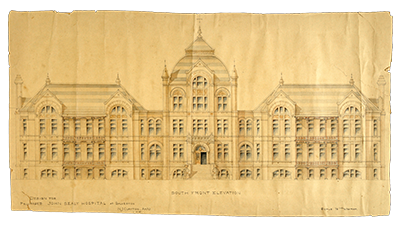
Galveston businessman and philanthropist John Sealy dedicates $50,000 for the construction of a hospital on the island.
-
1890
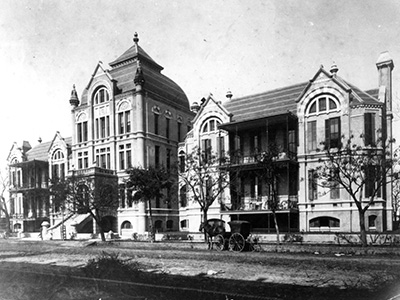
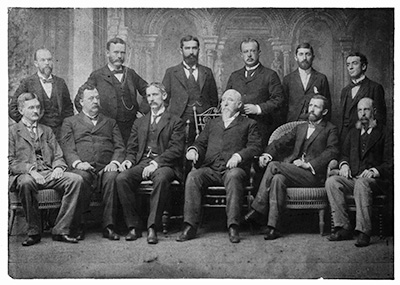
John Sealy Hospital in Galveston opens and welcomes its first patient.
The John Sealy Training School for Nurses welcomes its first students. It is now known as the School of Nursing.
-
1891
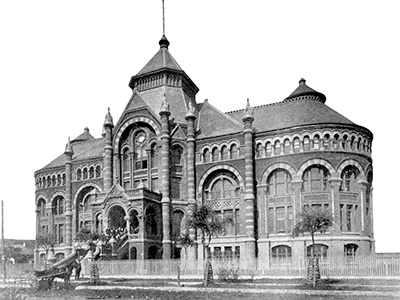
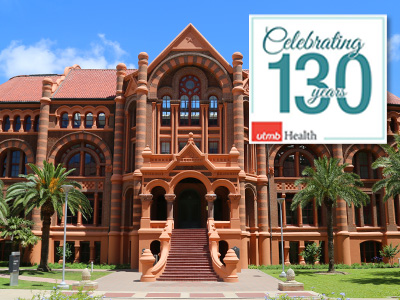
The medical school opens with 13 faculty members and 23 students in the Ashbel Smith Building, named for the physician who advocated for the creation of The University of Texas and its medical department. The building becomes known as “Old Red” for its distinctive red exterior.
-
1892
The Medical Department issues its first degrees; six students complete the nursing program.
-
1894
The Medical Department admits its first women students.
-
1896
Medical Department faculty help construct the first X-ray machine in Texas.
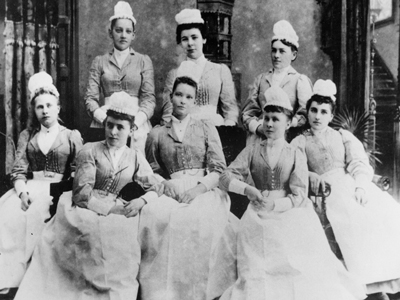
The Training School for Nurses becomes part of the Medical Department.
-
1897
The Medical School expands to a four-year curriculum.
The first woman graduates from the Medical Department.
As yellow fever poses a major public health threat in Galveston, the Medical Department develops expertise in infectious diseases.
-
1899
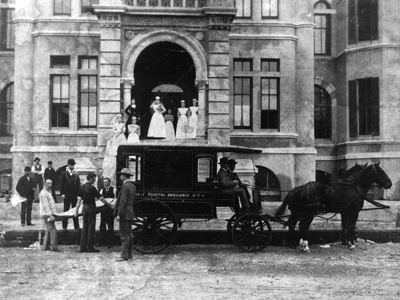
The Medical Department oversees a smallpox quarantine camp on Galveston’s East Beach.
-
1900
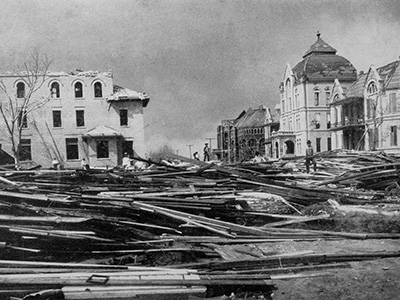
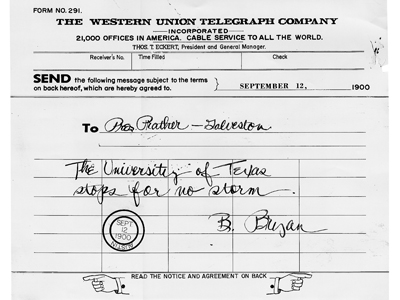
The Great Storm strikes Galveston, causing extensive damage. Classes resume shortly afterward following the Board of Regents’ declaration, “The University of Texas stops for no storm.”
-
1901
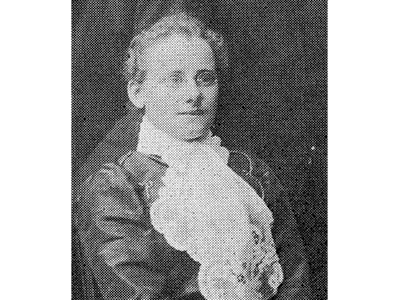
Dr. Marie Charlotte Schaefer, who received her medical degree from UTMB in 1900, becomes the school’s first female faculty member.
-
1912
The first woman to serve on the Medical Department faculty becomes head of the Department of Histology and Embryology.

-
1913
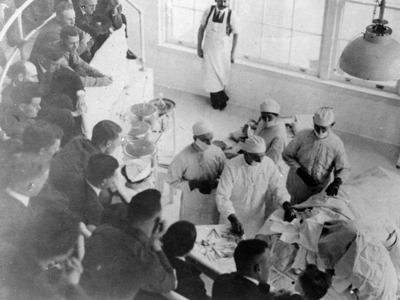
The Medical Department’s Chair of Surgery becomes a founding member and the first vice president of the American College of Surgeons.
-
1915
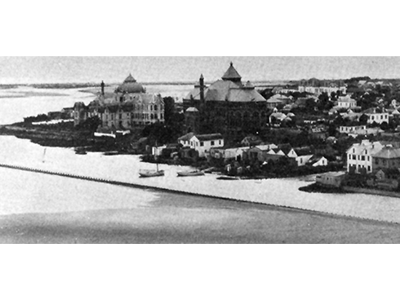
UTMB is commissioned by the state to build the first children’s hospital in Texas.
-
1917
The Medical Department raises its admission requirements from a high school education to two years of college.
-
1918
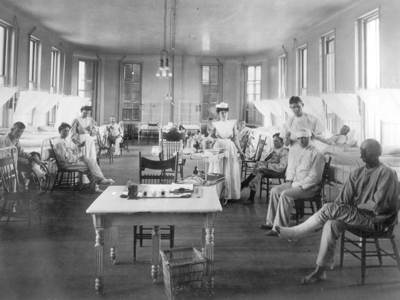
The 1918 influenza pandemic reaches Galveston.
-
1919
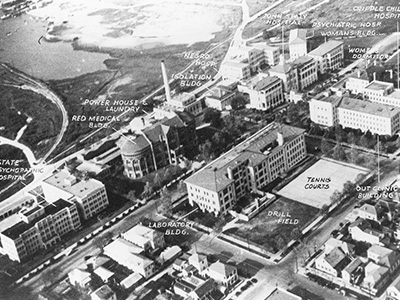
The Medical Department is officially renamed The University of Texas Medical Branch.
-
1920
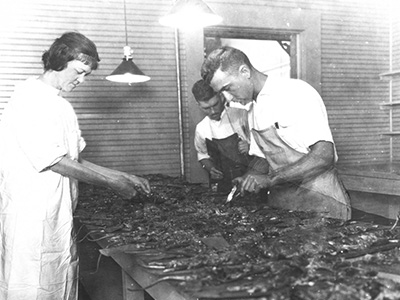
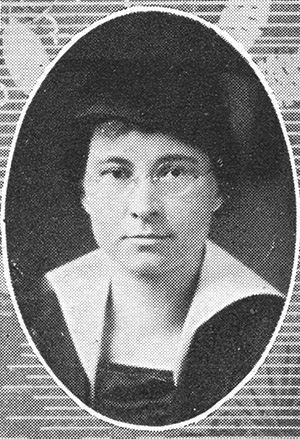
UTMB responds to an outbreak of Bubonic plague in Galveston. Accidentally infected during an autopsy, Dr. Anna Mary Bowie, a recent graduate of UTMB, receives the anti-plague serum and vaccine for Bubonic plague.
-
1922
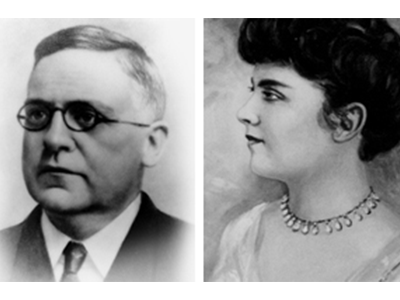
The Sealy & Smith Foundation for the John Sealy Hospital is chartered.
-
1924
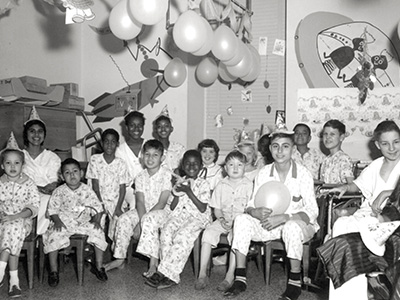
UTMB establishes the first department of pediatrics in Texas.
-
1925
The Medical Laboratory Building opens.
-
1926
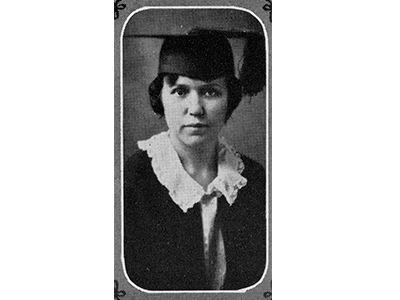
Dr. Edith Bonnett becomes the first woman to intern at John Sealy Hospital.
-
1940
UTMB faculty help found the American Board of Plastic Surgery.
-
1941
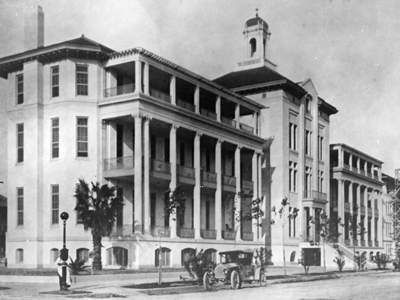
John Sealy Hospital becomes a state facility operated by The University of Texas.
-
1942
UTMB graduates two medical classes in one year to help meet the demand for physicians during World War II.
-
1947
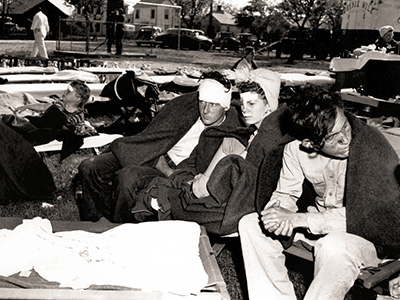
Following the Texas City Disaster, UTMB mobilizes to care for victims. Dr. Truman Blocker oversees treatment using triage methods learned during World War II and later advocates for the creation of what becomes the Blocker Burn Unit.
-
1949
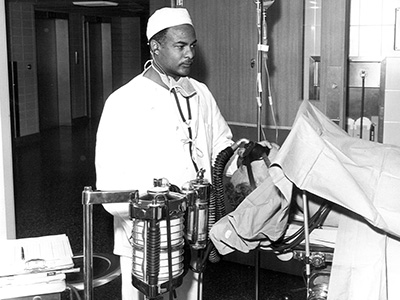
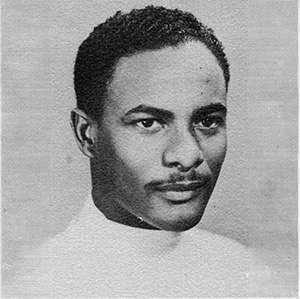
Herman Barnett, a former Tuskegee Airman, is the first African-American student to enroll at UTMB. He graduates in 1953 and goes on to a career in medicine and education.
-
1952
UTMB establishes biomedical graduate programs.
-
1954
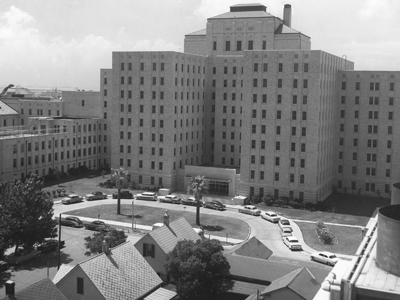
The new John Sealy Hospital and R. Waverley Smith Memorial Pavilion open.
-
1962
The General Clinical Research Center opens.
-
1966
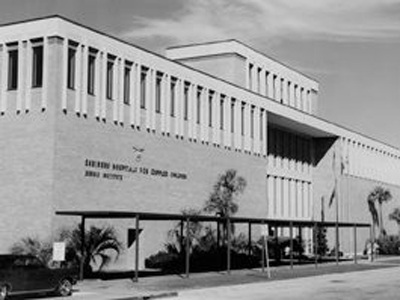
The first Shriners Burns Institute is dedicated on the UTMB campus.
-
1967
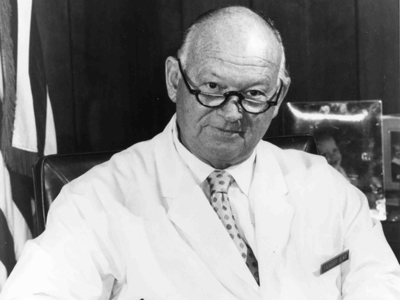
Dr. Truman Blocker becomes the first president of UTMB.
-
1968
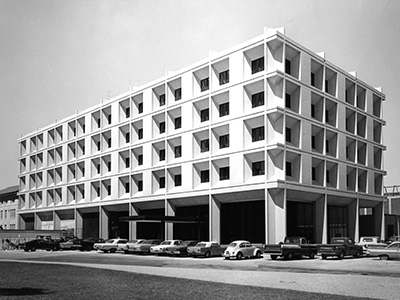
The original Jennie Sealy Hospital is dedicated.
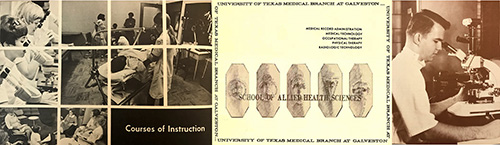
The School of Allied Health Sciences (now the School of Health Professions) is established.
-
1969
The Marine Biomedical Institute is established.
The Graduate School of Biomedical Sciences is established.
-
1971
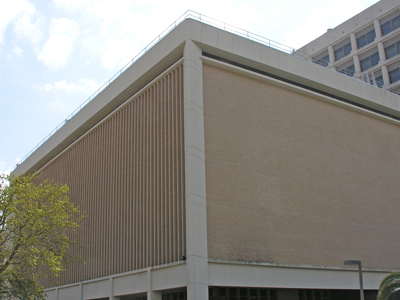
The Libbie Moody Thompson Basic Science Building is completed.
-
1972
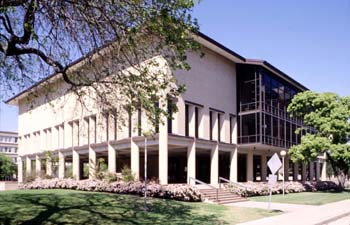
The Moody Medical Library opens.
-
1973
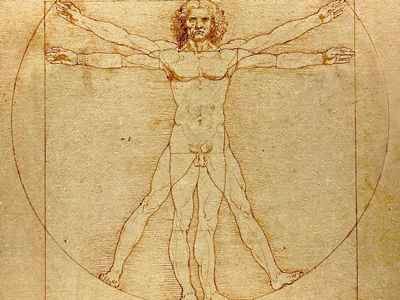
The Institute for the Medical Humanities is established to ensure that future scientists and medical professionals will have a solid grounding in the humanities.
-
1974
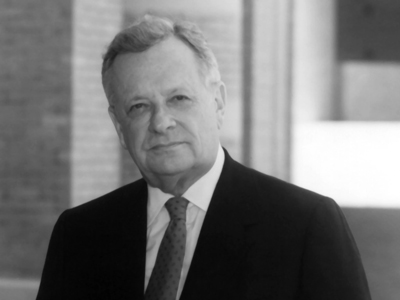
Dr. William C. Levin is named the second president of UTMB.
-
1978
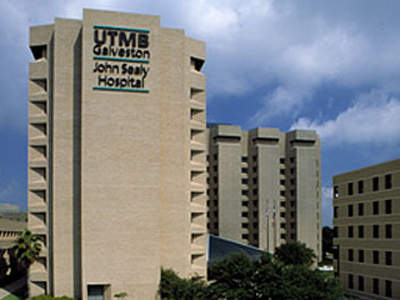
The current John Sealy Hospital tower opens.
-
1983
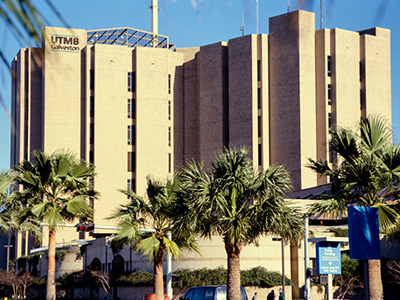
The Texas Department of Criminal Justice Hospital opens on the UTMB campus, providing inpatient, specialty and surgical care for incarcerated patients from across Texas.
-
1987
The Pan American Health Organization/World Health Organization Collaborating Center for Training in International Health is established.
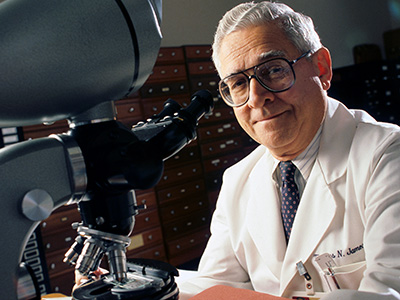
Dr. Thomas N. James is named the third president of UTMB.
-
1989
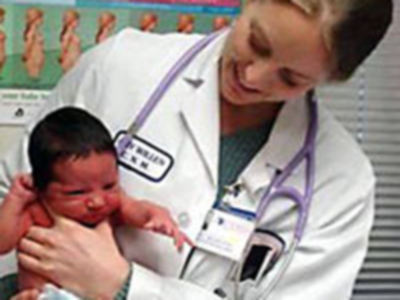
The Regional Maternal and Child Health Program sees its first patient.
-
1992
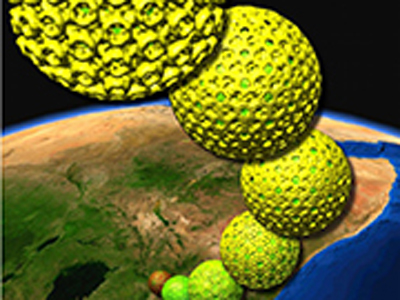
The Sealy Center for Molecular Sciences is established.
-
1993
UTMB launches its Aerospace Medicine Residency Program.
-
1994
UTMB begins its Correctional Managed Care partnership with the Texas Department of Criminal Justice.
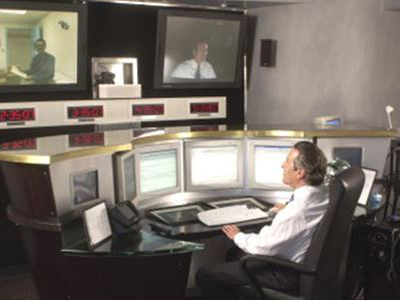
UTMB conducts its first telehealth consultation.
-
1995
The Center for Tropical Diseases at UTMB is designated a World Health Organization Collaborating Center.
UTMB acquires the World Reference Center for Arboviruses.
The Sealy Center for Structural Biology is established.
The Sealy Center for Cancer Cell Biology is established.
-
1996
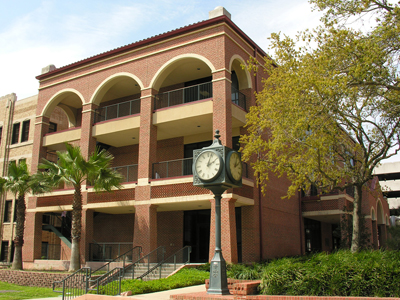
The Lee Hage Jamail Student Center opens.
The Primary Care Pavilion opens.
The Center on Aging at UTMB is named a Sealy Center.
The Blocker Burn Unit becomes the first burn center in the U.S. to be verified as a center of excellence.
-
1997
UTMB receives a federal biodefense grant.
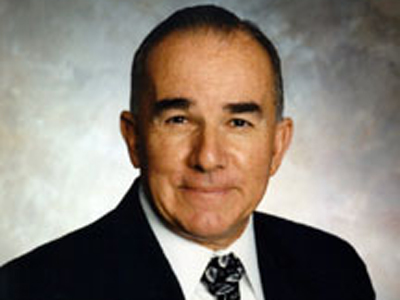
Dr. John D. Stobo becomes the fourth president of UTMB.
-
1999
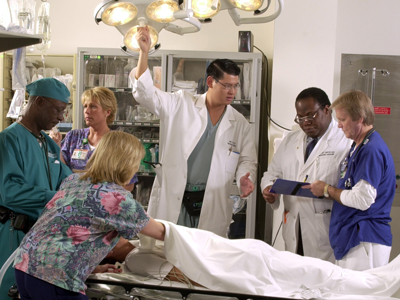
UTMB is designated a Level I Trauma Center by the American College of Surgeons.
-
2000
The UT System approves construction of a Biosafety Level 4 laboratory on the UTMB campus.
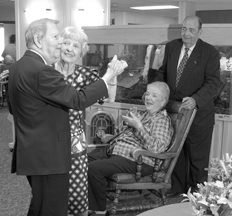
The Acute Care for Elders (ACE) Unit opens in John Sealy Hospital and is later recognized among the best such units in the country for patient satisfaction.
-
2001
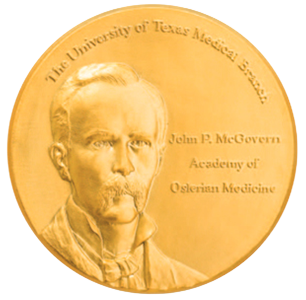
The John P. McGovern Academy of Oslerian Medicine is inaugurated at UTMB.
UTMB announces the Center for Biodefense and Emerging Infectious Diseases.
The Sealy Center for Vaccine Development is established.
-
2002
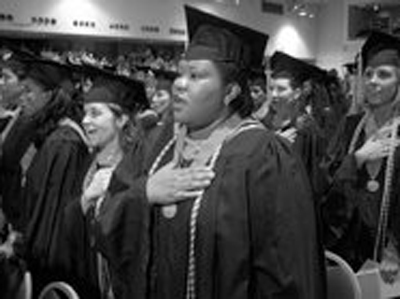
The School of Nursing graduates its first PhD students.
-
2003
The National Institutes of Health designates UTMB as the lead institution for the Western Center of Excellence for Infectious Diseases Research.
UTMB is selected as the site of one of two proposed national biocontainment laboratories.
The John Sealy Pavilion for Infectious Diseases Research, a Biosafety Level 4 laboratory facility, is dedicated.
The telemedicine program at UTMB completes its 100,000th consultation.
-
2004
The George and Cynthia Woods Mitchell Center for Alzheimer’s Disease Research is established.
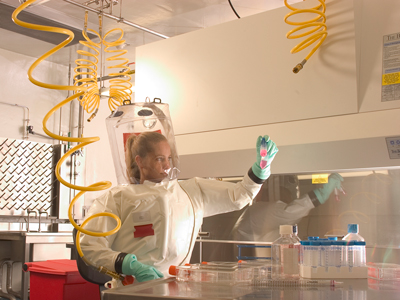
The Institute for Human Infections and Immunity is established.
-
2005
UTMB breaks ground on the Galveston National Laboratory.
-
2007
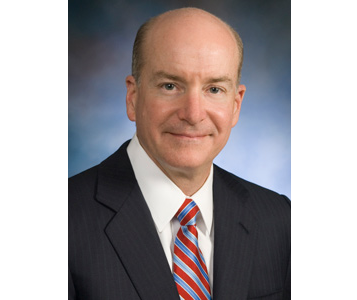
Dr. David L. Callender becomes the fifth president of UTMB.
The Graduate School of Biomedical Sciences becomes the first public institution in Texas to offer a doctoral degree in clinical science.
-
2008
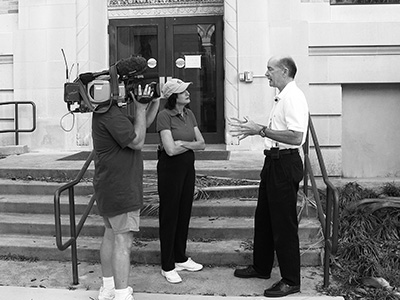
The Galveston National Laboratory opens as one of two National Biocontainment Laboratories established by the National Institutes of Health.
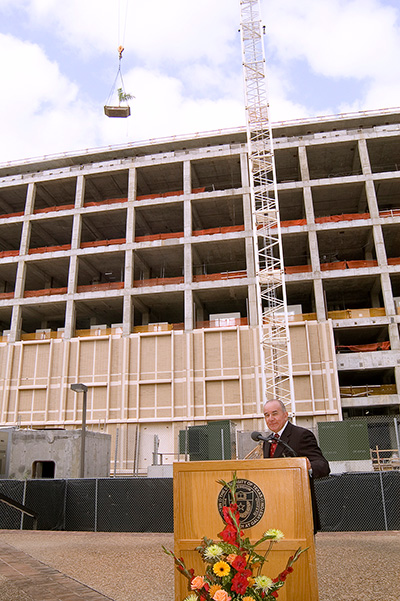
The National Institute of Allergy and Infectious Diseases awards UTMB $10.9 million to establish the Clinical Proteomics Center for Infectious Diseases and Biodefense.
The Department of Physical Therapy begins offering a doctoral degree in physical therapy.
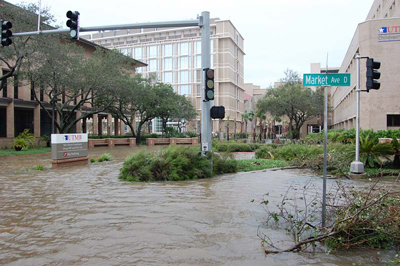
Hurricane Ike strikes Galveston. UTMB opens four mainland clinics within one week and delivers the first post-Ike baby on the island within one month.
-
2009
Texas authorizes funding to support recovery efforts at UTMB following Hurricane Ike. UTMB begins $947 million in recovery projects designed to strengthen campus resilience and protect education, research and patient care operations.
The Blocker Burn Unit reopens for adult patients, and John Sealy Hospital reopens as a full-service, 200-bed facility.
The National Institutes of Health awards UTMB a $21.5 million Clinical Translational Sciences Award.
The emergency department at UTMB reopens as a Level III Trauma Center as work begins toward regaining Level I designation.
-
2010
UTMB launches a new brand identity, logo and tagline, “Working Together to Work Wonders.”
UTMB becomes a full member institution of the Texas Medical Center.
UTMB receives over $4 million in funding for cancer research.
The National Heart, Lung, and Blood Institute awards UTMB $11 million to study conditions associated with airway inflammation.
-
2011
UTMB is redesignated a Level I Trauma Center.
UTMB researchers receive $4.8 million to develop a vaccine against Argentine hemorrhagic fever.
The Texas Legislature approves funding for a new hospital and continued Hurricane Ike recovery.
Researchers receive a $3 million National Institutes of Health grant to study aging in Mexico.
The Texas Higher Education Coordinating Board approves a Doctor of Nursing Practice degree program for the School of Nursing.
UTMB researchers receive $7.8 million to study the health effects of the Deepwater Horizon oil spill in the Gulf of Mexico.
Researchers develop a candidate vaccine against chikungunya virus.
The National Institutes of Health awards $1.7 million for plague research.
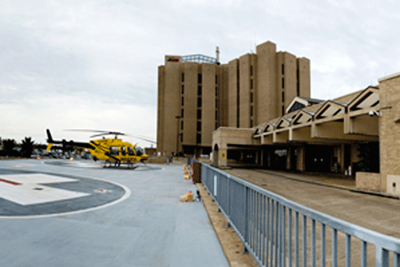
The UT System Board of Regents approves the new Jennie Sealy Hospital, supported by a $170 million pledge from the Sealy & Smith Foundation.
-
2012
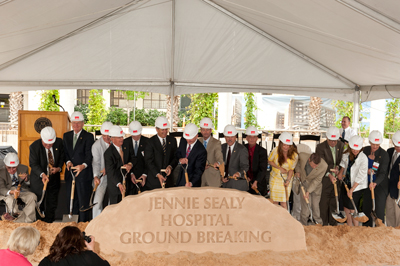
UTMB breaks ground on the new Jennie Sealy Hospital on the Galveston Campus.
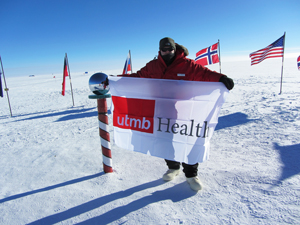
UTMB is selected to manage the Center for Polar Medical Operations.
The Moody Foundation pledges $9 million to support traumatic brain injury research at UTMB.
-
2014
UTMB establishes the Angleton Danbury Campus through a formal relationship with Angleton Danbury Medical Center.
UTMB is named a World Health Organization Collaborating Center for Vaccine Research, Evaluation and Training on Emerging Infectious Diseases, becoming the second university in the Western Hemisphere to receive the designation.
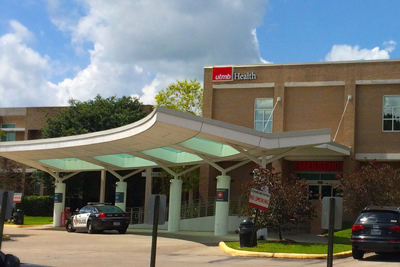
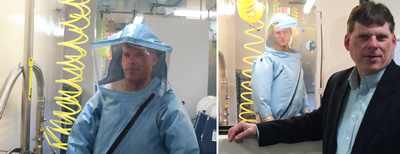
UTMB researchers announce an effective treatment for Ebola virus.
Time magazine recognizes Ebola fighters as its 2014 Person of the Year and features UTMB researcher Dr. Thomas Geisbert.
-
2015
UTMB begins the fall semester with 3,200 students and nearly 900 faculty members, following a 42% increase in enrollment since 2006.
The Sealy & Smith Foundation provides $75 million to renovate John Sealy Hospital.
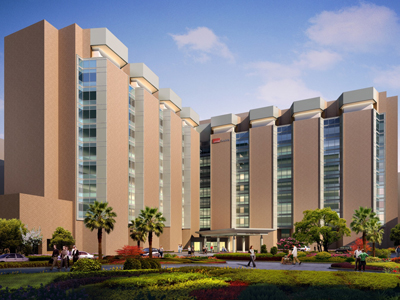
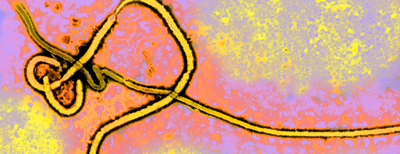
The U.S. Department of Health and Human Services designates UTMB as a regional treatment center for Ebola and other highly infectious diseases.
UTMB and The University of Texas MD Anderson Cancer Center partner to develop an outpatient cancer center on the League City Campus.
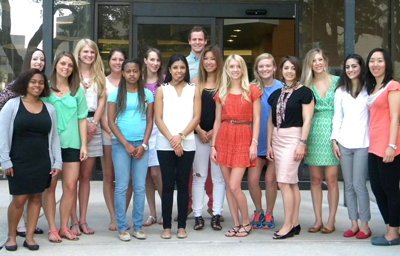
The School of Health Professions graduates its first students with master’s degrees in nutrition.
-
2016
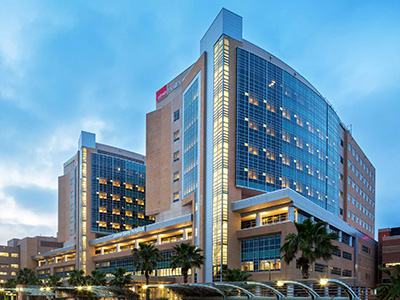
The new Jennie Sealy Hospital opens.
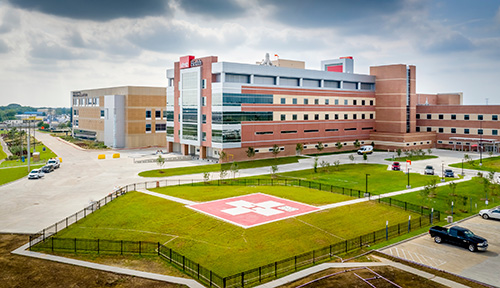
A new hospital on the League City Campus opens.
UTMB celebrates its 125th anniversary.
-
2017
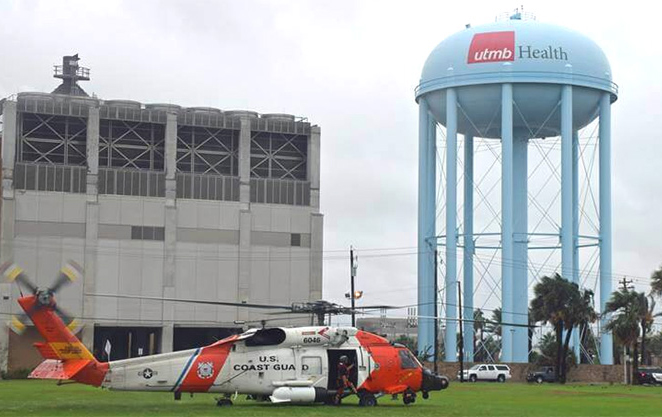
Hurricane Harvey brings more than 40 inches of rain to parts of the region, causing catastrophic flooding across UTMB service areas.
-
2018
The Sealy Institute for Vaccine Sciences is established, evolving from the Sealy Center for Vaccine Development.
-
2019
UTMB Health opens its hospital at the Clear Lake Campus in Webster.
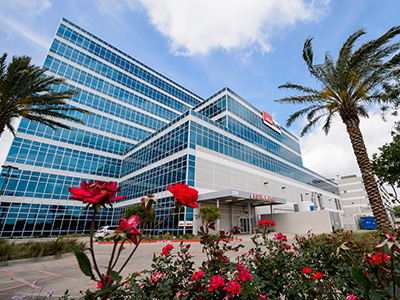
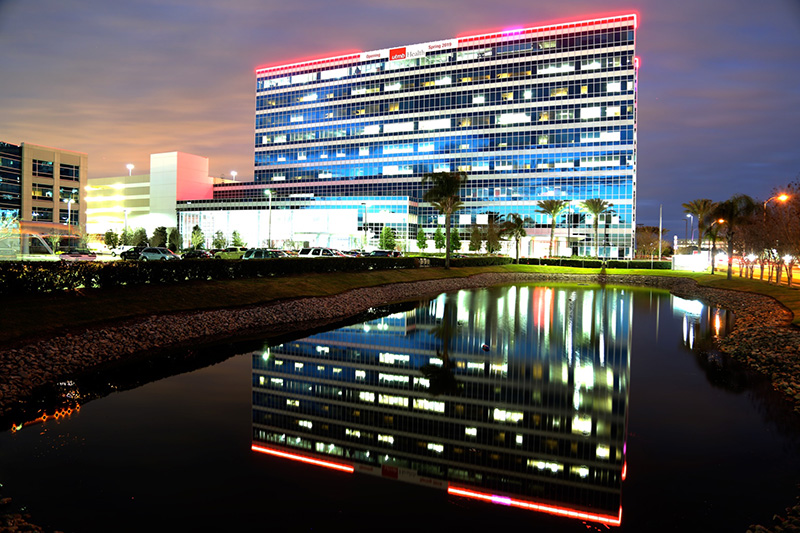
UTMB welcomes its first students to the Health Education Center, a five-story, $91.6 million advanced learning facility.
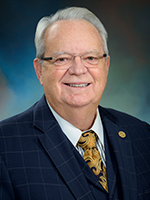
Dr. Ben G. Raimer is appointed president ad interim.
-
2020
As COVID-19 emerges, UTMB researchers contribute to virus identification, diagnostic testing and evaluation of vaccine candidates.
The renovation of 220,000 square feet of John Sealy Hospital is completed to serve women, infants and children, with support from the Sealy & Smith Foundation.
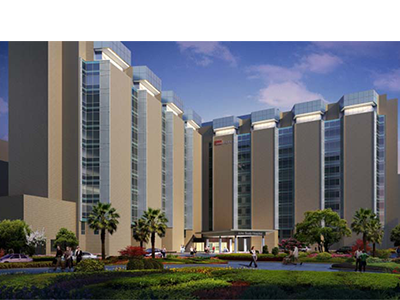
The Department of Neurosurgery is established, with Dr. Peter Kan serving as its first chair.
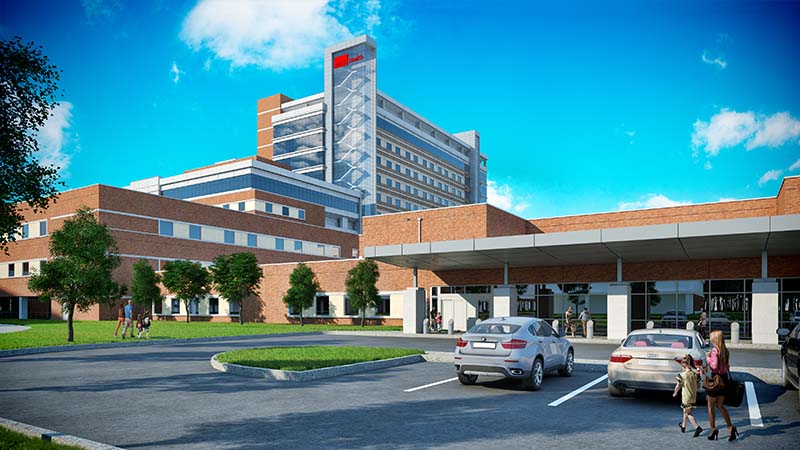
An expansion of the League City Campus Hospital is completed, adding a five-story patient tower with 60 beds and additional support areas.
UTMB begins administering COVID-19 vaccines to health care workers and later helps support regional vaccination efforts.
-
2021
Winter Storm Uri brings record-low temperatures, widespread power outages and water disruptions across Texas.
The Dave Bleakney Building opens in Angleton, expanding primary and specialty care in Brazoria County.
The UT System Board of Regents and the Council on Education for Public Health approve the creation of the UTMB School of Public and Population Health.
UTMB celebrates its 130th anniversary.
Dr. Ben G. Raimer is named sixth president of UTMB.
-
2022
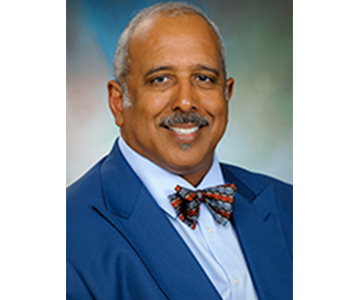
Dr. Charles P. Mouton is appointed president ad interim of UTMB.
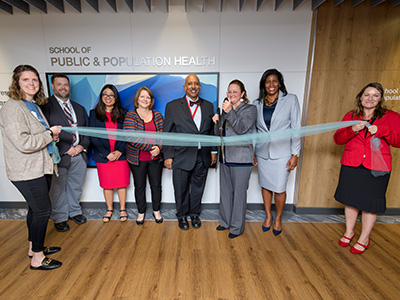
The UTMB School of Public and Population Health opens its doors and accepts its first class.
-
2023
Dr. Jochen Reiser becomes the seventh president of UTMB.
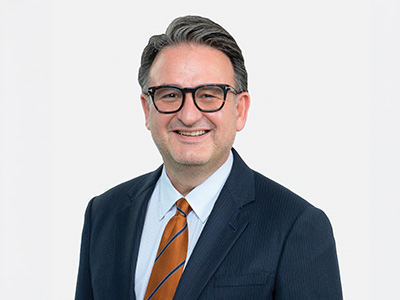
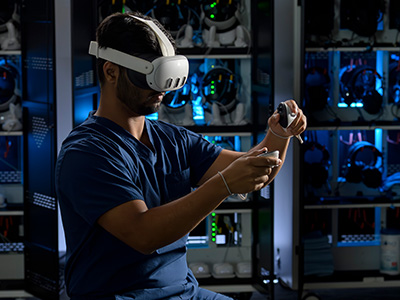
In recognition of its focus on technological advances and entrepreneurship, UTMB establishes Innovation as a fourth pillar alongside Clinical Care, Education and Research.
-
2025
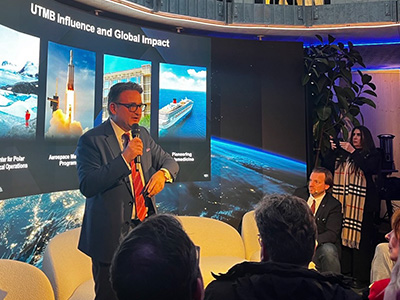
Dr. Jochen Reiser leads a UTMB delegation to the World Economic Forum and United Nations General Assembly, advancing UTMB initiatives in brain health, healthy living and healthy aging.
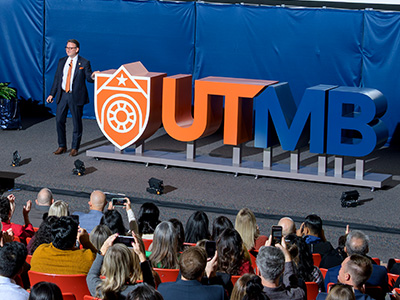
UTMB unveils a new institutional logo featuring an orange shield inspired by the historic Ashbel Smith Building (“Old Red”), paired with orange and blue lettering.
-
2026
Sealy Heart & Vascular Institute receives record-breaking $180.5 million from the Sealy & Smith Foundation.
UT System Board of Regents approves $300 million expansion of the League City Hospital Campus.
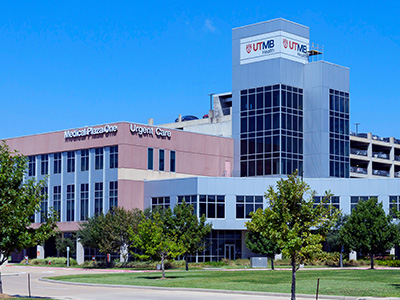
UTMB celebrates its 135th anniversary.
-
The end
-
The end 2