
Anesthesiology Newsletter

Dear all,
I am very pleased to introduce the inaugural issue of our Department of Anesthesiology Newsletter. This is a tremendous department, with exceptional faculty, residents, fellows, and CRNAs engaged in a wide range of clinical and academic activities both within and beyond UTMB.
We are fortunate to have many accomplishments and successes to highlight on a regular basis. These are the result of our participation at so many different levels at UTMB, as well as regionally, nationally, and internationally. Our editorial team has worked diligently to bring you these updates and looks forward to your input as we continue to shape future issues.
I hope you enjoy this first edition. Thank you for your continued dedication and for all that you do to advance our department as a leading program in anesthesiology.
Best regards,
Marcos
Spotlight on Staff
Heronica Alexander
Residency Program Manager

What inspired you to join UTMB? I truly believe God led me to UTMB, and to this department in particular. Doors opened here when many others were closed, and over the years I’ve been sustained through both the challenges and the wins. I’ve built lifelong relationships and have been grateful to make a positive impact in this role.
What do you enjoy most about working in the Anesthesiology Department? The sense of family stands out the most. I absolutely love it! Also, residency and fellowship training are some of the most demanding years for physicians, and it’s meaningful to support them through that process. It is a joy watching them grow into confident, skilled anesthesiologists, and it is incredibly rewarding.
What has been the biggest challenge in your role so far? Staffing has been an ongoing challenge throughout much of my time here. However, our current administration recognizes these needs and is actively working toward improvement, which I truly appreciate. I have learned to stay flexible, prioritize what matters most, and keep moving forward. I’m encouraged by the strength of our team and the support around us. I remain hopeful and grateful for how far we’ve come.
How do you like to spend your time outside of work? I enjoy spending time with family and watching movies, especially suspense, rom-coms, and mysteries.
Do you have family in the area? I’m originally from Louisiana, but my parents and extended family moved to Galveston when I was very young. Therefore, I’m ROI (raised on the island 😊), and many of my family members still live in the area.
What are your personal or professional goals for the future? My immediate goal is to continue strengthening and restructuring our team so we can best support our programs in an efficient and impactful way. Personally, my goal is to always strive to improve in my personal growth through humility, learning from mistakes, enjoying life, and walking in love.
Resident Spotlight
Dr. John Harman
CA-2 Resident | Incoming Chief Resident

Medical School: Dell Medical School at The University of Texas at Austin
Hometown: Dallas, TX
Before Medicine
Before entering medicine, Dr. Harman cultivated a uniquely diverse and accomplished background. He earned a BS in Marine Engineering Systems from the United States Merchant Marine Academy, followed by an MS in Transportation from MIT and an MBA from UT Austin. He worked as a Marine Engineer and served as a U.S. Navy Reserve Officer—experiences that helped shape his technical expertise, discipline, and leadership.
What Led Him to Medicine and Anesthesia
Dr. Harman’s transition into medicine was driven by a desire to make a direct and meaningful impact on patient care. His engineering and operational background naturally aligned with anesthesiology—a field that integrates physiology, critical decision-making, and hands-on procedural care in high-acuity settings.
Highlights and Challenges During Residency
One of the most meaningful aspects of residency for Dr. Harman has been the strong sense of camaraderie within the UTMB Anesthesiology program. He values the relationships he has built with colleagues—often bringing people together over his homemade ice cream, a favorite within the department.
He also appreciates the program’s supportive learning environment and broad clinical exposure. Like many residents, balancing the demands of training with personal growth has been challenging, but he continues to navigate this with resilience and perspective.
Fellowship Goals
Dr. Harman is currently interviewing for fellowships in Pediatric Anesthesia and looks forward to further specializing in this field.
Looking Ahead as Chief Resident
Dr. Harman is honored to step into the role of Chief Resident. He is committed to supporting his co-residents, fostering collaboration, and contributing to the continued growth and excellence of the program.
Life Outside the OR
Outside the hospital, Dr. Harman enjoys hiking, camping, yoga, and biking along the Galveston seawall. He frequently takes weekend trips to Austin and has recently developed an interest in oil painting, drawing inspiration from coastal sunsets.
Advice for Medical Students
“Don’t lose yourself in the process of becoming a physician - your own health comes first. Keep your friends and family close and make time for the things you love.”




Anesthesia department boosts quality metrics with homegrown system
The University of Texas Medical Branch has four campuses, five health sciences schools, seven institutes for advanced study, a research enterprise that includes one of only two national laboratories dedicated to the safe study of infectious threats to human health, a Level 1 trauma center, and a health system (UTMB Health) offering a range of primary and specialized medical services throughout the Texas Gulf Coast region.
THE CHALLENGE
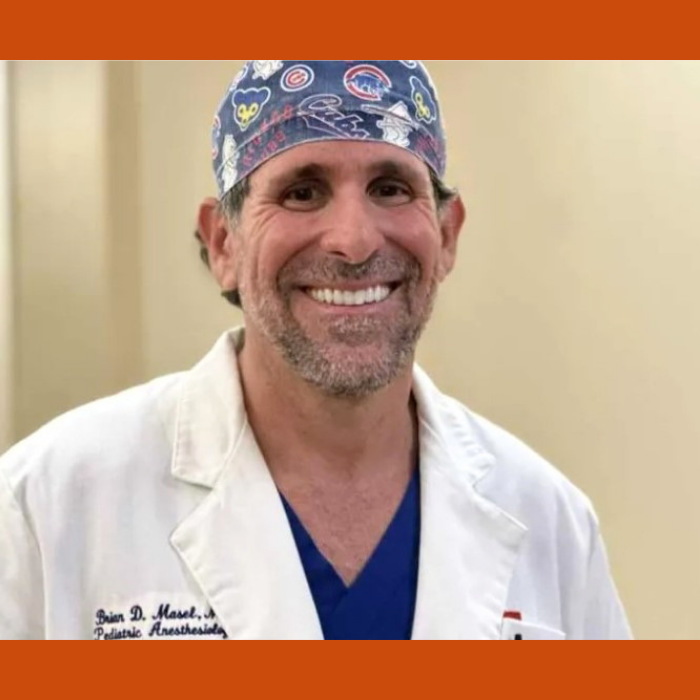
When Dr. Brian Masel, director of quality and chief of pediatric anesthesia at UTMB Health, joined the anesthesia department about four years ago, he saw an opportunity to bring more rigorous, data-driven quality measurements to one of the largest departments in one of the hospitals. It has 70 faculty, 80 residents and 40 CRNAs. Hospital leadership was eager to establish meaningful quality metrics, and Masel was excited to take that on.
"The challenge was finding the right approach," he explained. "Self-reporting, which is common in anesthesia, partly because Medicare and Medicaid tie reimbursement to it, has known limitations. It's difficult to get truly objective insights when providers assess their own performance.
"The alternative systems at the time had implementation requirements that we could not meet," he continued. "They required a substantial dedication of in-house technical support and a significant percentage of clinical FTE for the first couple of years. We were in a staffing crunch at the time, so that represented a significant resource commitment that wasn't feasible for us."
Staff eventually built their own system to pull data directly from their Epic electronic health record. They would then push that information over to Microsoft Power BI to compile and display the data.
"We had minimal success with behavioral change at that point," Masel noted. "We then tied a financial incentive to the group meeting the metrics. Even with financial incentives, we hit a common problem: Physicians and CRNAs weren't regularly visiting a separate dashboard to check their performance.
"Like most busy clinicians, they had established workflows, and adding another platform to monitor just wasn't sticking," he added. "I was tracking the data daily and following up with people individually, but I knew we needed a better way to keep these metrics visible and actionable."
PROPOSAL
The hospital already had been using a platform called C8 Health for about three years as its best-practices implementation platform, and it had become central to the anesthesia department's daily operations. It was where the team went for clinical information and resources.
"In addition to our protocols and policies, we had our department directory and individual schedules on it, so almost all of us used it quite frequently," Masel said. "When I looked at our engagement problem with the Power BI quality dashboard, I saw an opportunity to work with this platform and expand their use in our department to solve my quality measurement challenge.
"The vision was that if we could bring performance data directly into a platform where everyone was already working daily, we'd solve the visibility problem," he continued. "Providers would see their metrics in the same place they were already going for clinical needs, making it front and center rather than buried in a separate system."
Together, staff developed a system that could transform how quality metrics drive behavioral change. The idea was that the system would show each provider exactly how they're doing on their metrics, flag when they're falling behind and link them directly to the institutional guidance they need to improve.
"Instead of me personally tracking down dozens of clinicians to say, 'Hey, you need to work on this,' the platform could do that coaching automatically, at scale, for hundreds of providers at once," he added.
MEETING THE CHALLENGE
The technical setup creates a daily data pipeline from Epic directly into the C8 platform. Every day, each anesthesiologist can log into the app and see exactly where they stand on quality metrics. Staff track things like intraoperative blood pressure management, perioperative glucose control for diabetic patients, and antibiotic administration timing.
It's the same interface they're already using for clinical guidelines and department information, so there's no extra step.
"What makes it effective is the system doesn't wait for providers to check in," Masel explained. "It reaches out to them. The intervention combines an in-app dashboard displaying individual and departmental compliance, monthly summaries highlighting trends and drivers, and twice-weekly individualized notifications comparing each clinician's performance against prior periods and departmental goals.
"Each notification includes direct links to guidance on how to comply," he continued. "The AI component analyzes individual patterns, identifying which types of cases tend to be more challenging for that particular provider and suggesting targeted approaches.
Masel selects quality metrics strategically to align with institutional priorities, drawing from the American Society of Anesthesiologists' extensive quality measure library. One major focus has been surgical site infection reduction.
"We chose metrics for blood pressure management, glucose control and antibiotic administration because these are evidence-based factors that anesthesiologists can directly influence," he explained.
"One additional feature of what we developed was what one of my residents referred to as the gamification of quality goals," he continued. "The ability to easily see one's own performance in an app in real time and easily see how that compares to their peers unleashes their naturally competitive spirit and is an extremely powerful impetus for behavioral change."
RESULTS
The department has realized significant results in three different areas:
Perioperative glucose management compliance
"Over a three-month evaluation period, our department achieved a 9.1% absolute increase in perioperative glucose management compliance, moving from 72.2% to a projected annual rate of 81.3%," Masel reported. "What's particularly striking is that 39% of previously non-compliant providers became compliant within just three months.
"This happened with strong organic adoption: 83% of our clinicians became active users of the platform without any changes to staffing, incentives or institutional mandates beyond what we already had in place," he added.
Surgical site infection reduction and cost savings
"We have focused our early rounds of metrics on the reduction of surgical site infections," he noted. "Aside from surgical site infections being an unacceptable outcome and serious risk for patients, they are enormously expensive for hospitals. Although not completely under our control, it may surprise many how much anesthesiologists can affect the occurrence of surgical site infections.
"One of our primary groups of metrics pertains to perioperative glucose management," he continued. "The reason we focus so heavily on perioperative glucose management is its direct connection to surgical site infections. Patients with elevated blood sugar face significantly higher infection risk, and adherence to glucose management protocols is consistently associated with lower SSI rates."
Extrapolation of early data from the evaluation period indicates hyperglycemic-related surgical site infections may have decreased by approximately two-thirds. Based on these compliance improvements and projected against the previous fiscal year's case volume, staff expect more than $700,000 in annual savings from reduced SSI incidents alone.
"That is from the improvement in one metric," he noted. "When you look at the financial impact of our cumulative metric improvements, we project that we are on pace to approximately double that in annualized savings."
Provider incentive achievement
"We do not improve our performance and the quality of care for personal financial gain," Masel stated. "We do it because it is the best thing we can do to care for our patients. However, whether it's participation in MIPS or outcomes-based reimbursement from private insurers, financial incentives for hitting quality goals are known to be a potent motivator to drive change.
"We hit a wall at some point in our improvement rate, where I was genuinely concerned we would not be able to hit our goals," he continued. "Although we track each individual's quality performance, our goals are group goals. Our remuneration is therefore also based on us hitting our goals as an entire group."
The implementation of a quality interface where all metrics can be tracked at the provider level in real time breathed new life into the department's efforts and gave staff beyond a second wind, Masel said.
"I am proud to say our department has hit every goal and achieved 100% of available incentives every quarter," he reported. "This demonstrates that when you give people clear visibility into their performance and timely feedback paired with actionable guidance, they respond."