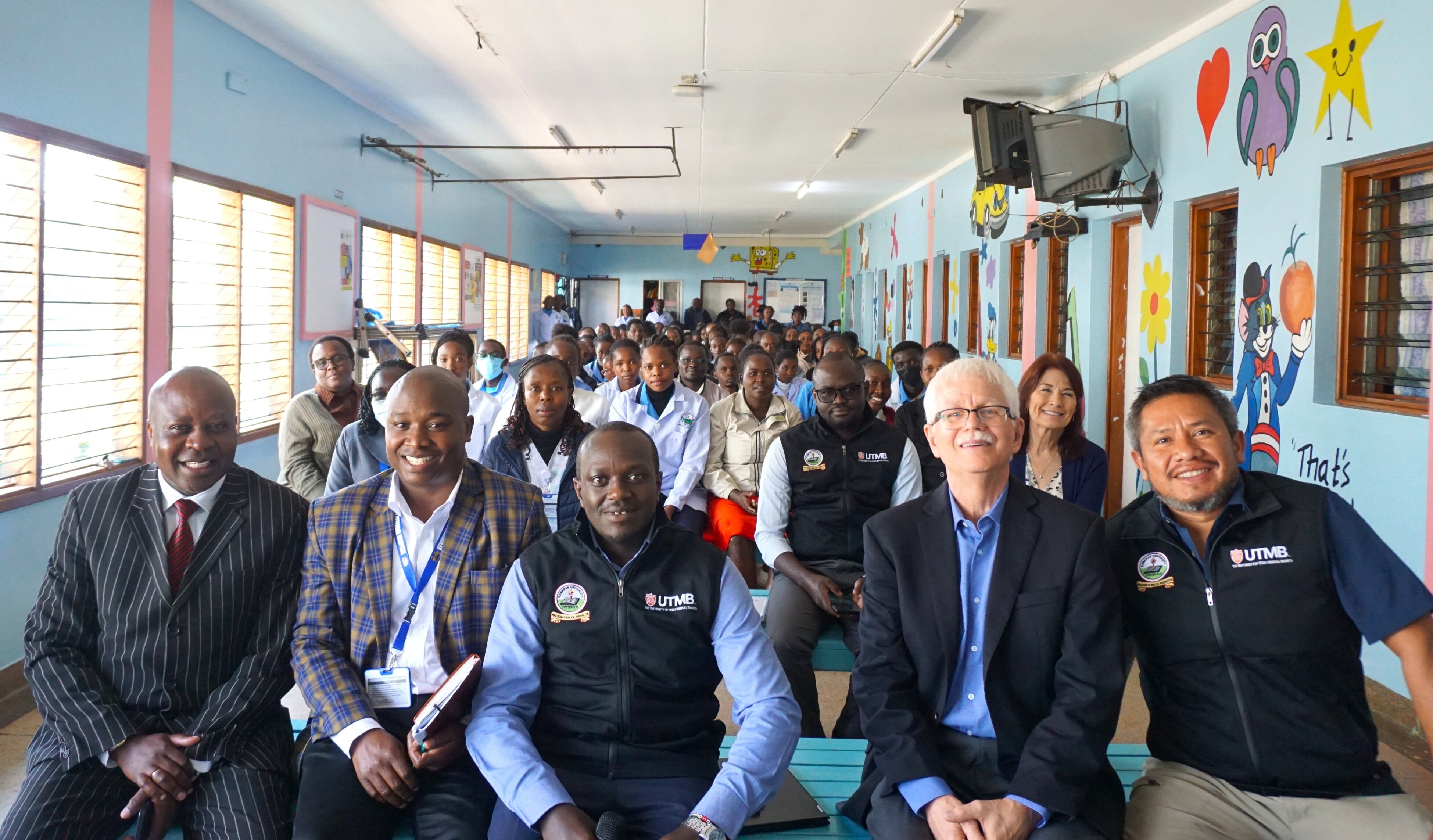
Photo: KUSAIDIA Team and CME attendees at Kericho County Referral Hospital in 2026
A year after its launch, the KUSAIDIA consortium: a collaboration between UTMB's Center for Tropical Diseases (CTD) and Kabarak University's School of Medicine and Health Sciences, is moving from relationship-building to measurable impact.
KUSAIDIA, short for the Kabarak-UTMB Synergistic Alliance for Innovative Diagnostics for Infections in Africa, takes its name from the Swahili word for "to help." The consortium unites the two universities with ten affiliated Kenyan hospitals around a shared goal: developing rapid, low-cost, user-friendly microbiology tests suited to resource-limited settings, and strengthening the diagnostic and surveillance systems needed to fight antimicrobial resistance (AMR) across sub-Saharan Africa.
Why It Matters
Bloodstream infections and sepsis are among the leading causes of hospitalization and death in sub-Saharan Africa, and enteric bacteria – including E. coli, Shigella, Salmonella, and Campylobacter – remain among the top reasons Kenyan patients are admitted to the hospital, with periodic cholera and typhoid outbreaks adding to the toll.
Without fast, reliable diagnostic testing, physicians in many Kenyan hospitals must treat suspected infections empirically – choosing an antibiotic based on best judgment rather than a confirmed diagnosis. This approach comes at a cost - incorrect empiric therapy is linked to a fivefold increase in mortality among patients in septic shock, and it fuels the spread of resistant bacteria.
The World Health Organization projects that, left unchecked, antimicrobial resistance could cause up to 10 million deaths a year globally by 2050 with low and middle-income countries, including Kenya, bearing a disproportionate share of that burden due to weaker health systems and limited diagnostic infrastructure. This is the gap KUSAIDIA works to help close: developing and deploying rapid, low-cost diagnostic microbiology tests; strengthening Antimicrobial Stewardship and Diagnostic Stewardship programs; and promoting optimal use of antimicrobials to fight against AMR.
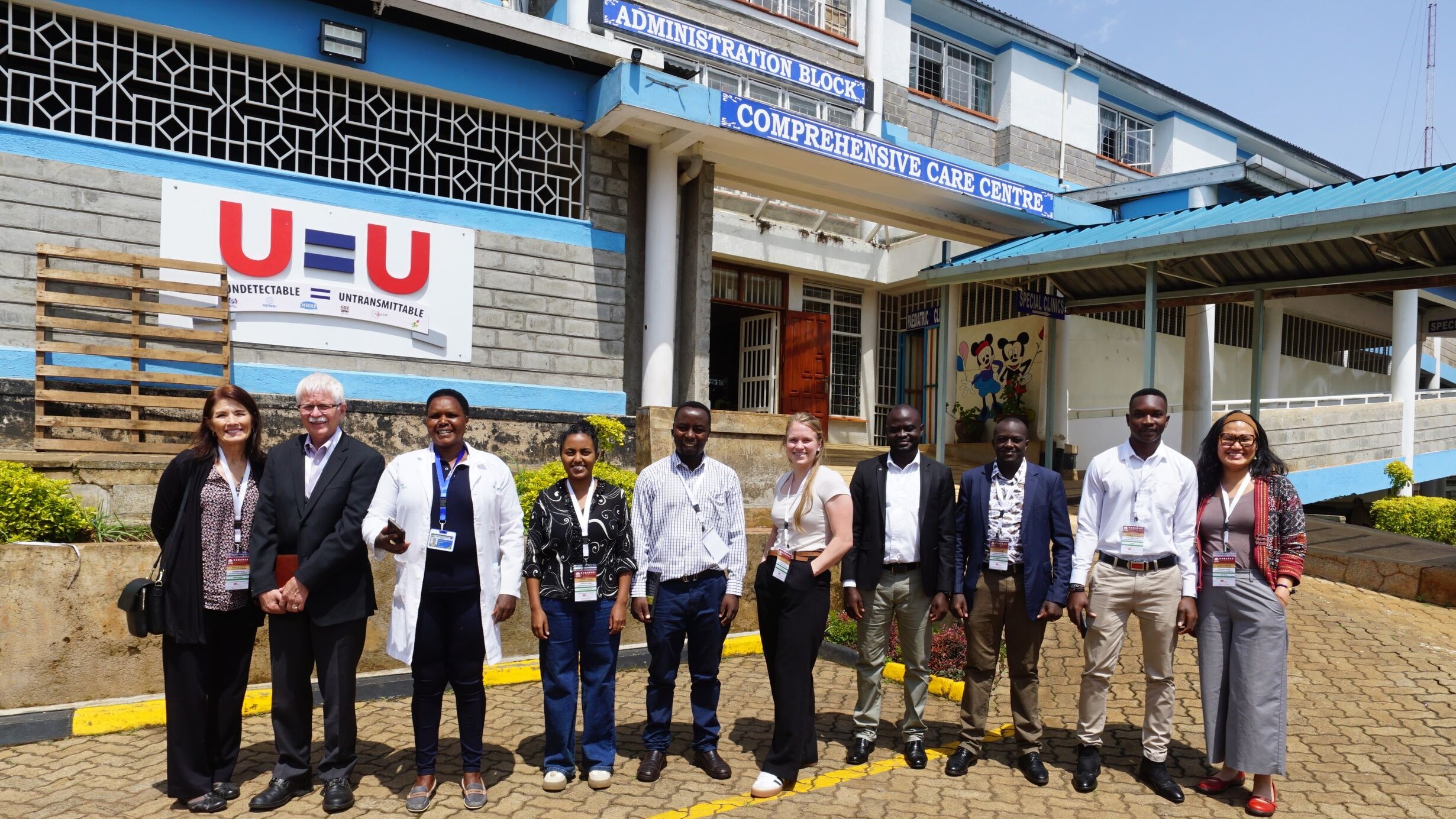
Photo: KUSAIDIA Team at Kericho County Referral Hospital in 2025
A Foundation Built in Year One
The partnership's first year centered on establishing trust and understanding of the current landscape. The KUSAIDIA team visited nine hospitals across western and central Kenya to introduce a novel rapid diagnostic platform for bloodstream infections currently under development at UTMB. The team conducted knowledge, attitudes, and practices (KAP) surveys and assessed laboratory diagnostic capacity and microbiology infrastructure at each site.
That groundwork included contributions from a UTMB medical student, Olivia Kruse, who spent four weeks in Kenya first helping survey physicians and laboratory staff and then later shadowing at a rural mission hospital as her Global Health Elective Pre-Clinical Preceptorship. Her experience, and that of the broader pilot team, helped surface the specific gaps in training and infrastructure that shape the partnership's next phase.
Turning Assessment into Action
Now in its second year, KUSAIDIA has moved from assessment to implementation. Drawing on findings from the pilot's hospital assessments, the CTD and Kabarak teams shifted their focus toward educational development and capacity-strengthening.
During an in-country visit in June and July, the team visited two tertiary county referral hospitals and delivered hands-on CME training to approximately 160 clinical and laboratory professionals across two on antimicrobial stewardship (AMS), antimicrobial resistance surveillance, and antibiogram development. The visit also introduced a Vitek-BacLink-WHONET data workflow training, connecting automated microbiology identification systems to the free World Health Organization WHONET microbiology laboratory database software used to track resistance trends over time and empower hospitals and their laboratories and physicians work together to champion AMR, create local antibiograms as well as advocate for more effective drug therapies.
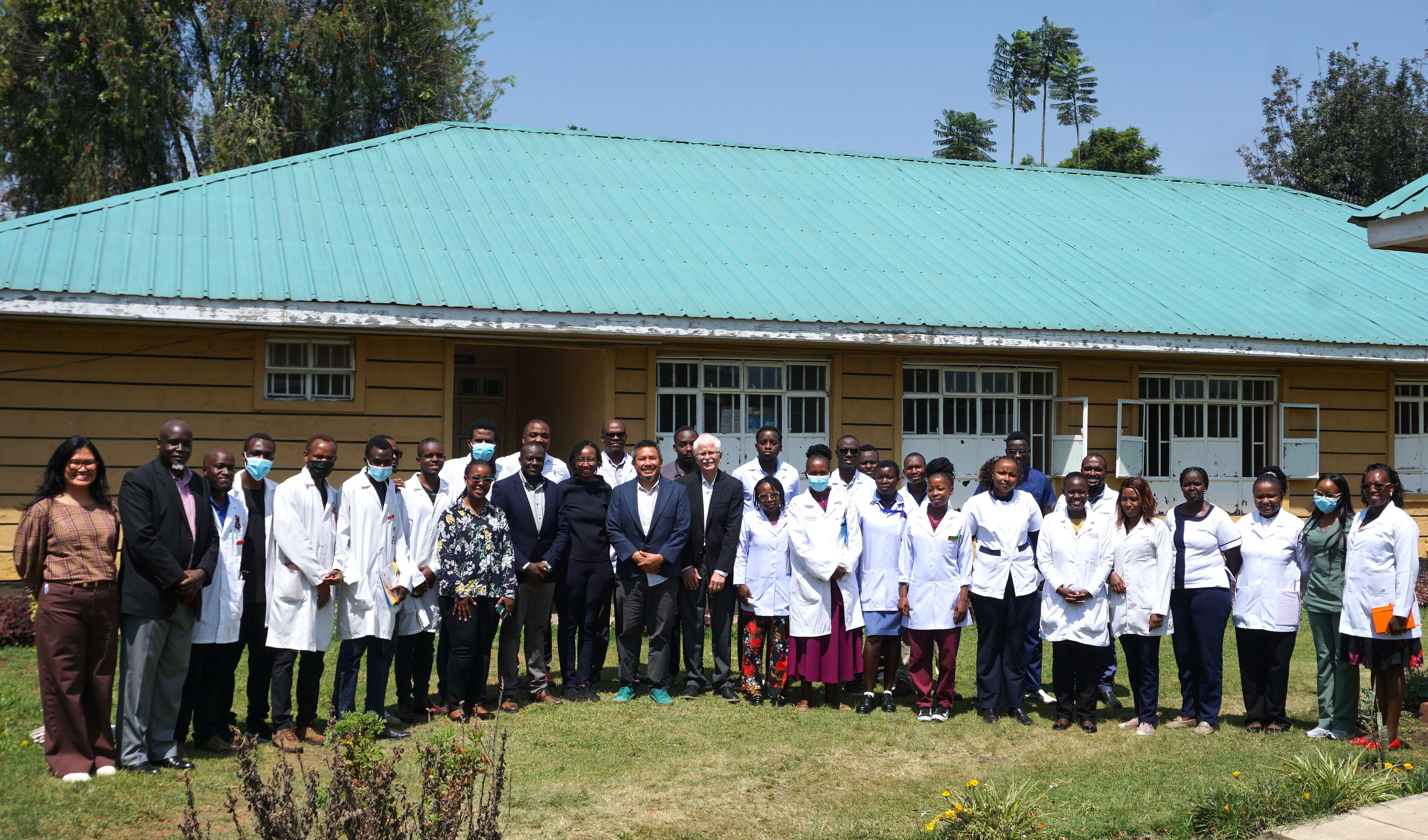
Photo: KUSAIDIA Team and CME Attendees at Nakuru County Referral Hospital in 2026
Building Toward Lasting Impact
Manuscripts describing the consortium's early findings are currently in progress, with publications expected as the pilot data and training outcomes are finalized. In addition, development continues in the lab on the rapid diagnostic platform at the heart of the collaboration.
For now, KUSAIDIA stands as a working model of what sustained, relationship-driven global health partnerships can achieve: a collaboration spanning two universities and ten hospitals, a shared diagnostic innovation moving toward real-world use, and a rapidly expanding cohort of Kenyan clinicians and laboratory staff equipped to combat antimicrobial resistance in their own hospitals.
As the partnership enters its next phase, the CTD and Kabarak University teams see KUSAIDIA as a strong example of UTMB's commitment to global health collaboration, capacity building, and AMR research — one built not on a single intervention, but on years of shared investment in people and systems.
Related stories: