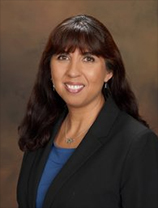
Gracie Vargas, PhD
Professor & Vice Chair for Research
Cecil H. and Ida M. Green Distinguished Chair in Neuroscience and Cell Biology
Route: 0456 | Tel: (409) 772-6514 | grvargas@utmb.edu
Research Experts
Affiliations: UTMB Center for Cancers of the Head and Neck, UTMB Center for Addiction Science & Therapeutics, Institute for Human Infection & Immunity
Education and Training
PhD in Biomedical Engineering, University of Texas at Austin, TX
MS in Mechanical Engineering, University Texas at Austin, TX
B.A. in Physics, Gustavus Adolphus College, St. Peter MN
Research Interests
My laboratory, the Advanced Bio-Optics Imaging Lab, develops and applies advanced optical imaging methods, including nonlinear optical microscopy (multiphoton and second harmonic generation), fluorescence lifetime imaging, intravital microscopy, endomicroscopy, and large-area fluorescence imaging, to investigate and define image-based markers for fundamental understanding of disease and for clinical translation. A unique expertise is in the use of label-free imaging for diagnostics and metabolic study of cellular systems in vitro and in vivo.
In translational neuroscience, my lab uses intravital multiphoton microscopy and head-mounted fluorescence imaging to study glial and vascular dynamics in neuroinflammation. This includes studying microglial-vascular dynamics centered on the coagulation-neuroinflammation axis in experimental cerebral malaria. This work, first supported by a multi-PI R01 from the National Institute of Neurological Disorders and Stroke, has expanded into study of the retina-brain axis as a window for detecting brain neuroinflammation through retinal markers and imaging, and into optic nerve neuroinflammation in glaucoma with support from the National Eye Institute. In cancer neuroscience, my lab combines label-free optical metabolic imaging with transcriptomics and metabolomics to understand how extracellular matrix stiffness in the tumor microenvironment reprograms glioblastoma metabolism, an effort that includes use of 3D bioprinted tumor models.
In the area of optical cancer diagnostics and label-free imaging, my lab established the feasibility of label-free nonlinear optical microscopy as an "optical biopsy" approach for detecting oral and head and neck epithelial neoplasia and developed a multimodal strategy that pairs widefield autofluorescence mucosal imaging with subsurface nonlinear optical microscopy to image cell and extracellular matrix atypia associated with precancer or cancer. We have now developed a handheld multimodal intraoral imaging probe for clinical biopsy guidance in head and neck cancer, in collaboration with faculty in UTMB otolaryngology and pathology and with collaborators at the University of Arizona and Johns Hopkins University, and our research is now focused on translating this probe for clinical use in head and neck cancer and other applications. This work has been funded through several awards from the NIH and CPRIT.
My early work includes pioneering studies in tissue optical clearing, now a widely adopted tool for deep-tissue imaging that we apply to whole-organ and whole-brain imaging, as well as in vivo imaging methods for assessing cervicovaginal mucosal safety in HIV prevention and women's health. Each of these areas are grounded in the concept of identifying image-based markers of injury and disease.
I am an elected Fellow of the American Institute for Medical and Biological Engineering (AIMBE) and of SPIE, the International Society for Optics and Photonics, and was recently inducted into the University of Texas at Austin Academy of Distinguished Biomedical Engineers (2024). I have served as a charter member of two NIH study sections in biomedical imaging.
Teaching and Mentoring
As a mentor and educator, I have worked with trainees at every stage: high school and summer undergraduate interns, post-baccalaureate researchers, medical students, PhD students, and postdoctoral researchers. PhD graduates from my lab have gone on to successful postdoctoral and faculty positions working at the interface between advanced optical imaging and areas such as neuroscience, cancer, and neuro-oncology with other trainees going into successful next steps. I am active in the Graduate School and direct courses in the Neuroscience Graduate Program. I have also mentored dozens of students as Director of the UTMB Post-baccalaureate Research Education Program (2016-2026). I received the UTMB Faculty Excellence Award in Mentoring in 2024. If you are a student looking for a lab working at the interface of advanced optical imaging and neuroscience or cancer, feel free to reach out to me to inquire about internships or rotations to find a lab home.