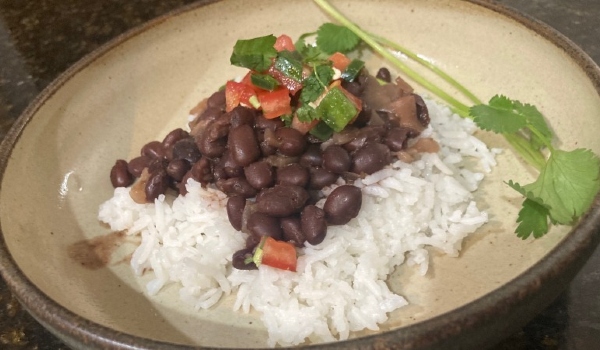
Can you name a superfood that’s been a culinary staple for more than 7,000 years and costs practically pennies per serving? Say hello to the mighty black bean.
Still a mainstay of Latin American and Caribbean cuisine, black beans feature prominently in the food traditions of Brazil (which grows a significant share of the world’s crop), Mexico, Guatemala, Puerto Rico, the Dominican Republic and Cuba.
These black satiny jewels are full of plant-based protein; rich in dietary fiber; high in folate, copper, iron, thiamine, manganese, magnesium and iron; and are a great source of antioxidants. Beyond their health benefits, black beans are versatile, delicious and affordable.
Growing up in Florida in a Cuban family, black beans and rice were as common as French fries, offered up as a side dish to most meals. I’ve continued to eat and prepare them throughout my life and offer this super simple way to make Cuban-inspired Black Bean Soup
—Pep Valdes, digital director, Office of Strategy & Communications
Ingredients
- 2 15-oz cans of black beans
- 1 can of water
- 1/3 cup red wine (optional)
- 2 tablespoons extra virgin olive oil
- 1 medium onion, chopped
- ½ green bell pepper, chopped
- 4-5 cloves garlic, mashed and chopped finely
- 1 teaspoon oregano
- ½ teaspoon powdered garlic
- ¼ teaspoon ground cumin
- 1 large bay leaf
- ½ teaspoon balsamic vinegar
- Salt to taste
Directions
- Add beans with their liquid to a medium-sized crockpot.
- Add one can of water, and the rest of the ingredients, to the crockpot.
- Simmer on high for four hours or on low for as long as you’d like. Stir occasionally.
- Taste and adjust seasoning to your liking.
- Beans are ready when onions are translucent and the soup has thickened slightly.
To serve
- Ladle a generous serving of the black beans over rice. Traditionally, long-grain white rice would be used, but I frequently serve mine over brown rice for a little extra nuttiness.
- If desired, the beans can be topped with raw onions, chopped cilantro or jalapeno, pico de gallo, sour cream and/or shredded cheese. A dash of a vinegary hot sauce makes a great addition.
Notes
- You can release some starch from the beans to help thicken the soup by mashing some of the beans with the back of a spoon. A drawback of using canned beans is that the quality and salt content can vary greatly between brands. Find your favorite and use your taste buds to determine how much salt you’ll need.
- The bean soup will be better the next day and freezes extremely well. Black beans cooked in this fashion are hard to mess up and are highly customizable. Like more heat? Swap out a couple jalapenos or serrano peppers for the bell pepper or add red pepper flakes. Want more veggies? I’ve added diced carrots and celery to mine. You can use chicken or veggie stock in place of water. Need meat? The Brazilian national dish “feijoada” pairs black beans with a prodigious amount of ham hocks, sausage and assorted meats. It all works and can all be prepared the same way.
- Canned beans are quick and convenient and, provided you found a good brand, do not suffer much in terms of texture and flavor. However, like any processed food, they do have nutritional drawbacks: They will have more salt than you need, some of the “superfood” benefits are diminished, and you should make sure the brand you are using is in a BPA-free can. Preparing dry beans isn’t that much harder; it just takes a little more time and planning. You soak your dry beans (they commonly come in 12-ounce bags) overnight in water to cover, reserving most of the water for cooking your beans the next day. Simmer until the beans are soft.
- If I’m using dry beans, I will usually forgo the crockpot and cook them in a Dutch oven on the stovetop. It allows me to brown my mirepoix (the onions and veggies) in the olive oil for a little extra flavor and better control the heat to help soften the beans.