Medical Discovery NewsBridging the World of Medical Discovery and You

Recent Episodes

A Changing Standard

MP3 WAV

  • Did you hear a bell toll mid-November in 2018? You should have because a longtime king died! Norbert, you're being melodramatic. It was no king.No, it wasn't a person, BUT, it was le Grand K which is a pretty big deal!

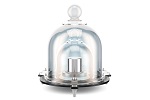
    Le Grand K is a shiny cylinder of platinum-iridium alloy that has been locked away for one hundred thirty years. Every forty years, this one-kilogram cylinder was taken out at the International Bureau of Weights and Measures in France so that we could be sure that one kilogram was still a kilogram. It was a physical calibration for the world's standard measurement of mass. But now, instead of using this cylinder, the kilogram will be defined by something called Planck's constant.

    It's a mainstay of quantum mechanics and has a value of six point six two six zero seven zero one five times ten to the negative thirty-four kilogram meters squared per second. Wow, that was a mouthful.

    So, basically, to find a kilogram, you'd use something called the kibble balance which determines mass as a balance to a defined electric force. It's complex, much harder than getting out a cylinder but it's way more precise. We already do this with the meter. We now tie the meter to the speed of light.

    Since light travels some two hundred ninety-nine million meters every second, then one divided by this number defines a distance that we call a meter. Since the speed of light never wavers, the length of a meter is precise. Now that the new definition of the kilogram has been approved by scientists from sixty nations, next is the second which has long been defined by emitted radiation from a radioactive Cesium clock.

    What?? Don't worry. It's complicated.

More Information

Metric system overhaul will dethrone the one, true kilogram
Like an aging monarch, Le Grand K is about to bow to modernity. For 130 years, this gleaming cylinder of platinum-iridium alloy has served as the world's standard for mass. Kept in a bell jar and locked away at the International Bureau of Weights and Measures (BIPM) in S'vres, France, the weight has been taken out every 40 years or so to calibrate similar weights around the world. Now, in a revolution far less bloody than the one that cost King Louis XVI his head, it will cede its throne as the one, true kilogram...
Two individuals wearing headphones stand in a recording booth, speaking into microphones with a music stand holding printed pages between them.

 Medicine...

Medicine is constantly advancing – that is a great thing about life in the 21st century. But it doesn’t just happen. Dedicated biomedical scientists are making discoveries that translate into those new medical advances.

Biomedical science is broad, encompassing everything from social science to microbiology, biochemistry, epidemiology, to structural biology and bioinformatics to name just a few areas. And, it can involve basic fundamental biology, the use of AI and chemistry to clinical studies that evaluate new medicines in patients.

No matter the research focus, the goal is always the same, to advance human health. It may take a few months, a few years or for fundamental science, a few decades. Few people make the connection that biomedical science is medicine and that biomedical scientists are working today on the medicine of tomorrow. Our weekly 500-word newspaper columns and 2-minute radio shows and podcasts provide insights into a broad range of biomedical science topics.

Medical Discovery News is dedicated to explaining discoveries in biomedical research and their promise for the future of medicine.

Podcasts

Alternatively, you can copy and paste the following web address (URL) into iTunes as a new subscription:
https://www.medicaldiscoverynews.com/shows/audio/mdnews.rss

You can also search and subscribe to "Medical Discovery News" in the podcast section of iTunes.

The www.medicaldiscoverynews.com web site and Medical Discovery News radio program (Program) are made possible by The University of Texas Medical Branch at Galveston (UTMB)as a community service and are intended to advance UTMB's mission of providing scholarly teaching, innovative scientific investigation, and state-of-the-art patient care in a learning environment to better the health of society and its commitment to the discovery of new innovative biomedical and health services knowledge leading to increasingly effective and accessible health care for the citizens of Texas.

All information provided on the web site and in the Program is for informational purposes only and is not intended for use as diagnosis or treatment of a health problem or as a substitute for consulting a licensed medical professional. Any information obtained by participating as a web site visitor or program listener is not intended to and should not be considered to constitute medical advice.

Thoughts and opinions expressed on the Program or on the website are those of the authors or guests and do not necessarily reflect the opinions of UTMB. The provision of links to other websites is not to be construed as written or implied sponsorship or endorsement of such websites by UTMB.

Please contact Dr. David Niesel or Dr. Norbert Herzog via email with any concerns, suggestions or comments.

All rights are reserved to information provided on the website or other information sources. No part of these programs can be reproduced stored in a retrieval system or transcribed in any form or by any means for personal or financial gained without the express written permission of Drs. Niesel and Dr. Herzog.