Recent Episodes
A Top 10 List Waiting to Save Lives
We may be in the 21st century, but infectious diseases remain the number one killer of children and a major cause of death for adults. That's fifteen percent of deaths across the globe! Most are in developing countries, but many are in middle income countries, and all of them are just a plane ride away.
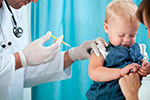
The most effective tool against infectious diseases are vaccines, but too few have been developed. So the leading science magazine, Science, asked which vaccines should we produce first? The result is a top ten list to save lives.
Number one is Ebola Sudan, a virus related to Ebola Zaire, which spawned the West Africa outbreak that killed 11,000 people from 2014 to 2015.
Next is a virus spread by mosquitoes, Chikungunya. As of January 2016, almost 700 cases involving 44 states were reported in the U.S. after having spread here from the Caribbean.
Then we have SARS and Middle Eastern Respiratory Syndrome virus, or MERS. MERS, which has a fifty percent mortality rate, is from Saudi Arabia but caused an outbreak in Korea. And SARS created a worldwide panic in 2004.
Among the world's deadliest microbes is the Marburg virus, a relative of Ebola, with a mortality rate of eighty percent. The remaining viruses on the list from Africa are Lassa and Rift Valley Fever viruses.
Next is a bacterium from Southeast Asia called
Salmonella enterica responsible for 6 million annual cases of Paratyphoid Fever. The last two infectious diseases on the top ten list are Schistosomiasis and hookworm, both caused by parasites.
We hope these diseases do not spread to further shores, however, being prepared with cheap and effective vaccines is most prudent. So, support biomedical research - our lives may depend on that next scientific advance.
More Information
10 of the Most Important Diseases With No Licensed Vaccine
Vaccination has been successful at controlling many of the world's diseases. However, there still remain many infectious diseases for which no licensed (US or EU) vaccine exists...
Leading Causes of Death
As compiled by the Centers for Disease Control and Prevention (CDC)
Foundation for the National Institutes of Health
The Foundation for the National Institutes of Health (FNIH) was established by Congress in 1990 as a not-for-profit 501(c)(3) charitable organization. The Foundation works with its partners to accelerate biomedical research and strategies to fight against diseases in the United States and across the world. The FNIH organizes and administers research programs; supports education and training of new researchers; organizes educational events and symposia; and administers a series of funds supporting a wide range of health challenges.