Medical Discovery NewsBridging the World of Medical Discovery and You

Recent Episodes

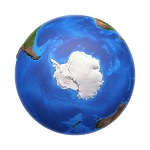
An Antarctic Cure

MP3 WAV

  • Though American explorer, Frederick Albert Cook, claimed he was first to reach the North Pole, we can't be sure. But he is known for novel lifesaving treatments on a trapped crew in Antarctica for more than a year.

    Cook joined seafaring expeditions to escape the trauma of losing his wife and child to childbirth. By the time he served as doctor on the Belgian Antarctic expedition in eighteen-ninety-eight, he had already been on several. The ship had been trapped in pack ice for four months and last seen sunshine two months before when the captain dragged himself to Dr. Cook. He had lost the use of his legs most likely from scurvy.

    Scurvy comes from a lack of vitamin C for at least three months and causes anemia, skin hemorrhages and even death. Most animals and plants can make vitamin C but not us. To save the captain, Cook recalled lessons he had learned from the Inuit, people of the arctic who survive without the vitamin C from fruits. He ordered the Captain to drink only water and eat only penguin and seal meat. He also had him stand naked next to a fire three times a day, perhaps the first use of light therapy to treat seasonal depression. Within a week, the Captain was better, and the rest of the men were also treated.

    It turns out that oils in caribou, fish, walrus, seal, and penguin contain enough vitamin C to prevent scurvy if they're not overcooked. Cook should have lived out his life as a hero, instead he went to prison for a ponzi scheme but was eventually pardoned just before his death.

More Information

The Antarctic Expedition That Changed Modern Medicine
The American explorer Frederick Albert Cook is remembered today, if he's remembered at all, for having likely lied about reaching the North Pole in 1908. Hailed as the Neil Armstrong of his day when he announced he'd seen the top of the world, he very quickly became the Lance Armstrong of his day after being pegged as a fraud...

Who Discovered the North Pole?
A century ago, explorer Robert Peary earned fame for discovering the North Pole, but did Frederick Cook get there first?...

Scurvy
curvy is a condition that develops in people who do not consume an adequate amount of vitamin C in their diet. Although scurvy is relatively rare in the United States, it continues to be a problem in malnourished populations around the world (such as impoverished, underdeveloped third world countries)...


Two individuals wearing headphones stand in a recording booth, speaking into microphones with a music stand holding printed pages between them.

 Medicine...

Medicine is constantly advancing – that is a great thing about life in the 21st century. But it doesn’t just happen. Dedicated biomedical scientists are making discoveries that translate into those new medical advances.

Biomedical science is broad, encompassing everything from social science to microbiology, biochemistry, epidemiology, to structural biology and bioinformatics to name just a few areas. And, it can involve basic fundamental biology, the use of AI and chemistry to clinical studies that evaluate new medicines in patients.

No matter the research focus, the goal is always the same, to advance human health. It may take a few months, a few years or for fundamental science, a few decades. Few people make the connection that biomedical science is medicine and that biomedical scientists are working today on the medicine of tomorrow. Our weekly 500-word newspaper columns and 2-minute radio shows and podcasts provide insights into a broad range of biomedical science topics.

Medical Discovery News is dedicated to explaining discoveries in biomedical research and their promise for the future of medicine.

Podcasts

Alternatively, you can copy and paste the following web address (URL) into iTunes as a new subscription:
https://www.medicaldiscoverynews.com/shows/audio/mdnews.rss

You can also search and subscribe to "Medical Discovery News" in the podcast section of iTunes.

The www.medicaldiscoverynews.com web site and Medical Discovery News radio program (Program) are made possible by The University of Texas Medical Branch at Galveston (UTMB)as a community service and are intended to advance UTMB's mission of providing scholarly teaching, innovative scientific investigation, and state-of-the-art patient care in a learning environment to better the health of society and its commitment to the discovery of new innovative biomedical and health services knowledge leading to increasingly effective and accessible health care for the citizens of Texas.

All information provided on the web site and in the Program is for informational purposes only and is not intended for use as diagnosis or treatment of a health problem or as a substitute for consulting a licensed medical professional. Any information obtained by participating as a web site visitor or program listener is not intended to and should not be considered to constitute medical advice.

Thoughts and opinions expressed on the Program or on the website are those of the authors or guests and do not necessarily reflect the opinions of UTMB. The provision of links to other websites is not to be construed as written or implied sponsorship or endorsement of such websites by UTMB.

Please contact Dr. David Niesel or Dr. Norbert Herzog via email with any concerns, suggestions or comments.

All rights are reserved to information provided on the website or other information sources. No part of these programs can be reproduced stored in a retrieval system or transcribed in any form or by any means for personal or financial gained without the express written permission of Drs. Niesel and Dr. Herzog.