Recent Episodes
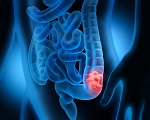
Bacteria's Role in Colorectal Cancer
While many of the bacteria in our gut keep us healthy, some, like certain strains of E. coli, produce toxins that may lead to colorectal cancer also called CRC. Researchers discovered that this toxin causes mutational signatures in cells that line the colon, the same type found in colorectal tumor cells.
Typically CRC develops from polyps on large intestine walls and are accumulations of mutated cells. These polyps can become cancerous unless they're removed during a colonoscopy, when a doctor does so using a camera guided tube. Most of the E. coli in our colon are harmless but the pathogenic ones carry genes that encode a toxin called colibactin. Tumors of cancer patients have DNA with fifty mutational signatures, but does this toxin cause the mutations?
Using stem cells growing on a structure, researchers made mini-intestines that they then injected with toxin and non-toxin producing e. coli. After months of repeated injections, they found mutations in the mini intestines exposed to colibactin. Then they compared this mutational pattern to two thousand tumor samples from patients and five percent had the same pattern. This suggests that E.coli colibactin toxin may contribute to one in twenty bowel cancers.
We don't know yet if other bacteria and their toxins are linked to CRC, but this is a promising new lead in the fight against colorectal cancer.
More Information
Bowel cancer may be linked to gut bacteria, researchers find
A common type of bacteria found in the gut may play a role in the formation of bowel cancer, helping to identify high-risk people...
Mutational signature in colorectal cancer caused by genotoxic pks+ E. coli
Various species of the intestinal microbiota have been associated with the development of colorectal cancer (CRC) yet a direct role of bacteria in the occurrence of oncogenic mutations has not been established...
Intestinal Organoids: New frontiers in the study of intestinal disease and physiology
The development of sustainable intestinal organoid cell culture has emerged as a new modality for the study of intestinal function and cellular processes. Organoid culture is providing a new test-bed for therapeutic research and development...