Recent Episodes
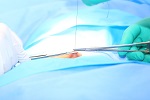
Beets and Sutures
Impressive inventions have come from high school science fairs including an early detection tool for pancreatic cancer, an air freshener made of cow poop, and a device that turns car exhaust into clean air.
That's way more than what I was doing in high school. Yeah, no kidding.
And now, another young inventor has found a low-tech way to signal an infected wound. Beet juice sutures that change from bright red to dark purple with infection. Back in two thousand twelve, a higher tech version of sutures made with sensors measured wound temperature. But it had to be paired with a smart phone to signal an infection when temperatures rose.
Our seventeen-year-old scientist, Dasia Taylor, instead keyed in on the skin's natural pH. People who don't have the means to shower daily have a pH of five but infection raises that number to seven and as high as nine. She found that while sophisticated meters can measure the pH, so can vegetables, and beets turned out to be ideal. It's bright red in acidic conditions and deep purple at pH nine. She then tested suturing materials for how well they retained the beet dye. The best was a cotton/polyester blend that turned purple within five minutes of exposure to pH nine. But the sutures must also hold the wound together, be affordable, and not harbor bacteria.
Dasia was a finalist in the Regeneron Science Talent Search, a highly prestigious high school science competition. She hopes her work will help the poor who don't have easy access to medical care.
More Information
This High Schooler Invented Color-Changing Sutures to Detect Infection
After winning a state science fair and becoming a finalist in a national competition, Dasia Taylor now has her sights set on a patent...
Novel 3-D "Smart" Sutures for Wireless Collection of Biological Data
The field of smart wearable systems has just gotten a boost thanks to researchers from Tufts University. A team of engineers has developed a novel 3-dimensional thread-based diagnostic platform that, when sutured into tissue, collects a range of real-time diagnostic data wirelessly, including pH, glucose levels, temperature, stress, strain, and pressure...
Natural skin surface pH is on average below 5, which is beneficial for its resident flora
A team of engineers has developed a novel 3-dimensional thread-based diagnostic platform that, when sutured into tissue, collects a range of real-time diagnostic data wirelessly, including pH, glucose levels, temperature, stress, strain, and pressure...






