Medical Discovery NewsBridging the World of Medical Discovery and You

Recent Episodes

Blood Pressure is Skin Deep

MP3 WAV

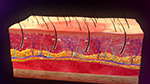
  • We may be taking our skin for granted. Yes, we know it's the largest organ, but other than wanting our skin to look good, it doesn't rank up there with the heart or the brain. But scientists may have discovered an important role the skin plays that we never knew about. Our skin may be helping to regulate blood pressure and heart rate.

    That's pretty neat. And it's important because one out of three Americans face high blood pressure, also known as hypertension, which contributes to nearly four-hundred-thousand deaths every year. The reality is outside of obesity and smoking, the cause of a vast majority of hypertension cases is unknown. We know it's connected to reduced blood flow to small blood vessels in parts of the body that are far from the heart including the skin. When tissues like the skin are starved for oxygen, the body reacts by increasing the flow of blood which causes high blood pressure.

    This reaction to get more blood is regulated by a family of proteins called HIF which are also found in the skin. To study whether HIF proteins in the skin affect blood flow, researchers created mice missing these proteins. When these mice were exposed to low oxygen, as expected, their blood pressure, heart rate and skin temperature were all negatively affected since their HIF protein did not do the job of increasing blood flow. This goes to show that the skin does regulate blood pressure and heart rate according to the oxygen levels in the blood.

    Learning this role that the skin plays might reveal new insights into the causes of hypertension and perhaps lead to new therapies to combat this common ailment. Controlling blood pressure is key to reducing the chances of having a stroke, heart attacks and damage to the circulatory system.

More Information

Skin found to play a role in controlling blood pressure
Skin plays a surprising role in helping regulate blood pressure and heart rate, according to scientists. While this discovery was made in mice, the researchers believe it is likely to be true also in humans...

Peripheral Vascular Resistance
The total resistance to blood flow through peripheral vascular beds has an important influence on the cardiac output. A rise in total peripheral resistance raises arterial blood pressure which, in turn, tends to reduce the cardiac output..

CDC High Blood Pressure Fact Sheet
A blood pressure monitor. Blood pressure is the force of blood pushing against the walls of the arteries that carry blood from your heart to other parts of your body. Blood pressure normally rises and falls throughout the day, but it can damage your heart and cause health problems if it stays high for a long time. High blood pressure is also called hypertension...


 Medicine...

Medicine is constantly advancing – that is a great thing about life in the 21st century. But it doesn’t just happen. Dedicated biomedical scientists are making discoveries that translate into those new medical advances.

Biomedical science is broad, encompassing everything from social science to microbiology, biochemistry, epidemiology, to structural biology and bioinformatics to name just a few areas. And, it can involve basic fundamental biology, the use of AI and chemistry to clinical studies that evaluate new medicines in patients.

No matter the research focus, the goal is always the same, to advance human health. It may take a few months, a few years or for fundamental science, a few decades. Few people make the connection that biomedical science is medicine and that biomedical scientists are working today on the medicine of tomorrow. Our weekly 500-word newspaper columns and 2-minute radio shows and podcasts provide insights into a broad range of biomedical science topics.

Medical Discovery News is dedicated to explaining discoveries in biomedical research and their promise for the future of medicine.

Podcasts

Alternatively, you can copy and paste the following web address (URL) into iTunes as a new subscription:
https://www.medicaldiscoverynews.com/shows/audio/mdnews.rss

You can also search and subscribe to "Medical Discovery News" in the podcast section of iTunes.

See all podcasts and radio stations

The www.medicaldiscoverynews.com web site and Medical Discovery News radio program (Program) are made possible by The University of Texas Medical Branch at Galveston (UTMB)as a community service and are intended to advance UTMB's mission of providing scholarly teaching, innovative scientific investigation, and state-of-the-art patient care in a learning environment to better the health of society and its commitment to the discovery of new innovative biomedical and health services knowledge leading to increasingly effective and accessible health care for the citizens of Texas.

All information provided on the web site and in the Program is for informational purposes only and is not intended for use as diagnosis or treatment of a health problem or as a substitute for consulting a licensed medical professional. Any information obtained by participating as a web site visitor or program listener is not intended to and should not be considered to constitute medical advice.

Thoughts and opinions expressed on the Program or on the website are those of the authors or guests and do not necessarily reflect the opinions of UTMB. The provision of links to other websites is not to be construed as written or implied sponsorship or endorsement of such websites by UTMB.

Please contact Dr. David Niesel or Dr. Norbert Herzog via email with any concerns, suggestions or comments.

All rights are reserved to information provided on the website or other information sources. No part of these programs can be reproduced stored in a retrieval system or transcribed in any form or by any means for personal or financial gained without the express written permission of Drs. Niesel and Dr. Herzog.