Recent Episodes
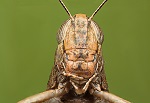
Bomb-Sniffing Cyborg Locusts
When a special swarm of locusts descend, they won't be after crops. Their mission is to sniff out explosives because these are cyborg locusts developed by the US Navy.
Locusts have a highly sensitive olfactory system that can pick out different explosive chemicals such as ammonium nitrate, TNT, and a plastic explosive called PETN. The researchers used a technology called biorobotic sensing which they used to measure the activity of a locust's brain cells in response to what it was smelling. Specific brain cells responded to certain explosive chemicals. This establishes a pattern of neuron activity that became the biosignature for the different explosives.
Researchers then implanted electrodes in the locusts' brain that can read these biosignatures without interfering with the insect's flight. Depending on which brain cells became activated and the type of activity, researchers could tell what the locusts were smelling. They could even tell how close the insects were to the source from the concentration of chemicals in the area. And the bugs could detect these chemicals in an amazing five hundred milliseconds.
One way to use these cyborg locusts is to release them in a suspect site and allow them to sniff out what's there. They're disposable and inexpensive. With an ongoing locust plague destroying large swaths of crops in East Africa, this is one way these bugs can make up for their destructive reputation.
More Information
Bomb-sniffing locusts can slip into tight spots
Dogs may be the traditional animal for sniffing explosives, but when it comes to getting into hard-to-reach spaces, the military are looking towards a smaller option.The US navy has invested $750,000 into research to design a “bomb-sniffing cyborg locust”, and turn the pest into a sophisticated weapon.
Researchers Move Closer to Bomb-Sniffing Cyborg Locusts
Scientists were able to hijack a locust's olfactory system to detect different explosives within a few hundred milliseconds.
Explosive sensing with insect-based biorobots
Stand-off chemical sensing is an important capability with applications in several domains including homeland security. Engineered devices for this task, popularly referred to as electronic noses, have limited capacity compared to the broad-spectrum abilities of the biological olfactory system. Therefore, we propose a hybrid bio-electronic solution that directly takes advantage of the rich repertoire of olfactory sensors and sophisticated neural computational framework available in an insect olfactory system.