Recent Episodes
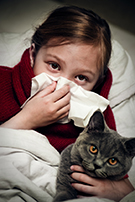
Cat Allergy Vaccine
Norbert: We may have a solution that could save marriages. It's a vaccine.
Dave: A vaccine to save marriages? Someone's getting rich.
Norbert: Well, not all marriages, just the ones involving cat allergies. If a loved one with a cat allergy stands between you and your feline, there's hope in a vaccine called Cicassia.
It significantly eased symptoms such as runny nose and watery eyes in clinical trials. Those are allergic reactions to cat dander, which are microscopic pieces of dead skin that carry a protein called Fel d 1. Cats secrete it onto their skin which then gets on furniture, clothing, and in the air.
Normally the body treats this protein like any of the millions of antigens or foreign matter entering our bodies. Either there's no threat or the antigen is removed without us being aware of it. But some immune systems overreact by making too much immunoglobulin E - an antibody that triggers a release of histamines.
One effect of histamines is to relax capillaries, which expands them, allowing blood fluids and antibodies to pass through. That's why people with cat allergies suffer a runny nose and watery eyes. The capillaries around those areas expand. The body is quickly, and unnecessarily, reacting to the cat protein, sending antibodies there to eliminate it and wash it away. Other histamine reactions are more severe and even deadly, such as anaphalactic shock.
The new cat vaccine stops the immune system from reacting by incorporating pieces from the cat protein. Introducing Fel d 1 to the body this way shifts the immune response so it does not see the protein as a threat. If this vaccine and a few others in the works are approved, they'll be the "cat's meow!"