Medical Discovery NewsBridging the World of Medical Discovery and You

Recent Episodes

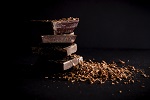
Chocolate Helps Burn Body Fat

MP3 WAV

  • Year over year, among the top three New Year's resolutions is losing weight. The good news this year is keep eating chocolate. In fact, eat more. Yup. Researchers found that eating chocolate in the mornings and evenings changes your metabolism so that you burn more fat.well, in post-menopausal women

    The study group involved nineteen Spanish postmenopausal women between the ages of forty-five and sixty-five. They ate a quarter pound of milk chocolate within an hour of waking or going to bed for two weeks. Yes, that's a lot of chocolate, about a third of their daily calories, although the control group did not have any. They also all ate their normal diets.

    Researchers found that no one gained weight despite all the chocolate and those who ate it reported feeling less hungry and eating less of other sweets. The Morning chocolate eaters lowered their daily calorie intake by three hundred calories while the evening eaters ate one hundred fifty fewer calories. The latter group also saw a seven percent bump in activity levels and thirty five percent bump in the amount of carbohydrates burned in the blood. The morning chocolate women saw smaller waist sizes, lower stress hormones and greater fat burning. Both groups had a change in their gut microbiome. This study suggests chocolate has a broad effect on appetite, sleep and how we process food for energy.

    So far, the study is limited to post-menpausal women, but wouldn't it be nice if the rest of us had the same benefit!

More Information

High Intake of Chocolate in the Morning Could Help Burn Body Fat, Reduce Blood Glucose Levels
A new study, led by Brigham and Women's Hospital scientists, suggests that having chocolate in the morning or in the evening/night results in differential effects on hunger and appetite, lipid oxidation, fasting glucose, microbiota, and sleep and temperature rhythms; the consumption of a rather high amount of chocolate (100 g) concentrated in a narrow timing window in the morning could help to burn body fat and to decrease glucose levels in postmenopausal women...

Timing of chocolate intake affects hunger, substrate oxidation, and microbiota: A randomized controlled trial
Eating chocolate in the morning or in the evening/at night, may differentially affect energy balance and impact body weight due to changes in energy intake, substrate oxidation, microbiota (composition/function), and circadian-related variables...


Two individuals wearing headphones stand in a recording booth, speaking into microphones with a music stand holding printed pages between them.

 Medicine...

Medicine is constantly advancing – that is a great thing about life in the 21st century. But it doesn’t just happen. Dedicated biomedical scientists are making discoveries that translate into those new medical advances.

Biomedical science is broad, encompassing everything from social science to microbiology, biochemistry, epidemiology, to structural biology and bioinformatics to name just a few areas. And, it can involve basic fundamental biology, the use of AI and chemistry to clinical studies that evaluate new medicines in patients.

No matter the research focus, the goal is always the same, to advance human health. It may take a few months, a few years or for fundamental science, a few decades. Few people make the connection that biomedical science is medicine and that biomedical scientists are working today on the medicine of tomorrow. Our weekly 500-word newspaper columns and 2-minute radio shows and podcasts provide insights into a broad range of biomedical science topics.

Medical Discovery News is dedicated to explaining discoveries in biomedical research and their promise for the future of medicine.

Podcasts

Alternatively, you can copy and paste the following web address (URL) into iTunes as a new subscription:
https://www.medicaldiscoverynews.com/shows/audio/mdnews.rss

You can also search and subscribe to "Medical Discovery News" in the podcast section of iTunes.

The www.medicaldiscoverynews.com web site and Medical Discovery News radio program (Program) are made possible by The University of Texas Medical Branch at Galveston (UTMB)as a community service and are intended to advance UTMB's mission of providing scholarly teaching, innovative scientific investigation, and state-of-the-art patient care in a learning environment to better the health of society and its commitment to the discovery of new innovative biomedical and health services knowledge leading to increasingly effective and accessible health care for the citizens of Texas.

All information provided on the web site and in the Program is for informational purposes only and is not intended for use as diagnosis or treatment of a health problem or as a substitute for consulting a licensed medical professional. Any information obtained by participating as a web site visitor or program listener is not intended to and should not be considered to constitute medical advice.

Thoughts and opinions expressed on the Program or on the website are those of the authors or guests and do not necessarily reflect the opinions of UTMB. The provision of links to other websites is not to be construed as written or implied sponsorship or endorsement of such websites by UTMB.

Please contact Dr. David Niesel or Dr. Norbert Herzog via email with any concerns, suggestions or comments.

All rights are reserved to information provided on the website or other information sources. No part of these programs can be reproduced stored in a retrieval system or transcribed in any form or by any means for personal or financial gained without the express written permission of Drs. Niesel and Dr. Herzog.