Medical Discovery NewsBridging the World of Medical Discovery and You

Recent Episodes

CRISPR to the Rescue

MP3 WAV

  • Genetic therapies present exciting possibilities and one place that's now leading with cutting edge experiments is China. Today only ten human clinical trials in the world use a technology called CRISPR which makes gene editing possible, and nine of those trials are in China. CRISPR is short for Clustered Regularly Interspaced Short Palindromic Repeats.

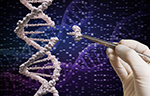
    In bacteria, where CRISPR was first described and characterized, it represents a primitive immune system that protects bacteria from invading viruses. Some clever biologists recognized that the CRISPR system could be used for genome editing. This means we have a powerful tool to correct genetic mistakes and to alter the properties of human cells ' like fighting cancer.

    In two thousand fifteen, Chinese scientists used CRISPR to edit the genome of a human embryo. This sent shock waves around the scientific world and now other Chinese scientists are altering human immune cells to enhance their cancer fighting properties.

    One approach alters a gene for a protein called programmed cell death protein one. Scientists have used CRISPR to knock out the protein in immune cells. By doing so, cancer cells can't activate this protein and cause the immune cell to self-destruct. This allows immune cells to do their job of killing cancer cells. Variations of this approach are also being used to attack prostate, lung, and bladder cancers. Others are replacing T-cell receptors with ones that destroy leukemia cells.

    Even though some fear CRISPR could be used to create 'customized' super babies, it can become a powerful weapon against our most stubborn diseases.

More Information

China Is Surging Ahead In The Race To Beat Cancer With CRISPR
China's second human CRISPR trial is now underway. Soon, the U.S. will be conducting its first trial. The first one to try may not be as relevant; who succeeds will be what matters....

Doctors In China Lead Race To Treat Cancer By Editing Genes
Shaorong Deng has advanced cancer of the esophagus, a common form of cancer in China. He went through radiation and chemotherapy, but the cancer kept spreading. Now he's back at the hospital to get an experimental treatment. It involves using cells from his own immune system, known as T cells, after they have been taken out of his body and genetically altered in a lab by the gene-editing tool called CRISPR...


 Medicine...

Medicine is constantly advancing – that is a great thing about life in the 21st century. But it doesn’t just happen. Dedicated biomedical scientists are making discoveries that translate into those new medical advances.

Biomedical science is broad, encompassing everything from social science to microbiology, biochemistry, epidemiology, to structural biology and bioinformatics to name just a few areas. And, it can involve basic fundamental biology, the use of AI and chemistry to clinical studies that evaluate new medicines in patients.

No matter the research focus, the goal is always the same, to advance human health. It may take a few months, a few years or for fundamental science, a few decades. Few people make the connection that biomedical science is medicine and that biomedical scientists are working today on the medicine of tomorrow. Our weekly 500-word newspaper columns and 2-minute radio shows and podcasts provide insights into a broad range of biomedical science topics.

Medical Discovery News is dedicated to explaining discoveries in biomedical research and their promise for the future of medicine.

Podcasts

Alternatively, you can copy and paste the following web address (URL) into iTunes as a new subscription:
https://www.medicaldiscoverynews.com/shows/audio/mdnews.rss

You can also search and subscribe to "Medical Discovery News" in the podcast section of iTunes.

See all podcasts and radio stations

The www.medicaldiscoverynews.com web site and Medical Discovery News radio program (Program) are made possible by The University of Texas Medical Branch at Galveston (UTMB)as a community service and are intended to advance UTMB's mission of providing scholarly teaching, innovative scientific investigation, and state-of-the-art patient care in a learning environment to better the health of society and its commitment to the discovery of new innovative biomedical and health services knowledge leading to increasingly effective and accessible health care for the citizens of Texas.

All information provided on the web site and in the Program is for informational purposes only and is not intended for use as diagnosis or treatment of a health problem or as a substitute for consulting a licensed medical professional. Any information obtained by participating as a web site visitor or program listener is not intended to and should not be considered to constitute medical advice.

Thoughts and opinions expressed on the Program or on the website are those of the authors or guests and do not necessarily reflect the opinions of UTMB. The provision of links to other websites is not to be construed as written or implied sponsorship or endorsement of such websites by UTMB.

Please contact Dr. David Niesel or Dr. Norbert Herzog via email with any concerns, suggestions or comments.

All rights are reserved to information provided on the website or other information sources. No part of these programs can be reproduced stored in a retrieval system or transcribed in any form or by any means for personal or financial gained without the express written permission of Drs. Niesel and Dr. Herzog.