Medical Discovery NewsBridging the World of Medical Discovery and You

Recent Episodes

Dancing Molecules Might Restore Your Dancing

MP3 WAV

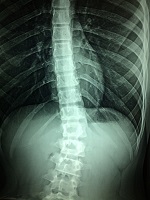
  • The idea that serious spinal cord injuries are untreatable may not be true any longer. Scientists have developed a "dancing molecules" approach. It can repair the spinal cord and reverse paralysis.

    In earlier studies, scientists built artificial scaffolds made partly with short proteins called peptides to signal tissue regeneration. But the results weren't great.

    The new study showed that when the movement of the signaling peptides is tuned just right, they can activate the cellular pathways important in spinal repair.

    The researchers created a liquid that once injected into the spinal column, forms a gel composed of a network of nanofibers that mimics the natural matrix of the spinal column. The gel enhances the motion of the two signaling peptides which increases their ability to attach to cell receptors and activate those pathways.

    One pathway stimulates the long threadlike parts of nerve cells which then cells to communicate helping regeneration.

    The second signaling pathway stimulates the growth of supporting cells such as blood vessels. In just four weeks after a single injection of this gel into paralyzed mice, they could walk again.

    The treatment has been through human clinical trials and safety testing. It was able to repair nerve damage and improved both sensations and mobility.

    Similar approaches could one day be used to regenerate tissues in heart disease, liver failure and even some cancers.

    You can now hear additional episodes on many of your favorite podcast providers - visit Buzzsprout to subscribe.

More Information

Bioactive scaffolds with enhanced supramolecular motion promote recovery from spinal cord injury
The signaling of cells by scaffolds of synthetic molecules that mimic proteins is known to be effective in the regeneration of tissues. Here, we describe peptide amphiphile supramolecular polymers containing two distinct signals and test them in a mouse model of severe spinal cord injury...

Fixing Spinal Cord Injuries With 'Dancing Molecules'
In a new injectable therapy that repairs spinal cord injuries, molecules form nanofibers that 'dance' around, making communication with cells to repair the injured spinal cord more likely...

A dynamic duo: Self-assembly of nanofibers facilitates the repair of spinal cord injury in mice
The extracellular matrix (ECM) is a vital component of all tissues that contributes to the physical and chemical cues that can affect cell fate. The design of materials to encourage the repair of tissue after injury is a long-standing goal of regenerative medicine. Supramolecular polymers based on reversible noncovalent interactions form fibrous materials that can act as simple but tailored ECM mimics. On page 848 of this issue, Álvarez et al. (1) show that tuning the dynamics of bioactive supramolecular polymers correlates with the degree of regeneration and functional outcome after acute spinal cord injury (SCI) in mice...

Two individuals wearing headphones stand in a recording booth, speaking into microphones with a music stand holding printed pages between them.

 Medicine...

Medicine is constantly advancing – that is a great thing about life in the 21st century. But it doesn’t just happen. Dedicated biomedical scientists are making discoveries that translate into those new medical advances.

Biomedical science is broad, encompassing everything from social science to microbiology, biochemistry, epidemiology, to structural biology and bioinformatics to name just a few areas. And, it can involve basic fundamental biology, the use of AI and chemistry to clinical studies that evaluate new medicines in patients.

No matter the research focus, the goal is always the same, to advance human health. It may take a few months, a few years or for fundamental science, a few decades. Few people make the connection that biomedical science is medicine and that biomedical scientists are working today on the medicine of tomorrow. Our weekly 500-word newspaper columns and 2-minute radio shows and podcasts provide insights into a broad range of biomedical science topics.

Medical Discovery News is dedicated to explaining discoveries in biomedical research and their promise for the future of medicine.

Podcasts

Alternatively, you can copy and paste the following web address (URL) into iTunes as a new subscription:
https://www.medicaldiscoverynews.com/shows/audio/mdnews.rss

You can also search and subscribe to "Medical Discovery News" in the podcast section of iTunes.

The www.medicaldiscoverynews.com web site and Medical Discovery News radio program (Program) are made possible by The University of Texas Medical Branch at Galveston (UTMB)as a community service and are intended to advance UTMB's mission of providing scholarly teaching, innovative scientific investigation, and state-of-the-art patient care in a learning environment to better the health of society and its commitment to the discovery of new innovative biomedical and health services knowledge leading to increasingly effective and accessible health care for the citizens of Texas.

All information provided on the web site and in the Program is for informational purposes only and is not intended for use as diagnosis or treatment of a health problem or as a substitute for consulting a licensed medical professional. Any information obtained by participating as a web site visitor or program listener is not intended to and should not be considered to constitute medical advice.

Thoughts and opinions expressed on the Program or on the website are those of the authors or guests and do not necessarily reflect the opinions of UTMB. The provision of links to other websites is not to be construed as written or implied sponsorship or endorsement of such websites by UTMB.

Please contact Dr. David Niesel or Dr. Norbert Herzog via email with any concerns, suggestions or comments.

All rights are reserved to information provided on the website or other information sources. No part of these programs can be reproduced stored in a retrieval system or transcribed in any form or by any means for personal or financial gained without the express written permission of Drs. Niesel and Dr. Herzog.