Medical Discovery NewsBridging the World of Medical Discovery and You

Recent Episodes

Driving Cancer Cells Away Without a CAR

MP3 WAV

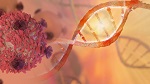
  • The human immune system is like a home security system. It's on alert twenty-four-seven, three-sixty-five for invaders and even malignant cells. That's why scientists have harnessed our immune system, specifically T cells, to kill cancer cells, Using a technology called CAR or chimeric antigen receptor, they engineer a patient's own T cells to recognize and destroy cancer cells. But the therapy can also harm patients in some cases from the immune system becoming over-activated.

    To avoid this risk, researchers have just found a way to use non-immune cells to target cancer cells in the lab, specifically human embryonic kidney cells and human mesenchymal stem cells. These engineered cells are called synthetic T cells and they're designed to recognize cancer cells by placing sensor receptors and cell-killing technology on them.

    Once a cancer cell is detected, a series of cellular reactions occur within the T cell which produces a drug-activating protein. This protein is then transferred to surrounding cancer cells which are killed by the activated drug. One scientist compared it to an explosion where one single synthetic T cell destroys many cancer cells.

    The therapy has two benefits. First, only cells in the immediate area are killed which limits surrounding tissue damage. Also, these synthetic T cells may induce fewer side effects since they don't over-activate the immune system.

    All this sounds great but the work hasn't even moved into animal testing, much less clinical trials on human patients. So, there's a ways to go, however, it's an exciting development in cell therapy and the efforts to fight cancer.

More Information

Non-immune cells equipped with T cell receptor-like signaling for cancer cell ablation
The ability to engineer custom cell-contact-sensing output devices into human non-immune cells would be useful for extending the applicability of cell-based cancer therapies and avoiding risks associated with engineered immune cells. Here, we have developed a new class of synthetic T-cell receptor-like signal-transduction device that functions efficiently in human non-immune cells and triggers release of output molecules specifically upon sensing contact with a target cell...

E-cigarettes cause more harm than good on a population level
Although some adults may successfully quit smoking through the use of e-cigarettes, the number of those who benefit from the product is far outweighed by the number of teenagers and young adults who transition from e-cigarette use to cigarette smoking and the number of years lost on a population level, according to research published in PLoS ONE..

Researchers Build a Cancer Immunotherapy Without Immune Cells
A team has engineered two stem cell lines into 'synthetic T cells' that destroy breast cancer cells in vitro...

Two individuals wearing headphones stand in a recording booth, speaking into microphones with a music stand holding printed pages between them.

 Medicine...

Medicine is constantly advancing – that is a great thing about life in the 21st century. But it doesn’t just happen. Dedicated biomedical scientists are making discoveries that translate into those new medical advances.

Biomedical science is broad, encompassing everything from social science to microbiology, biochemistry, epidemiology, to structural biology and bioinformatics to name just a few areas. And, it can involve basic fundamental biology, the use of AI and chemistry to clinical studies that evaluate new medicines in patients.

No matter the research focus, the goal is always the same, to advance human health. It may take a few months, a few years or for fundamental science, a few decades. Few people make the connection that biomedical science is medicine and that biomedical scientists are working today on the medicine of tomorrow. Our weekly 500-word newspaper columns and 2-minute radio shows and podcasts provide insights into a broad range of biomedical science topics.

Medical Discovery News is dedicated to explaining discoveries in biomedical research and their promise for the future of medicine.

Podcasts

Alternatively, you can copy and paste the following web address (URL) into iTunes as a new subscription:
https://www.medicaldiscoverynews.com/shows/audio/mdnews.rss

You can also search and subscribe to "Medical Discovery News" in the podcast section of iTunes.

The www.medicaldiscoverynews.com web site and Medical Discovery News radio program (Program) are made possible by The University of Texas Medical Branch at Galveston (UTMB)as a community service and are intended to advance UTMB's mission of providing scholarly teaching, innovative scientific investigation, and state-of-the-art patient care in a learning environment to better the health of society and its commitment to the discovery of new innovative biomedical and health services knowledge leading to increasingly effective and accessible health care for the citizens of Texas.

All information provided on the web site and in the Program is for informational purposes only and is not intended for use as diagnosis or treatment of a health problem or as a substitute for consulting a licensed medical professional. Any information obtained by participating as a web site visitor or program listener is not intended to and should not be considered to constitute medical advice.

Thoughts and opinions expressed on the Program or on the website are those of the authors or guests and do not necessarily reflect the opinions of UTMB. The provision of links to other websites is not to be construed as written or implied sponsorship or endorsement of such websites by UTMB.

Please contact Dr. David Niesel or Dr. Norbert Herzog via email with any concerns, suggestions or comments.

All rights are reserved to information provided on the website or other information sources. No part of these programs can be reproduced stored in a retrieval system or transcribed in any form or by any means for personal or financial gained without the express written permission of Drs. Niesel and Dr. Herzog.