Recent Episodes
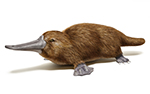
Duck-Billed Diabetes Treatment
What's the size of a kitten, has webbed feet, a paddle shaped tail, and deadly spurs on its feet?
One unusual mammal, that's for sure. It's the duck-billed platypus that lives in Australia and Tasmania. Now it has something unique to offer humans.
The venom in the males' feet may lead to a new treatment for type II diabetes. Among the components of Platypus venom is a molecule called Glucagon-like peptide-1 or GLP-1. We humans also possess this molecule which promotes insulin release. Insulin is necessary to trigger cells to take up the sugar in our blood that otherwise would damage organs and cause other life threatening complications. Diabetics either don't make enough insulin or their cells do not respond to it. But what if the Platypus GLP-1 can change that?
Unlike the human molecule, which degrades very quickly, the Platypus GLP-1 is highly stable. That led scientists to speculate that if they knew why it was so robust, maybe it could become the basis of a new drug to treat type II diabetes. There are already drugs on the market based on the ability of GLP-1 to increase insulin release, but with side effects.
As more people develop diabetes in the U.S., researchers are looking for therapeutics that work better than what we have. Perhaps the extraordinary platypus holds the answer. It would be an addition to the list of powerful medicines that have come from venoms.
This gives us even more reason to protect our natural environment, as we depend on our animal allies and they in turn rely on us to keep them alive.
More Information
GLP-1'Based Therapy for Diabetes: What You Do Not Know Can Hurt You
Butler PC, Dry S, and Elashoff R. Diabetes Care. 2010;33(2):453-455. doi:10.2337/dc09-1902.
Diabetes
Diabetes is a disease that occurs when your blood glucose, also called blood sugar, is too high. Over time, having too much glucose in your blood can cause health problems, such as heart disease, nerve damage, eye problems, and kidney disease. You can take steps to prevent diabetes or manage it...
How Nature's Deadliest Venoms Are Saving Lives
Animal venoms have evolved to immobilize and kill prey in seconds. Venomous toxins target vital body parts with extreme precision and potency, making them valuable templates to craft new drugs...