Recent Episodes
Fishing for Answers
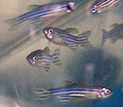
Just about every important drug or therapy today is possible thanks to animal models such as lab mice. But we are starting to see scientists favor an unexpected lab animal: the zebrafish.
The small freshwater fish is native to India and makes a great model for studying aspects of human disease. That's because its entire genome is already sequenced, its genes are easily manipulated, and its embryos are transparent and mature quickly.
A couple of recent studies show why they are important. In one, scientists studied whether a human gene called SETDB1 spurs the growth of melanoma, a deadly skin cancer. To find out, scientists introduced a copy of the gene into zebrafish embryos, with the goal of having the genes become a part of melanocytes, cells that pigment the skin.
Once that happened, the protein that the gene encodes began to change cell functions and prevented other genes from working properly. This accelerated the growth of melanoma, which scientists believe happens in humans. Future studies can target this gene.
Another study uses zebrafish to explore autism. Fish aren't autistic, but we do share genes involved in the disorder. The research focused on twenty four genes missing or duplicated in people with autism.
One at a time, scientists deleted these genes in zebrafish embryos and watched for brain abnormalities such as changes in brain tissue and in the structure of axons which transmit signals between brain cells. Again, the results can help researchers focus on new treatments for autism. Who would have thought a tiny fish could be helpful?
Photo credit: Bruce Riley, PhD, Texas A&M University, 2012
More Information
Zebrafish
This Wikipedia entry has all the information on Danio rerio, aka the zebrafish.
Fish Shed Light on Human Melanoma
Bioscience Technology article on the use of Zebrafish as a model to study aspects of human melanoma.
Fishing for Answers to Autism Puzzle
Bioscience Technology article describing recent experiments to identify genes important in human autism.
The Zebrafish Model Organism Database
The ultimate source of info on lab usage of zebrafish.