Recent Episodes
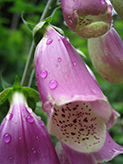
Foxglove and High Blood Pressure
Few pharmaceutical drugs are produced from plants anymore, but one commonly prescribed for heart attack patients is still produced from the colorful flower, Foxglove. Turns out the plant might also help millions of Americans with high blood pressure. It raises the level of a protein that keeps our blood pressure in check.
People began using this amazing flower in the 13th century ' to clean wounds, and even to treat leg swelling caused by heart problems. Scientifically known as Digitalis lantana and Digitalis purpurea, today its leaves are used to make digoxin. Digoxin is prescribed for congestive heart failure or atrial fibrillation, which is an irregular heartbeat. It is able to increases the force of the heart's contraction and slow the electrical impulses to regulate its rhythm.
Now scientists have discovered Digoxin could also treat high blood pressure. Researchers learned a protein, RGS2, works protectively in the body to keep blood pressure in check. They also theorized if they could increase the body's RGS2 levels, blood pressure would drop.
Hoping an RGS2 boosting drug already exists, the team began testing thousands of medications. Not only did digoxin raise RGS2 levels in lab-grown cells, it did so in mice by two to three times. It seems to work by slowing the normal degradation of the protein in mice.
Further tests need to show that raising RGS2 with digoxin does indeed lower blood pressure in humans, and study the long-term effects of taking the drug. Digoxin can be quite toxic. Since it takes the body a long time to process, the drug can build up and cause serious health problems.
If Digoxin is approved to treat high blood pressure, it will give Americans with high blood pressure one more option. It is a serious disease that can lead to heart failure, stroke, and kidney failure.
More Information
New Action for Ancient Heart Drug
Newswise - "An ancient heart drug that's inspired the work of herbalists and poets for centuries may treat a condition that plagues millions of overstressed and overweight Americans today..."
Medicinal Plants: Foxglove
Georgetown University offers this informational web page on the Foxglove plant.
What Is High Blood Pressure?
Everything you ever wanted to know about high blood pressure from the National Heart Lung and Blood Institute.