Medical Discovery NewsBridging the World of Medical Discovery and You

Recent Episodes

Frontotemporal Dementia

MP3 WAV

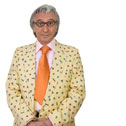
  • Imagine your surprise when a colleague, who's normally a sharp dresser, shows up in a checked sports coat with striped suit slacks.

    Six months later, he's having trouble pronouncing and finding words. Then at 52, he can no longer write. His mind is sharp yet the hard part for his family is he doesn't care about anyone or anything.

    This disorder is called Frontotemporal dementia or FTD. It used to be considered rare but now FTD is the most common cause of early onset dementia after Alzheimer's.

    The typical age when symptoms begin is between 45 and 65 years old. Patients die within five to fifteen years.

    What happens in people with FTD is the outer layers of the brain – just above the eyes and near the ears ' begin to shrink. Patients can have a hard time making or understanding speech.

    But most often, they have behavioral changes.

    Some behavior becomes impulsive and can be socially inappropriate. Patients can lack empathy, express more interest in sex, and even change their food preferences. Others become apathetic, which can include blunted emotions, bad personal hygiene, and low energy.

    In the majority of FTD cases, small pockets of brain cells die off, leaving the front part of the brain pockmarked with holes. A smaller percentage of cases are called Pick's disease, where there's a buildup of an insoluble protein called tau in the brain.

    In both these diseases, researchers linked the cause to mutations in genes on chromosome 17. But more recently, scientists are identifying chromosomal abnormalities passed on in families. In fact, in forty percent of FTD cases, patients have a family history of the disease.

    Now scientists are studying the brains of 271 patients who had FTD before they died. They hope to better understand this disease, which for now has no cure or way of slowing its progression.

More Information

Mayo Clinic is a not-for-profit medical practice dedicated to the diagnosis and treatment of virtually every type of complex illness. It is part of Mayo Clinic's mission to serve as a reliable source of health information. They have a very informative website about frontotemporal dementia here.

The University of California San Francisco has a Memory and Aging Center and a very comprehensive web page about frontotemporal dementia (FTD). The page provides information about what FTD is, the different types of FTD, the signs and symptoms, progression, treatments and what to talk to your doctor about here.

The National Institute of Neurological Disorders and Stroke is an excellent source of information on a variety of neurological disorders including frontotemporal dementia here.

Connections, a publication from the Alzheimer's Disease Education and Referral Center , included a very readable article on
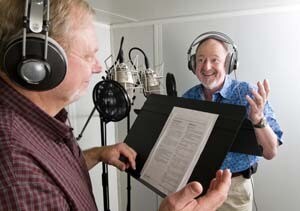

Two individuals wearing headphones stand in a recording booth, speaking into microphones with a music stand holding printed pages between them.

 Medicine...

Medicine is constantly advancing – that is a great thing about life in the 21st century. But it doesn’t just happen. Dedicated biomedical scientists are making discoveries that translate into those new medical advances.

Biomedical science is broad, encompassing everything from social science to microbiology, biochemistry, epidemiology, to structural biology and bioinformatics to name just a few areas. And, it can involve basic fundamental biology, the use of AI and chemistry to clinical studies that evaluate new medicines in patients.

No matter the research focus, the goal is always the same, to advance human health. It may take a few months, a few years or for fundamental science, a few decades. Few people make the connection that biomedical science is medicine and that biomedical scientists are working today on the medicine of tomorrow. Our weekly 500-word newspaper columns and 2-minute radio shows and podcasts provide insights into a broad range of biomedical science topics.

Medical Discovery News is dedicated to explaining discoveries in biomedical research and their promise for the future of medicine.

Podcasts

Alternatively, you can copy and paste the following web address (URL) into iTunes as a new subscription:
https://www.medicaldiscoverynews.com/shows/audio/mdnews.rss

You can also search and subscribe to "Medical Discovery News" in the podcast section of iTunes.

The www.medicaldiscoverynews.com web site and Medical Discovery News radio program (Program) are made possible by The University of Texas Medical Branch at Galveston (UTMB)as a community service and are intended to advance UTMB's mission of providing scholarly teaching, innovative scientific investigation, and state-of-the-art patient care in a learning environment to better the health of society and its commitment to the discovery of new innovative biomedical and health services knowledge leading to increasingly effective and accessible health care for the citizens of Texas.

All information provided on the web site and in the Program is for informational purposes only and is not intended for use as diagnosis or treatment of a health problem or as a substitute for consulting a licensed medical professional. Any information obtained by participating as a web site visitor or program listener is not intended to and should not be considered to constitute medical advice.

Thoughts and opinions expressed on the Program or on the website are those of the authors or guests and do not necessarily reflect the opinions of UTMB. The provision of links to other websites is not to be construed as written or implied sponsorship or endorsement of such websites by UTMB.

Please contact Dr. David Niesel or Dr. Norbert Herzog via email with any concerns, suggestions or comments.

All rights are reserved to information provided on the website or other information sources. No part of these programs can be reproduced stored in a retrieval system or transcribed in any form or by any means for personal or financial gained without the express written permission of Drs. Niesel and Dr. Herzog.