Medical Discovery NewsBridging the World of Medical Discovery and You

Recent Episodes

Heart Disease Before Fast Food

MP3 WAV

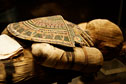
  • As the woman lay in the CAT scanner, the technician almost said, "Please Hold Your Breath," but then realized he didn't have to. The patient was a mummy who died 3500 years ago and is one of 22 from the museum of Egyptian Antiquities who underwent CAT scans.

    The purpose? To assess them for cardiovascular disease.

    That is because a team of U.S. and Egyptian cardiologists wanted to know just how widespead heart disease was in ancient times. The results show more than half the mummies had calcifications in their artery walls.

    They also had vascular disease, the very same type of cardiovascular disease people today suffer.

    One of the mummies is Lady Raj - nursemaid to Queen Nefertiti. Lady Raj lived to be about 30 to 40 years old and died around 1530 B.C. That was 300 years before the time of Moses and two hundred years before King Tutankhamen.

    Her CAT scan revealed calcified atherosclerotic plaques in her aorta even then. In fact, her case was the worst. All this is surprising, since we consider heart disease a modern day affliction.

    So what risk factors did these ancient Egyptians face? In general, Egyptians who were mummified were more privileged and lived a lifestyle with a higher risk for heart disease.

    They ate beef, duck and other poultry. And, since refrigeration was unavailable, they used salt to preserve meat. At the time, tobacco wasn't available and with little mechanical transportation, they were probably physically active.

    That tells us they didn't have all the modern day risk factors like smoking, sedentary lifestyles and diets rich in saturated fats, salt and processed sugars.

    Yet they did have heart disease, which suggests we may have a genetic predisposition to develop atherosclerosis.

    Very provocative and maybe useful in developing new therapeutics, as more of us face heart disease.

More Information

A feature in Science Daily describes the studies reported in the Journal of the American Medical Association that hardening of the arteries was detected in 3,500 year old Egyptian mummies, suggesting that the factors causing heart attack and stroke are not only modern ones; they afflicted ancient people, too. There are also links for more fascinating information.
For more information...

A similar article appeared in Science Magazine and can be read online here and also at Discovery News where there are several additional links to information about ancient Egyptians.

For more information about coronary heart disease, go to one of our favorite sources of information, Medline Plus. MedlinePlus brings together authoritative information from NLM, the National Institutes of Health, and other government agencies and health-related organizations. MedlinePlus also has extensive information about drugs, an illustrated medical encyclopedia, interactive patient tutorials, and latest health news.
For more information...

To learn about atherosclerosis, and what you can do to prevent it, treat it and live with it, go here.

Two individuals wearing headphones stand in a recording booth, speaking into microphones with a music stand holding printed pages between them.

 Medicine...

Medicine is constantly advancing – that is a great thing about life in the 21st century. But it doesn’t just happen. Dedicated biomedical scientists are making discoveries that translate into those new medical advances.

Biomedical science is broad, encompassing everything from social science to microbiology, biochemistry, epidemiology, to structural biology and bioinformatics to name just a few areas. And, it can involve basic fundamental biology, the use of AI and chemistry to clinical studies that evaluate new medicines in patients.

No matter the research focus, the goal is always the same, to advance human health. It may take a few months, a few years or for fundamental science, a few decades. Few people make the connection that biomedical science is medicine and that biomedical scientists are working today on the medicine of tomorrow. Our weekly 500-word newspaper columns and 2-minute radio shows and podcasts provide insights into a broad range of biomedical science topics.

Medical Discovery News is dedicated to explaining discoveries in biomedical research and their promise for the future of medicine.

Podcasts

Alternatively, you can copy and paste the following web address (URL) into iTunes as a new subscription:
https://www.medicaldiscoverynews.com/shows/audio/mdnews.rss

You can also search and subscribe to "Medical Discovery News" in the podcast section of iTunes.

The www.medicaldiscoverynews.com web site and Medical Discovery News radio program (Program) are made possible by The University of Texas Medical Branch at Galveston (UTMB)as a community service and are intended to advance UTMB's mission of providing scholarly teaching, innovative scientific investigation, and state-of-the-art patient care in a learning environment to better the health of society and its commitment to the discovery of new innovative biomedical and health services knowledge leading to increasingly effective and accessible health care for the citizens of Texas.

All information provided on the web site and in the Program is for informational purposes only and is not intended for use as diagnosis or treatment of a health problem or as a substitute for consulting a licensed medical professional. Any information obtained by participating as a web site visitor or program listener is not intended to and should not be considered to constitute medical advice.

Thoughts and opinions expressed on the Program or on the website are those of the authors or guests and do not necessarily reflect the opinions of UTMB. The provision of links to other websites is not to be construed as written or implied sponsorship or endorsement of such websites by UTMB.

Please contact Dr. David Niesel or Dr. Norbert Herzog via email with any concerns, suggestions or comments.

All rights are reserved to information provided on the website or other information sources. No part of these programs can be reproduced stored in a retrieval system or transcribed in any form or by any means for personal or financial gained without the express written permission of Drs. Niesel and Dr. Herzog.