Medical Discovery NewsBridging the World of Medical Discovery and You

Recent Episodes

How the Worm Got Away

MP3 WAV

  • The war torn South Sudan and Northern Uganda both saw thousands of its children develop a severe form of epilepsy starting in 1990. When the children were given food or exposed to cold temperatures, they uncontrollably nodded their heads. Their disease worsened, leading to disability and often death.

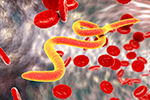
    Recently scientists found a possible link. They believe infection by a parasitic worm, Onchocerca volvulus, is triggering the children's own immune system to attack their neurons. The first clue was that areas with high rates of infection by the worm, which causes river blindness, also correlated with high rates of the nodding syndrome.

    In the new research, scientists looked in patients' blood and cerebral spinal fluid for antibodies that reacted to the person's own proteins. They identified four antibodies that were one hundred times higher than in unaffected villagers.

    In particular, antibodies to a protein called leiomodin-one or LM-one were found in over half of the nodding syndrome children and in much higher amounts. When researchers added these antibodies to cultured human neurons, the neurons died suggesting the same was happening inside the patients.

    It turns out the worm carries a protein that resembles the human LM-one. This is called molecular mimicry, where the worm evolved to create these similar proteins in order to divert its host so attack itself giving the worm a chance to survive. These results are not definitive, but could lead to promising treatment for over thirty one African countries that now report nodding syndrome.

More Information

Mystery nodding syndrome may be triggered by parasitic worm
In some communities, roughly half of families had at least one child with the condition, called nodding syndrome; by 2013, an estimated 1600 children in Uganda were affected. But the cause of the devastation was a mystery. Now, a study finds that a parasitic worm often found in the children might trigger the body's own defenses to attack neurons...

South Sudan country profile
South Sudan gained independence from Sudan on 9 July 2011 as the outcome of a 2005 agreement that ended Africa's longest-running civil war...

Ivermectin (Systemic)
Ivermectin is a member of the avermectin class of broad-spectrum antiparasitic agents which have a unique mode of action...

 Medicine...

Medicine is constantly advancing – that is a great thing about life in the 21st century. But it doesn’t just happen. Dedicated biomedical scientists are making discoveries that translate into those new medical advances.

Biomedical science is broad, encompassing everything from social science to microbiology, biochemistry, epidemiology, to structural biology and bioinformatics to name just a few areas. And, it can involve basic fundamental biology, the use of AI and chemistry to clinical studies that evaluate new medicines in patients.

No matter the research focus, the goal is always the same, to advance human health. It may take a few months, a few years or for fundamental science, a few decades. Few people make the connection that biomedical science is medicine and that biomedical scientists are working today on the medicine of tomorrow. Our weekly 500-word newspaper columns and 2-minute radio shows and podcasts provide insights into a broad range of biomedical science topics.

Medical Discovery News is dedicated to explaining discoveries in biomedical research and their promise for the future of medicine.

Podcasts

Alternatively, you can copy and paste the following web address (URL) into iTunes as a new subscription:
https://www.medicaldiscoverynews.com/shows/audio/mdnews.rss

You can also search and subscribe to "Medical Discovery News" in the podcast section of iTunes.

See all podcasts and radio stations

The www.medicaldiscoverynews.com web site and Medical Discovery News radio program (Program) are made possible by The University of Texas Medical Branch at Galveston (UTMB)as a community service and are intended to advance UTMB's mission of providing scholarly teaching, innovative scientific investigation, and state-of-the-art patient care in a learning environment to better the health of society and its commitment to the discovery of new innovative biomedical and health services knowledge leading to increasingly effective and accessible health care for the citizens of Texas.

All information provided on the web site and in the Program is for informational purposes only and is not intended for use as diagnosis or treatment of a health problem or as a substitute for consulting a licensed medical professional. Any information obtained by participating as a web site visitor or program listener is not intended to and should not be considered to constitute medical advice.

Thoughts and opinions expressed on the Program or on the website are those of the authors or guests and do not necessarily reflect the opinions of UTMB. The provision of links to other websites is not to be construed as written or implied sponsorship or endorsement of such websites by UTMB.

Please contact Dr. David Niesel or Dr. Norbert Herzog via email with any concerns, suggestions or comments.

All rights are reserved to information provided on the website or other information sources. No part of these programs can be reproduced stored in a retrieval system or transcribed in any form or by any means for personal or financial gained without the express written permission of Drs. Niesel and Dr. Herzog.