Medical Discovery NewsBridging the World of Medical Discovery and You

Recent Episodes

How to Be Dense in Old Age

MP3 WAV

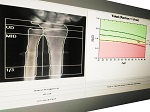
  • One in two women will break a bone in their lifetime. For some, the bones become so porous as they age that even a sneeze can fracture a bone. But what if bone loss is not inevitable? In a surprising discovery, researchers were able to increase the bone mass of female mice by eight hundred percent through targeting the hormone, estrogen.

    In the blood, estrogen regulates sexual development, plays a role in the heart, breasts, skin and hair, as well as bone development. But we're not sure of its role in the brain. Researchers wanted to see how estrogen-sensitive nerve cells in the brain's hypothalamus affect metabolism.

    The hypothalamus links the nervous system to the endocrine system, where hormones are made. Together they regulate essential bodily functions such as sex drive and heart rate. To see how estrogen impacts this system, scientists blocked the receptors for estrogen in the hypothalamus and saw that the mice gained weight.

    They thought it was fat or muscle, but they were amazed to find the weight was bone mass. Not only had it grown by eight hundred percent, the bones became super strong. Researchers then focused on a region of the hypothalamus called the arcuate nucleus. When they blocked the estrogen receptors here in mice with bone density loss of seventy percent, half of it returned in just weeks.

    The theory is that after puberty, estrogen in the hypothalamus tells the body to divert energy away from bone growth to reproduction. The estrogen blocked mice were able to maintain their bone density through old age, so this offers an exciting path for scientists to explore. This brain to bone signaling pathway may be key to allowing women to keep their bone strength well into old age.

More Information

Osteoporosis breakthrough: Bone mass increased by 800 percent
A groundbreaking set of studies has found that blocking certain receptors in the brain leads to the growth of remarkably strong bones. Could a new osteoporosis treatment be on the horizon?...

Estrogen signaling in arcuate Kiss1 neurons suppresses a sex-dependent female circuit promoting dense strong bones
We propose that a newly-identified female brain-to-bone pathway exists as a homeostatic regulator diverting calcium and energy stores from bone building when energetic demands are high. Our work reveals a previously unknown target for treatment of age-related bone disease...

National Osteoporosis Foundation Osteoporosis Fast Facts
Osteoporosis is a disease of the bone that makes a person's bones weak and more likely to break. Approximately 10 million Americans have osteoporosis and another 44 million have low bone density, placing them at increased risk..


Two individuals wearing headphones stand in a recording booth, speaking into microphones with a music stand holding printed pages between them.

 Medicine...

Medicine is constantly advancing – that is a great thing about life in the 21st century. But it doesn’t just happen. Dedicated biomedical scientists are making discoveries that translate into those new medical advances.

Biomedical science is broad, encompassing everything from social science to microbiology, biochemistry, epidemiology, to structural biology and bioinformatics to name just a few areas. And, it can involve basic fundamental biology, the use of AI and chemistry to clinical studies that evaluate new medicines in patients.

No matter the research focus, the goal is always the same, to advance human health. It may take a few months, a few years or for fundamental science, a few decades. Few people make the connection that biomedical science is medicine and that biomedical scientists are working today on the medicine of tomorrow. Our weekly 500-word newspaper columns and 2-minute radio shows and podcasts provide insights into a broad range of biomedical science topics.

Medical Discovery News is dedicated to explaining discoveries in biomedical research and their promise for the future of medicine.

Podcasts

Alternatively, you can copy and paste the following web address (URL) into iTunes as a new subscription:
https://www.medicaldiscoverynews.com/shows/audio/mdnews.rss

You can also search and subscribe to "Medical Discovery News" in the podcast section of iTunes.

The www.medicaldiscoverynews.com web site and Medical Discovery News radio program (Program) are made possible by The University of Texas Medical Branch at Galveston (UTMB)as a community service and are intended to advance UTMB's mission of providing scholarly teaching, innovative scientific investigation, and state-of-the-art patient care in a learning environment to better the health of society and its commitment to the discovery of new innovative biomedical and health services knowledge leading to increasingly effective and accessible health care for the citizens of Texas.

All information provided on the web site and in the Program is for informational purposes only and is not intended for use as diagnosis or treatment of a health problem or as a substitute for consulting a licensed medical professional. Any information obtained by participating as a web site visitor or program listener is not intended to and should not be considered to constitute medical advice.

Thoughts and opinions expressed on the Program or on the website are those of the authors or guests and do not necessarily reflect the opinions of UTMB. The provision of links to other websites is not to be construed as written or implied sponsorship or endorsement of such websites by UTMB.

Please contact Dr. David Niesel or Dr. Norbert Herzog via email with any concerns, suggestions or comments.

All rights are reserved to information provided on the website or other information sources. No part of these programs can be reproduced stored in a retrieval system or transcribed in any form or by any means for personal or financial gained without the express written permission of Drs. Niesel and Dr. Herzog.