Medical Discovery NewsBridging the World of Medical Discovery and You

Recent Episodes

I Can See Again

MP3 WAV

  • I can tolerate reading glasses. What I'm afraid of is developing a degenerative eye disease, like many older Americans, and eventually losing my sight.

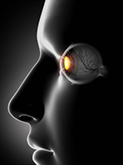
    No kidding, yet it is a reality for many seniors. Degenerative eye diseases that lead to blindness are caused by the death of photoreceptor cells, which are nerve cells in the retina that allow us to see.

    For years scientists have experimented with ways to repair or replace these cells and finally, in a recent, landmark study, researchers transplanted immature photoreceptor cells in mice and restored their vision.

    They first engineered mice with rods that didn't work. Rods and cones are the two types of photoreceptor nerve cells. The cells convert light energy into signals that travel from the optic nerve to the brain. Cones detect color and detail, while rods pick up black and white, peripheral, and low-light vision.

    In these mice with non-working rods, researchers injected their retinas with immature rod receptor cells from young healthy mice. Within four to six weeks, one in six of these transplanted rod precursor cells were close to functioning normally. They formed nerve connections and generated signals that were transmitted to the brain for visual processing.

    This is the first time transplanted photoreceptor cells have been shown to integrate into the circuitry of the retina and improve vision.

    To test their results, researchers placed treated mice and diseased mice into a dimly lit water maze. The treated mice with new rods could see well enough in low light to find a platform and climb out. The diseased mice took much longer, proving the implants work.

    Researchers say the study's success was due to the large number of photoreceptor cells they implanted. A clinical trial is already underway.

More Information

Blind Mice Sight Restored By Transplanting Light-sensitive Photoreceptors
An article highlighting the important discovery that sight could be restored by transplanting light-sensitive photoreceptors.

Photoreceptor Death in Mouse Models Of Retinitis Pigmentosa
An article about the death of photoreceptor cells in a mouse model of retinitis pigmentosa.

How Your Eyes Work
To learn the basics of how the eye works, go to this American Optometric Association website which includes links to information on how to take care of your vision. The University of Michigan also has a good site for more information about the eye here.

See All You Can See
The National Eye Institute offers this wonderful interactive web page to teach kids about the eye and vision.

Stargardt Disease
Here you can learn about Stargardt disease, the most common form of inherited juvenile macular degeneration. Inherited as an autosomal recessive trait, it is a severe form of MD that begins in late childhood and leads to legal blindness. Stargardt disease is symptomatically similar to age-related macular degeneration, and it affects approximately one in 10,000 children.

Saffron Supplementation in Stargardt's Disease
The US National Institute of Health has a great deal of information about the many clinical trials ongoing in the US. Information about one trial for treating Stargardt disease is available here.

Two individuals wearing headphones stand in a recording booth, speaking into microphones with a music stand holding printed pages between them.

 Medicine...

Medicine is constantly advancing – that is a great thing about life in the 21st century. But it doesn’t just happen. Dedicated biomedical scientists are making discoveries that translate into those new medical advances.

Biomedical science is broad, encompassing everything from social science to microbiology, biochemistry, epidemiology, to structural biology and bioinformatics to name just a few areas. And, it can involve basic fundamental biology, the use of AI and chemistry to clinical studies that evaluate new medicines in patients.

No matter the research focus, the goal is always the same, to advance human health. It may take a few months, a few years or for fundamental science, a few decades. Few people make the connection that biomedical science is medicine and that biomedical scientists are working today on the medicine of tomorrow. Our weekly 500-word newspaper columns and 2-minute radio shows and podcasts provide insights into a broad range of biomedical science topics.

Medical Discovery News is dedicated to explaining discoveries in biomedical research and their promise for the future of medicine.

Podcasts

Alternatively, you can copy and paste the following web address (URL) into iTunes as a new subscription:
https://www.medicaldiscoverynews.com/shows/audio/mdnews.rss

You can also search and subscribe to "Medical Discovery News" in the podcast section of iTunes.

The www.medicaldiscoverynews.com web site and Medical Discovery News radio program (Program) are made possible by The University of Texas Medical Branch at Galveston (UTMB)as a community service and are intended to advance UTMB's mission of providing scholarly teaching, innovative scientific investigation, and state-of-the-art patient care in a learning environment to better the health of society and its commitment to the discovery of new innovative biomedical and health services knowledge leading to increasingly effective and accessible health care for the citizens of Texas.

All information provided on the web site and in the Program is for informational purposes only and is not intended for use as diagnosis or treatment of a health problem or as a substitute for consulting a licensed medical professional. Any information obtained by participating as a web site visitor or program listener is not intended to and should not be considered to constitute medical advice.

Thoughts and opinions expressed on the Program or on the website are those of the authors or guests and do not necessarily reflect the opinions of UTMB. The provision of links to other websites is not to be construed as written or implied sponsorship or endorsement of such websites by UTMB.

Please contact Dr. David Niesel or Dr. Norbert Herzog via email with any concerns, suggestions or comments.

All rights are reserved to information provided on the website or other information sources. No part of these programs can be reproduced stored in a retrieval system or transcribed in any form or by any means for personal or financial gained without the express written permission of Drs. Niesel and Dr. Herzog.