Medical Discovery NewsBridging the World of Medical Discovery and You

Recent Episodes

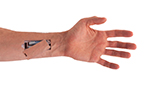
Implantable Biodegradable Batteries

MP3 WAV

  • The thought of living without smart phones can send some people into a panic attack! And the fact is, without small and powerful batteries, our pocket sized computers just wouldn't exist. The race has been on to make batteries even smaller, and in the world of medicine, to make them biocompatible. An ideal one would power a device temporarily and then biodegrade harmlessly inside the body. Several are in development.

    Australian scientists are working on a battery made of silk and gold. Batteries need three components to work. The anode and cathode are at either end and the middle is the electrolyte that allows the current to flow. In the new battery, the silk was made into a film which acts as a platform. Choline nitrate, a biochemical compound, was placed on the silk film as the electrolyte. To finish the ends, a magnesium alloy was the anode and the cathode used gold particles. The battery was sealed using additional silk. These silk bio-batteries are the size of a postage stamp, about point two millimeters thick and generates almost one volt ' more than enough to power a small device for up to two hours.

    Other researchers are also developing bio-batteries. One involves melanin, a pigment in the skin, and manganese oxide as the electrodes and sodium ions as the electrolyte. It also breaks down into non-toxic elements in the body.

    Implanted devices could monitor a tissue and send back data, provide images deep inside the body, or dispense drugs as needed. No doubt bio-batteries will become a mainstay in the near future to ensure health and treat disease.

More Information

Dissolvable Batteries Made of Silk
The biodegradable batteries produce enough voltage and should last long enough to power temporary medical implants...

 Medicine...

Medicine is constantly advancing – that is a great thing about life in the 21st century. But it doesn’t just happen. Dedicated biomedical scientists are making discoveries that translate into those new medical advances.

Biomedical science is broad, encompassing everything from social science to microbiology, biochemistry, epidemiology, to structural biology and bioinformatics to name just a few areas. And, it can involve basic fundamental biology, the use of AI and chemistry to clinical studies that evaluate new medicines in patients.

No matter the research focus, the goal is always the same, to advance human health. It may take a few months, a few years or for fundamental science, a few decades. Few people make the connection that biomedical science is medicine and that biomedical scientists are working today on the medicine of tomorrow. Our weekly 500-word newspaper columns and 2-minute radio shows and podcasts provide insights into a broad range of biomedical science topics.

Medical Discovery News is dedicated to explaining discoveries in biomedical research and their promise for the future of medicine.

Podcasts

Alternatively, you can copy and paste the following web address (URL) into iTunes as a new subscription:
https://www.medicaldiscoverynews.com/shows/audio/mdnews.rss

You can also search and subscribe to "Medical Discovery News" in the podcast section of iTunes.

See all podcasts and radio stations

The www.medicaldiscoverynews.com web site and Medical Discovery News radio program (Program) are made possible by The University of Texas Medical Branch at Galveston (UTMB)as a community service and are intended to advance UTMB's mission of providing scholarly teaching, innovative scientific investigation, and state-of-the-art patient care in a learning environment to better the health of society and its commitment to the discovery of new innovative biomedical and health services knowledge leading to increasingly effective and accessible health care for the citizens of Texas.

All information provided on the web site and in the Program is for informational purposes only and is not intended for use as diagnosis or treatment of a health problem or as a substitute for consulting a licensed medical professional. Any information obtained by participating as a web site visitor or program listener is not intended to and should not be considered to constitute medical advice.

Thoughts and opinions expressed on the Program or on the website are those of the authors or guests and do not necessarily reflect the opinions of UTMB. The provision of links to other websites is not to be construed as written or implied sponsorship or endorsement of such websites by UTMB.

Please contact Dr. David Niesel or Dr. Norbert Herzog via email with any concerns, suggestions or comments.

All rights are reserved to information provided on the website or other information sources. No part of these programs can be reproduced stored in a retrieval system or transcribed in any form or by any means for personal or financial gained without the express written permission of Drs. Niesel and Dr. Herzog.