Medical Discovery NewsBridging the World of Medical Discovery and You

Recent Episodes

Inside a Hoarder's Brain

MP3 WAV

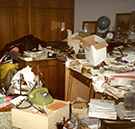
  • Whenever I catch an episode of 'Hoarders' on A&E, I'm fascinated- and baffled that people can live that way! But most hoarders can't help themselves without intervention. A study reveals a malfunction in the brain's decision-making network is behind the disorder.

    Hoarding is classified as an obsessive compulsive disorder, or OCD, which is an anxiety disorder which drives someone to do something as a result of repeated thoughts or feelings. But the new study offers evidence that hoarding is its own dysfunction. Brain scans of hoarders revealed differences between their brains and those with OCD and healthy adults.

    Hoarders were asked to decide whether to keep or toss their junk mail. They also had to decide on someone else's mail. Using functional magnetic resonance imaging or fMRI, the subjects' brains were monitored for changes and activity in the anterior cingulated cortex and insula - the decision-making network.

    Faced with whether or not to throw away a piece of their mail, hoarders felt more anxiety compared with the other groups. The scan revealed a massive increase in activity which explains why they feel overwhelmed and unable to throw anything away. In contrast, when deciding on other people's mail, that area of the brain wasn't stimulated, suggesting the malfunction allows them to ignore their own mess.

    If hoarding is reclassified as its own disorder, additional treatment methods could be tailored to help sufferers. It'd also benefit those around them who face a well documented health and fire hazard from all that clutter.

More Information

Diagnosis and Assessment of Hoarding Disorder
R.O. Frost, G. Steketee, D.F. Tolin. (2012). Annual Review of Clinical Psychology. Vol. 8, 219-242.

Comprehensive review article that presents the history in this area, the new criteria for diagnosis and a wealth of facts about this disorder.

Why aren't hoarders bothered by all that junk? Scientists find a clue
Nice, layman-friendly review of the recent study by David Tolin, PhD, at Yale University School of Medicine that describes changes in regions of the brain by fMRI leading to the hypothesis that hoarding affects and may be caused by malfunctioning in decision making.

Two individuals wearing headphones stand in a recording booth, speaking into microphones with a music stand holding printed pages between them.

 Medicine...

Medicine is constantly advancing – that is a great thing about life in the 21st century. But it doesn’t just happen. Dedicated biomedical scientists are making discoveries that translate into those new medical advances.

Biomedical science is broad, encompassing everything from social science to microbiology, biochemistry, epidemiology, to structural biology and bioinformatics to name just a few areas. And, it can involve basic fundamental biology, the use of AI and chemistry to clinical studies that evaluate new medicines in patients.

No matter the research focus, the goal is always the same, to advance human health. It may take a few months, a few years or for fundamental science, a few decades. Few people make the connection that biomedical science is medicine and that biomedical scientists are working today on the medicine of tomorrow. Our weekly 500-word newspaper columns and 2-minute radio shows and podcasts provide insights into a broad range of biomedical science topics.

Medical Discovery News is dedicated to explaining discoveries in biomedical research and their promise for the future of medicine.

Podcasts

Alternatively, you can copy and paste the following web address (URL) into iTunes as a new subscription:
https://www.medicaldiscoverynews.com/shows/audio/mdnews.rss

You can also search and subscribe to "Medical Discovery News" in the podcast section of iTunes.

The www.medicaldiscoverynews.com web site and Medical Discovery News radio program (Program) are made possible by The University of Texas Medical Branch at Galveston (UTMB)as a community service and are intended to advance UTMB's mission of providing scholarly teaching, innovative scientific investigation, and state-of-the-art patient care in a learning environment to better the health of society and its commitment to the discovery of new innovative biomedical and health services knowledge leading to increasingly effective and accessible health care for the citizens of Texas.

All information provided on the web site and in the Program is for informational purposes only and is not intended for use as diagnosis or treatment of a health problem or as a substitute for consulting a licensed medical professional. Any information obtained by participating as a web site visitor or program listener is not intended to and should not be considered to constitute medical advice.

Thoughts and opinions expressed on the Program or on the website are those of the authors or guests and do not necessarily reflect the opinions of UTMB. The provision of links to other websites is not to be construed as written or implied sponsorship or endorsement of such websites by UTMB.

Please contact Dr. David Niesel or Dr. Norbert Herzog via email with any concerns, suggestions or comments.

All rights are reserved to information provided on the website or other information sources. No part of these programs can be reproduced stored in a retrieval system or transcribed in any form or by any means for personal or financial gained without the express written permission of Drs. Niesel and Dr. Herzog.