Recent Episodes
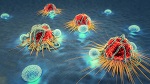
It's Revolutionary - A Cancer Vaccine
Immunotherapies are the best cancer fighting tools today, but they're expensive. They're customized to each patient, activating the person's immune system to kill cancer cells.
Now there's an exciting alternative that's not only cheaper but may activate any person's immune system against cancer, a sort of universal cancer vaccine. Researchers have been injecting tumors with viruses and a variety of molecules in hopes of finding ones that would activate the body's immune system to kill cancer cells.
Though they had found some that work in animals, none worked in humans until a group of scientists at Stanford decided to test twenty molecules they believed might work. They induced tumors in mice by injecting them just below the skin in two spots on the abdomen. Once the tumors started growing, they injected the twenty molecules alone or in combinations into one of the two tumors.
They hit the jackpot with one pair of molecules. One is a small DNA molecule called a CpG and the other is an antibody called OX-forty. Both stimulate the immune system to enhance its cancer fighting activity. Alone, the two molecules had little effect on the tumors, but injected together, the injected tumors disappeared in under ten days. Even the uninjected tumors in the same animal disappeared within twenty days.
Amazingly, eighty-seven of the ninety mice tested were cured of their cancers. Even in three mice where the cancer returned, the tumors regressed when they were re-injected. A clinical trial is already planned with fifteen cancer patients. How amazing if the trials work and a cancer vaccine becomes a reality.
More Information
Eradication of spontaneous malignancy by local immunotherapy
It has recently become apparent that the immune system can cure cancer. In some of these strategies, the antigen targets are preidentified and therapies are custom-made against these targets. In others, antibodies are used to remove the brakes of the immune system, allowing preexisting T cells to attack cancer cells. We have used another noncustomized approach called in situ vaccination...
Lymphoma
Lymphoma is a cancer that starts in cells that are part of the body's immune system. Knowing which type of lymphoma you have is important because it affects your treatment options and your outlook (prognosis). If you aren't sure which type you have, ask your doctor so you can get the right information...
TLR9 Agonist SD-101, Anti-OX40 Antibody BMS 986178, and Radiation Therapy in Treating Patients With Low-Grade B-Cell Non-Hodgkin Lymphomas
This phase I trial studies the side effects and best dose of the anti-OX40 antibody BMS-986178 when given together with the TLR9 agonist SD-101 and radiation therapy in treating patients with low-grade B-cell Non-Hodgkin lymphomas. TLR9 agonist SD-101 may stimulate the immune system in different ways and stop cancer cells from growing. Anti-OX40 antibody is a monoclonal antibody that enhances the activation of T cells, immune cells that are important for fighting tumors Radiation therapy uses high energy x-rays to kill cancer cells and may make them more easily detected by the immune system. Giving TLR9 agonist SD-101 together with anti-OX40 antibody BMS 986178 and radiation therapy may work better in treating patients with low-grade B-cell non-hodgkin lymphomas...