
Medical Discovery NewsBridging the World of Medical Discovery and You

Recent Episodes

It Is Better to Forget

MP3 WAV

  • Today, I'm grateful that my brain is so good at forgetting! If you're confused, listen to this story. In nineteen-twenty-nine, a timid man known in psychology as Subject S, complained he couldn't forget a thing. When they tested him, he could recite page after page of words or numbers. Retested fifteen years later, his recall was perfect.

    Who wouldn't want that, right? Not really. You see, he couldn't understand abstract concepts and his thoughts were weighted down with excessive detail.

    He eventually turned to alcohol to dampen the noise of his mind. So, if forgetting is an important part of memory, how does our brain know what to remember and what to forget? A team of neuroscientists may have found one piece of the answer.

    They discovered a new brain pathway involving a cell type they call 'melanin-concentrating hormone', or M.C.H. These are neurons in the brain involved in memory regulation. In mouse studies, they presented toys to two groups of mice. Next, each groups' MCH neurons were stimulated or inhibited, and the mice were shown the toys again. The stimulated mice acted like the toys were brand new, but the inhibited mice seemed to remember the toys.

    The team believes that M.C.H. neurons are activated during sleep to help us 'forget' excess details of the prior day, which might also explain why we often forget our dreams. What this study affirms is the value of good sleep. If forgetting is key to memory, we can maximize brain performance by giving it time to store and remove information so we're ready for a new day.

More Information

REM sleep'active MCH neurons are involved in forgetting hippocampus-dependent memories
Sleep affects memories via several mechanisms. Izawa et al. identified a possible new pathway in the brain: REM sleep'active hypothalamic melanin-concentrating hormone (MCH)'producing neurons, which, among others, project to the hippocampus. Surprisingly, genetic ablation of MCH neurons increased memory performance in mice. Conversely, pharmacogenetic activation of MCH neurons impaired memory. In vitro physiological experiments showed that activation of MCH fibers in hippocampal slices suppressed spiking activity of pyramidal cells. These findings indicate that the MCH pathway may become a target for memory modulation...

Scientists Identify Neurons That Help the Brain Forget
In mice, cells in the hypothalamus clear out old memories while the animals sleep. Akihiro Yamanaka, a neuroscientist at Nagoya University in Japan, found brain cells in mice that actively disrupt neurons that help consolidate memories...

Dopamine Is Required for Learning and Forgetting in Drosophila
Psychological studies in humans and behavioral studies of model organisms suggest that forgetting is a common and biologically regulated process, but the molecular, cellular, and circuit mechanisms underlying forgetting are poorly understood...
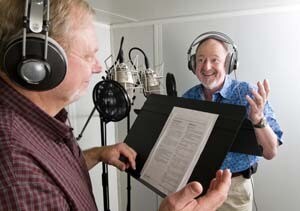

Two individuals wearing headphones stand in a recording booth, speaking into microphones with a music stand holding printed pages between them.

 Medicine...

Medicine is constantly advancing – that is a great thing about life in the 21st century. But it doesn’t just happen. Dedicated biomedical scientists are making discoveries that translate into those new medical advances.

Biomedical science is broad, encompassing everything from social science to microbiology, biochemistry, epidemiology, to structural biology and bioinformatics to name just a few areas. And, it can involve basic fundamental biology, the use of AI and chemistry to clinical studies that evaluate new medicines in patients.

No matter the research focus, the goal is always the same, to advance human health. It may take a few months, a few years or for fundamental science, a few decades. Few people make the connection that biomedical science is medicine and that biomedical scientists are working today on the medicine of tomorrow. Our weekly 500-word newspaper columns and 2-minute radio shows and podcasts provide insights into a broad range of biomedical science topics.

Medical Discovery News is dedicated to explaining discoveries in biomedical research and their promise for the future of medicine.

Podcasts

Alternatively, you can copy and paste the following web address (URL) into iTunes as a new subscription:
https://www.medicaldiscoverynews.com/shows/audio/mdnews.rss

You can also search and subscribe to "Medical Discovery News" in the podcast section of iTunes.

The www.medicaldiscoverynews.com web site and Medical Discovery News radio program (Program) are made possible by The University of Texas Medical Branch at Galveston (UTMB)as a community service and are intended to advance UTMB's mission of providing scholarly teaching, innovative scientific investigation, and state-of-the-art patient care in a learning environment to better the health of society and its commitment to the discovery of new innovative biomedical and health services knowledge leading to increasingly effective and accessible health care for the citizens of Texas.

All information provided on the web site and in the Program is for informational purposes only and is not intended for use as diagnosis or treatment of a health problem or as a substitute for consulting a licensed medical professional. Any information obtained by participating as a web site visitor or program listener is not intended to and should not be considered to constitute medical advice.

Thoughts and opinions expressed on the Program or on the website are those of the authors or guests and do not necessarily reflect the opinions of UTMB. The provision of links to other websites is not to be construed as written or implied sponsorship or endorsement of such websites by UTMB.

Please contact Dr. David Niesel or Dr. Norbert Herzog via email with any concerns, suggestions or comments.

All rights are reserved to information provided on the website or other information sources. No part of these programs can be reproduced stored in a retrieval system or transcribed in any form or by any means for personal or financial gained without the express written permission of Drs. Niesel and Dr. Herzog.