
Medical Discovery NewsBridging the World of Medical Discovery and You

Recent Episodes

Life Without Pain

MP3 WAV

  • I just finished reading the last of the Stieg Larsson Millennium series, "The Girl Who Kicked the Hornet's Nest".

    In it is a villain who suffers from "congenital analgesia" which means he doesn't feel pain.

    It's an exceedingly rare condition. We're talking about less than thirty people in the world! They can't feel pain but they can distinguish between sharp and dull.

    The first description of this disorder was in 1932, when a New York physician described a 54-year old man who as a child was struck in the head with a lathing hatchet. He never felt pain as his father removed the tool and a doctor sewed him up.

    We now know people with congenital analgesia have both copies of the same mutated gene. That gene, called SCN9A provides instructions for making a certain kind of sodium channel.

    Sodium channels are found on all nerve cells, but these particular sodium channels, called NaV1.7, are found only on nerve cells that transmit pain signals to the brain.

    Without functioning NaV1.7s, people cannot feel pain whether it's from burns, broken bones or even giving birth. That might sound good, but it's especially dangerous for children. Feeling no pain, they chew on their tongue, break bones and hurt themselves repeatedly

    The upside of understanding this disease is that by doing so, scientists hope to develop less risky pain medication. Right now drugs like lidocaine control pain by blocking all sodium channels, even those in the central nervous system.

    That means someone given too much lidocaine can end up with seizures and dizziness followed by cardiovascular collapse which can end in death.

    If scientists can develop pain medication that will block NaV1.7s specifically, patients will avoid risky side effects while enjoying pain free procedures.

More Information

Genetics Home Reference provides consumer-friendly information about the effects of genetic variations on human health. The resources on this site should not be used as a substitute for professional medical care or advice but represents a valuable resource. Users seeking information about a personal genetic disease, syndrome, or condition should consult with a qualified healthcare professional. This is a good place to start.

Enterotypes of the human gut microbiome Information about a documentary film about congenital analgesia in children can be read at A Life Without Pain

A child with congenital insensitivity to pain appeared on the Oprah Winfrey Show.

For a description of congenital insensitivity to pain, read Congenital Insensitivity to Pain ' A Life Without Pain.

For a scientific review of congenital insensitivity to pain, read Congenital Insensitivity to Pain.

For a detailed yet readable summary of congenital insensitivity to pain, read How CIPA Works.
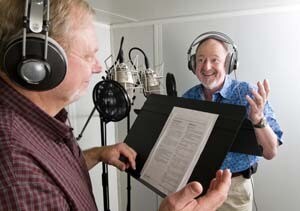
Two individuals wearing headphones stand in a recording booth, speaking into microphones with a music stand holding printed pages between them.

 Medicine...

Medicine is constantly advancing – that is a great thing about life in the 21st century. But it doesn’t just happen. Dedicated biomedical scientists are making discoveries that translate into those new medical advances.

Biomedical science is broad, encompassing everything from social science to microbiology, biochemistry, epidemiology, to structural biology and bioinformatics to name just a few areas. And, it can involve basic fundamental biology, the use of AI and chemistry to clinical studies that evaluate new medicines in patients.

No matter the research focus, the goal is always the same, to advance human health. It may take a few months, a few years or for fundamental science, a few decades. Few people make the connection that biomedical science is medicine and that biomedical scientists are working today on the medicine of tomorrow. Our weekly 500-word newspaper columns and 2-minute radio shows and podcasts provide insights into a broad range of biomedical science topics.

Medical Discovery News is dedicated to explaining discoveries in biomedical research and their promise for the future of medicine.

Podcasts

Alternatively, you can copy and paste the following web address (URL) into iTunes as a new subscription:
https://www.medicaldiscoverynews.com/shows/audio/mdnews.rss

You can also search and subscribe to "Medical Discovery News" in the podcast section of iTunes.

The www.medicaldiscoverynews.com web site and Medical Discovery News radio program (Program) are made possible by The University of Texas Medical Branch at Galveston (UTMB)as a community service and are intended to advance UTMB's mission of providing scholarly teaching, innovative scientific investigation, and state-of-the-art patient care in a learning environment to better the health of society and its commitment to the discovery of new innovative biomedical and health services knowledge leading to increasingly effective and accessible health care for the citizens of Texas.

All information provided on the web site and in the Program is for informational purposes only and is not intended for use as diagnosis or treatment of a health problem or as a substitute for consulting a licensed medical professional. Any information obtained by participating as a web site visitor or program listener is not intended to and should not be considered to constitute medical advice.

Thoughts and opinions expressed on the Program or on the website are those of the authors or guests and do not necessarily reflect the opinions of UTMB. The provision of links to other websites is not to be construed as written or implied sponsorship or endorsement of such websites by UTMB.

Please contact Dr. David Niesel or Dr. Norbert Herzog via email with any concerns, suggestions or comments.

All rights are reserved to information provided on the website or other information sources. No part of these programs can be reproduced stored in a retrieval system or transcribed in any form or by any means for personal or financial gained without the express written permission of Drs. Niesel and Dr. Herzog.