Medical Discovery NewsBridging the World of Medical Discovery and You

Recent Episodes

Lifesaving Venom

MP3 WAV

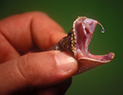
  • People have evolved to fear snakes out of necessity. One bite from a venomous snake can be fatal! So it is ironic that a number of remarkable drugs come from poisonous snakes and other deadly creatures. Researchers increasingly prize this group of animals, believing their venom can treat major disorders ranging from high blood pressure, to heart disease, and cancer.

    So, why is venom made into lifesaving drugs? Take the Brazilian pit viper - it incapacitates its victims by causing their blood pressure to plummet. But when molecules in the venom are developed into therapeutic drugs such as ACE inhibitors, they lower high blood pressure by decreasing chemicals that tighten blood vessels so that blood flows more smoothly.

    Another drug called tirofiban comes from the saw-scaled viper, whose venom thins the blood and causes victims to bleed out. As a drug, it's an anticoagulant that clears blood clots in people with a minor or impending heart attack.

    Another snake venom, from the Malayan pit viper, also thins blood. However, its venom possesses a protein that may dissolve blood clots in stroke victims up to six hours after the first symptoms appear. That would improve on the three hour window of existing drugs, and save a lot more lives.

    Scientists are venturing beyond snake venom. The deathstalker scorpion is a bright yellow spider whose bites can be fatal. Yet, its venom contains chlorotoxin which just happens to attach to cancer cells by binding strongly to a cancer specific protein. By fluorescently labeling chlorotoxin, surgeons can identify and remove cancer tissue. Chlorotoxin can also be used to kill cancer cells by delivering radioactivity directly to tumors.

    While this is all great news, scientists are concerned negative environmental impacts on the habitat of exotic species will limit their work. Ultimately, that's fewer life saving drugs available to all of us.

More Information

How a pit viper saved millions of lives: Snakes as drug factories
Discover Magazine — "Snake venom is a blend of molecules, many of which are exquisitely adapted for wreaking havoc. Some are enzymes that slice muscles apart. Some grab onto proteins that normally form clots, so that a snake's victim can't stop bleeding. Many snake venoms attack the nervous system with molecular precision that is so good that neuroscientists have snakes to thank for some of their biggest discoveries..."

Making medicines from poisonous snakes
Animals in Research — "Within minutes, the bites of rattlesnakes, cobras, pit vipers, or other poisonous snakes may cause you to have severe burning pain and swelling at the bite site. This local reaction may quickly be followed by a severe drop in blood pressure or paralysis that causes you to collapse, and have extensive bleeding everywhere in your body, with major bruising spreading from the bite, and blood escaping from your nose and mouth. Without treatment, you may die..."

From viper's venom to drug design: Treating hypertension
A relatively layman-friendly article published in the Journal of the Federation of American Societies for Experimental Biology.


Two individuals wearing headphones stand in a recording booth, speaking into microphones with a music stand holding printed pages between them.

 Medicine...

Medicine is constantly advancing – that is a great thing about life in the 21st century. But it doesn’t just happen. Dedicated biomedical scientists are making discoveries that translate into those new medical advances.

Biomedical science is broad, encompassing everything from social science to microbiology, biochemistry, epidemiology, to structural biology and bioinformatics to name just a few areas. And, it can involve basic fundamental biology, the use of AI and chemistry to clinical studies that evaluate new medicines in patients.

No matter the research focus, the goal is always the same, to advance human health. It may take a few months, a few years or for fundamental science, a few decades. Few people make the connection that biomedical science is medicine and that biomedical scientists are working today on the medicine of tomorrow. Our weekly 500-word newspaper columns and 2-minute radio shows and podcasts provide insights into a broad range of biomedical science topics.

Medical Discovery News is dedicated to explaining discoveries in biomedical research and their promise for the future of medicine.

Podcasts

Alternatively, you can copy and paste the following web address (URL) into iTunes as a new subscription:
https://www.medicaldiscoverynews.com/shows/audio/mdnews.rss

You can also search and subscribe to "Medical Discovery News" in the podcast section of iTunes.

The www.medicaldiscoverynews.com web site and Medical Discovery News radio program (Program) are made possible by The University of Texas Medical Branch at Galveston (UTMB)as a community service and are intended to advance UTMB's mission of providing scholarly teaching, innovative scientific investigation, and state-of-the-art patient care in a learning environment to better the health of society and its commitment to the discovery of new innovative biomedical and health services knowledge leading to increasingly effective and accessible health care for the citizens of Texas.

All information provided on the web site and in the Program is for informational purposes only and is not intended for use as diagnosis or treatment of a health problem or as a substitute for consulting a licensed medical professional. Any information obtained by participating as a web site visitor or program listener is not intended to and should not be considered to constitute medical advice.

Thoughts and opinions expressed on the Program or on the website are those of the authors or guests and do not necessarily reflect the opinions of UTMB. The provision of links to other websites is not to be construed as written or implied sponsorship or endorsement of such websites by UTMB.

Please contact Dr. David Niesel or Dr. Norbert Herzog via email with any concerns, suggestions or comments.

All rights are reserved to information provided on the website or other information sources. No part of these programs can be reproduced stored in a retrieval system or transcribed in any form or by any means for personal or financial gained without the express written permission of Drs. Niesel and Dr. Herzog.