Medical Discovery NewsBridging the World of Medical Discovery and You

Recent Episodes

Making Friends With a Malarial Enemy

MP3 WAV

  • The proverb “the enemy of my enemy is my friend” is not only true in politics, it can also be said in the microbial world.

    A group of microbes – fungi – have long been an enemy to our enemies. Fungi are yeasts and molds that can produce antibiotics that destroy or inhibit the growth of bacterial cells.

    But that's not all they do. A new report shows fungi can also fight a deadly parasitic disease – malaria. This tropical disease is caused by single-celled parasites called plasmodium, of which four species are primarily responsible for making people sick.

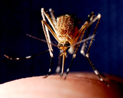
    The parasite is carried by mosquitos to a vertebrate host, which can be humans, monkeys or even reptiles.

    Scientists are attacking the parasite by targeting it in the mosquito. And they're doing so with a fungus called Metarhizium anisopliae or M. anisopliae.

    Scientists are experimenting with genetically altered forms of the fungus. These altered M. anisopliae can produce chemicals that identify the parasite in the mosquito's blood and then block the parasite from entering the insect's salivary glands. This way the parasite does not get transferred when an infected mosquito bites a host.

    If M. anisopliae proves effective, the plan is to spray the altered fungus on surfaces like interior walls and bed nets, where mosquitoes land. Once the fungus makes contact with the mosquito, it can penetrate the insect's cuticle or exoskeleton and begin replicating in its blood.

    Researchers are engineering this fungus to attack malaria in other ways, too. One is being engineered to produce a protein to clump the malarial parasites together, which inactivates them.

    Another produces a toxin that kills the parasites. These three approaches may reduce malarial viability by an astounding seventy to ninety percent.

    Considering malaria infects over three hundred million people a year and kills a million, these fungal “friends” could have a major impact.

More Information

Development of Transgenic Fungi That Kill Human Malaria Parasites in Mosquitoes
Weiguo Fang, Joel Vega-Rodríguez, Anil K. Ghosh, Marcelo Jacobs-Lorena,
Angray Kang, Raymond J. St. Leger. Research article in prestigious science journal that describes the original experiments. This is a well referenced and illustrated report.
Science 25 February 2011:Vol. 331 no. 6020 pp. 1074-1077. DOI: 10.1126/science.1199115

Malaria
A PubMed Health website that gives a comprehensive view of the malaria parasite, its lifecycle and the disease it causes. There are also extensive links to disease information and treatment and diagnostic approaches among other topics.

World Malaria Report 2010
“The World Malaria Report 2010 summarizes information received from 106 malaria-endemic countries and other sources and updates the analyses presented in the 2009 Report. It highlights continued progress made towards meeting the World Health Assembly (WHA) targets for malaria to be achieved by the end of 2010 and by 2015.”

Two individuals wearing headphones stand in a recording booth, speaking into microphones with a music stand holding printed pages between them.

 Medicine...

Medicine is constantly advancing – that is a great thing about life in the 21st century. But it doesn’t just happen. Dedicated biomedical scientists are making discoveries that translate into those new medical advances.

Biomedical science is broad, encompassing everything from social science to microbiology, biochemistry, epidemiology, to structural biology and bioinformatics to name just a few areas. And, it can involve basic fundamental biology, the use of AI and chemistry to clinical studies that evaluate new medicines in patients.

No matter the research focus, the goal is always the same, to advance human health. It may take a few months, a few years or for fundamental science, a few decades. Few people make the connection that biomedical science is medicine and that biomedical scientists are working today on the medicine of tomorrow. Our weekly 500-word newspaper columns and 2-minute radio shows and podcasts provide insights into a broad range of biomedical science topics.

Medical Discovery News is dedicated to explaining discoveries in biomedical research and their promise for the future of medicine.

Podcasts

Alternatively, you can copy and paste the following web address (URL) into iTunes as a new subscription:
https://www.medicaldiscoverynews.com/shows/audio/mdnews.rss

You can also search and subscribe to "Medical Discovery News" in the podcast section of iTunes.

The www.medicaldiscoverynews.com web site and Medical Discovery News radio program (Program) are made possible by The University of Texas Medical Branch at Galveston (UTMB)as a community service and are intended to advance UTMB's mission of providing scholarly teaching, innovative scientific investigation, and state-of-the-art patient care in a learning environment to better the health of society and its commitment to the discovery of new innovative biomedical and health services knowledge leading to increasingly effective and accessible health care for the citizens of Texas.

All information provided on the web site and in the Program is for informational purposes only and is not intended for use as diagnosis or treatment of a health problem or as a substitute for consulting a licensed medical professional. Any information obtained by participating as a web site visitor or program listener is not intended to and should not be considered to constitute medical advice.

Thoughts and opinions expressed on the Program or on the website are those of the authors or guests and do not necessarily reflect the opinions of UTMB. The provision of links to other websites is not to be construed as written or implied sponsorship or endorsement of such websites by UTMB.

Please contact Dr. David Niesel or Dr. Norbert Herzog via email with any concerns, suggestions or comments.

All rights are reserved to information provided on the website or other information sources. No part of these programs can be reproduced stored in a retrieval system or transcribed in any form or by any means for personal or financial gained without the express written permission of Drs. Niesel and Dr. Herzog.