Medical Discovery NewsBridging the World of Medical Discovery and You

Recent Episodes

Making Surgery Survivable

MP3 WAV

  • Imagine facing surgery without anesthesia, in a smelly operating room and the surgeon enters wearing a blood stained apron. I would run screaming out the door. You and me both. Yet, prior to about the 1840s, that was how surgery was done. Surgeons did not wash their hands, instruments were not sterilized, and patients were held down on the table.

    Even though as early as 1546, Fracastro of Verona postulated that small germs could cause diseases no one linked them to wound infections. A clue came later from Louis Pasteur who showed that microorganisms could sour wine, beer and milk and expanded that into a theory that germs caused diseases. In 1862, he invented pasteurization whereby bacteria could be killed by heating.

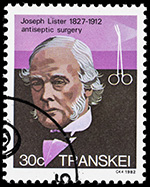
    Later a British surgeon, Joseph Lister built on this knowledge to change surgery forever. He read Pasteur's work and theorized that germs cause infections. At the time, so many people died after surgeries that there was a call to abolish the practice.

    Lister decided to begin treating all wounds on his wards with dressings soaked in carbolic acid because he had learned that the same compound was being used to disinfect sewage. He then began hand washing, sterilizing instruments and spraying carbolic acid in the operating room during surgery.

    Other physicians criticized him even though Lister achieved remarkable success. But in time, his methods were adopted in Germany, the US, France and then Great Britain. He's hailed as 'Father of Antiseptic Surgery' and saved a huge number lives.

More Information

The Butchering Art: Joseph Lister's Quest to Transform the Grisly World of Victorian Medicine
Lindsey Fitzharris's story of Lister's battle to introduce hygiene to the operating theatre makes compelling reading...

Brought to Life: Joseph Lister (1827-1912)
Joseph Lister is the surgeon who introduced new principles of cleanliness which transformed surgical practice in the late 1800s...

Louis Pasteur Biography
Louis Pasteur (1822 ' 1895) was a French chemist and microbiologist who developed antidotes and cures to many dangerous illnesses such as anthrax and rabies. He also successfully invented a way to pasteurise milk and make it safe from tuberculosis...

Joseph Lister: father of modern surgery
On the centenary of Joseph Lister's death, it is appropriate to remember and honour his remarkable accomplishments that earned him the title 'father of modern surgery"...

 Medicine...

Medicine is constantly advancing – that is a great thing about life in the 21st century. But it doesn’t just happen. Dedicated biomedical scientists are making discoveries that translate into those new medical advances.

Biomedical science is broad, encompassing everything from social science to microbiology, biochemistry, epidemiology, to structural biology and bioinformatics to name just a few areas. And, it can involve basic fundamental biology, the use of AI and chemistry to clinical studies that evaluate new medicines in patients.

No matter the research focus, the goal is always the same, to advance human health. It may take a few months, a few years or for fundamental science, a few decades. Few people make the connection that biomedical science is medicine and that biomedical scientists are working today on the medicine of tomorrow. Our weekly 500-word newspaper columns and 2-minute radio shows and podcasts provide insights into a broad range of biomedical science topics.

Medical Discovery News is dedicated to explaining discoveries in biomedical research and their promise for the future of medicine.

Podcasts

Alternatively, you can copy and paste the following web address (URL) into iTunes as a new subscription:
https://www.medicaldiscoverynews.com/shows/audio/mdnews.rss

You can also search and subscribe to "Medical Discovery News" in the podcast section of iTunes.

See all podcasts and radio stations

The www.medicaldiscoverynews.com web site and Medical Discovery News radio program (Program) are made possible by The University of Texas Medical Branch at Galveston (UTMB)as a community service and are intended to advance UTMB's mission of providing scholarly teaching, innovative scientific investigation, and state-of-the-art patient care in a learning environment to better the health of society and its commitment to the discovery of new innovative biomedical and health services knowledge leading to increasingly effective and accessible health care for the citizens of Texas.

All information provided on the web site and in the Program is for informational purposes only and is not intended for use as diagnosis or treatment of a health problem or as a substitute for consulting a licensed medical professional. Any information obtained by participating as a web site visitor or program listener is not intended to and should not be considered to constitute medical advice.

Thoughts and opinions expressed on the Program or on the website are those of the authors or guests and do not necessarily reflect the opinions of UTMB. The provision of links to other websites is not to be construed as written or implied sponsorship or endorsement of such websites by UTMB.

Please contact Dr. David Niesel or Dr. Norbert Herzog via email with any concerns, suggestions or comments.

All rights are reserved to information provided on the website or other information sources. No part of these programs can be reproduced stored in a retrieval system or transcribed in any form or by any means for personal or financial gained without the express written permission of Drs. Niesel and Dr. Herzog.