Medical Discovery NewsBridging the World of Medical Discovery and You

Recent Episodes

Making You More Tasty

MP3 WAV

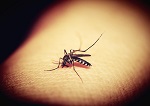
  • One thing that everyone can agree on is that mosquitoes are annoying. Nothing spoils a nice day outdoors quite like the incessant buzzing and biting that mosquitoes bring. And that's not all there is to these nasty hordes. Mosquitoes are vectors for some of the world's most feared infections. We are talking viruses that cause yellow fever, dengue and Zika. And many other types of pathogenic or disease-causing microbes like malaria can be transmitted by mosquitos.

    Much research has been done on how mosquitoes target individuals. They are attracted to certain colors of clothing, the carbon dioxide that we exhale, certain blood types (if your blood type is O, watch out!) and certain scents. Recent research now shows that animals infected with the Zika virus or dengue virus become more attractive to mosquitoes. The virus changes the host to enhance the chances it is the target of a blood meal and transmitted to the next animal. Sinister, don't you think? No wonder about half the world's population is at risk for dengue fever.

    Recently, researchers in China have shown that given the opportunity to bite either uninfected mice or mice infected with dengue virus, mosquitoes chose the infected mice almost 70% of the time. The scientists studied what made the infected mice different, and they guessed that it was something about how the mice smelled. They studied hundreds of volatile chemicals involved in scent and finally identified a chemical called acetophenone. They discovered that infected mice had ten times the amount of this volatile chemical than uninfected mice.

    The scientists wanted to know if this phenomenon was just in mice, or if it applied to humans too. In experiments where acetophenone was placed on a person's hands, they became more attractive to mosquitos than someone without the acetophenone on their hands. The next step was to see if humans infected with dengue also produced higher levels of acetophenone. Scientists did not want to put everyone in a room to get bitten by mosquitoes, so they collected odors from the subjects instead. They collected odors from the armpits of patients both with and without dengue infections and placed the scent molecules on absorbent paper. The scents from infected patients attracted more mosquitoes.

    The scientists ultimately discovered that when a person becomes infected, a protein on the skin that normally limits acetophenone production stops working. In an infected person, high levels of acetophenone are produced, increasing their attractiveness to mosquitos.

    The good news is that scientists have shown that a chemical related to vitamin A called isotretinoin restores the skin protein and reduces acetophenone levels. This would make a person infected with dengue virus less attractive to mosquitos. Isotretinoin is already FDA approved for the treatment of acne. This would quicken FDA approval for the required clinical trials in humans.

    This could help us reduce the transmission of these deadly viruses, and maybe another way to prevent mosquito bites. Think of the impact that this would have on reducing human misery and illness around the world.

More Information

Zika or dengue infections make you more appealing to mosquitoes
Infection with Zika or dengue viruses affects the microbiome of the skin, ramping up production of compounds that entice mosquitoes. But treatment with a common acne medication may cancel out this effect...

Two individuals wearing headphones stand in a recording booth, speaking into microphones with a music stand holding printed pages between them.

 Medicine...

Medicine is constantly advancing – that is a great thing about life in the 21st century. But it doesn’t just happen. Dedicated biomedical scientists are making discoveries that translate into those new medical advances.

Biomedical science is broad, encompassing everything from social science to microbiology, biochemistry, epidemiology, to structural biology and bioinformatics to name just a few areas. And, it can involve basic fundamental biology, the use of AI and chemistry to clinical studies that evaluate new medicines in patients.

No matter the research focus, the goal is always the same, to advance human health. It may take a few months, a few years or for fundamental science, a few decades. Few people make the connection that biomedical science is medicine and that biomedical scientists are working today on the medicine of tomorrow. Our weekly 500-word newspaper columns and 2-minute radio shows and podcasts provide insights into a broad range of biomedical science topics.

Medical Discovery News is dedicated to explaining discoveries in biomedical research and their promise for the future of medicine.

Podcasts

Alternatively, you can copy and paste the following web address (URL) into iTunes as a new subscription:
https://www.medicaldiscoverynews.com/shows/audio/mdnews.rss

You can also search and subscribe to "Medical Discovery News" in the podcast section of iTunes.

The www.medicaldiscoverynews.com web site and Medical Discovery News radio program (Program) are made possible by The University of Texas Medical Branch at Galveston (UTMB)as a community service and are intended to advance UTMB's mission of providing scholarly teaching, innovative scientific investigation, and state-of-the-art patient care in a learning environment to better the health of society and its commitment to the discovery of new innovative biomedical and health services knowledge leading to increasingly effective and accessible health care for the citizens of Texas.

All information provided on the web site and in the Program is for informational purposes only and is not intended for use as diagnosis or treatment of a health problem or as a substitute for consulting a licensed medical professional. Any information obtained by participating as a web site visitor or program listener is not intended to and should not be considered to constitute medical advice.

Thoughts and opinions expressed on the Program or on the website are those of the authors or guests and do not necessarily reflect the opinions of UTMB. The provision of links to other websites is not to be construed as written or implied sponsorship or endorsement of such websites by UTMB.

Please contact Dr. David Niesel or Dr. Norbert Herzog via email with any concerns, suggestions or comments.

All rights are reserved to information provided on the website or other information sources. No part of these programs can be reproduced stored in a retrieval system or transcribed in any form or by any means for personal or financial gained without the express written permission of Drs. Niesel and Dr. Herzog.