Medical Discovery NewsBridging the World of Medical Discovery and You

Recent Episodes

Micro(bes)

MP3 WAV

  • Increasingly, the mind-blowing technology portrayed in science fiction movies is made real in labs around the world. In particular, two recently published studies are reminiscent of Star Wars.

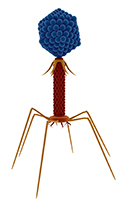
    The first study engineered viruses to generate electricity! One day they may power nano-scale implanted devices in the human body. The viruses used in the studies attack bacterial cells and are simple organisms with proteins and a genome. The proteins 'coat' the genome, protecting it as it enters the bacterial cell.

    In one particular virus, the proteins have two distinct ends, one with one positive charge and the other with a negative charge. This arrangement of opposing charges at opposite ends of the same molecule can create a piezo-electric effect. It means when the shape of these molecules are compressed, they generate an electric current.

    Researchers used the concept to build tiny bio-generators that could be activated by a person's movements, such as stair climbing. They may one-day power implanted devices that sense and report the levels of important compounds like glucose or neurotransmitters.

    Another amazing technology is the biological ion transistor computer chip - the first ever produced. In these biological transistors, charged molecules called ions take the place of electrons. In essence, this means a computer chip can now network with human cells.

    In recent experiments, researchers used a powerful neurotransmitter called acetylcholine as the charged molecule. Acetylcholine is a muscle activator. When a message from the brain travels along the nerves to a muscle, a neuron transmits acetylcholine ion to nearby muscle cells and triggers movement. In theory, the ion transistor could be wired and integrated into the nervous system to do the same job.

    In the future, this could allow 'fine' control of muscle movement or more importantly, restore movement in people with paralysis.

More Information

✔ Supercharging the nervous system with biological, ion transistor computer chips
A short article by Sebastian Anthony on the research by Dr. Tybrandt in Sweden on his biological ion computer chip research.

✔ Electronics Go Viral
A well-written ScienceNow article by Robert Service discussing the piezo-electric energy production of bacteriophage proteins.

Two individuals wearing headphones stand in a recording booth, speaking into microphones with a music stand holding printed pages between them.

 Medicine...

Medicine is constantly advancing – that is a great thing about life in the 21st century. But it doesn’t just happen. Dedicated biomedical scientists are making discoveries that translate into those new medical advances.

Biomedical science is broad, encompassing everything from social science to microbiology, biochemistry, epidemiology, to structural biology and bioinformatics to name just a few areas. And, it can involve basic fundamental biology, the use of AI and chemistry to clinical studies that evaluate new medicines in patients.

No matter the research focus, the goal is always the same, to advance human health. It may take a few months, a few years or for fundamental science, a few decades. Few people make the connection that biomedical science is medicine and that biomedical scientists are working today on the medicine of tomorrow. Our weekly 500-word newspaper columns and 2-minute radio shows and podcasts provide insights into a broad range of biomedical science topics.

Medical Discovery News is dedicated to explaining discoveries in biomedical research and their promise for the future of medicine.

Podcasts

Alternatively, you can copy and paste the following web address (URL) into iTunes as a new subscription:
https://www.medicaldiscoverynews.com/shows/audio/mdnews.rss

You can also search and subscribe to "Medical Discovery News" in the podcast section of iTunes.

The www.medicaldiscoverynews.com web site and Medical Discovery News radio program (Program) are made possible by The University of Texas Medical Branch at Galveston (UTMB)as a community service and are intended to advance UTMB's mission of providing scholarly teaching, innovative scientific investigation, and state-of-the-art patient care in a learning environment to better the health of society and its commitment to the discovery of new innovative biomedical and health services knowledge leading to increasingly effective and accessible health care for the citizens of Texas.

All information provided on the web site and in the Program is for informational purposes only and is not intended for use as diagnosis or treatment of a health problem or as a substitute for consulting a licensed medical professional. Any information obtained by participating as a web site visitor or program listener is not intended to and should not be considered to constitute medical advice.

Thoughts and opinions expressed on the Program or on the website are those of the authors or guests and do not necessarily reflect the opinions of UTMB. The provision of links to other websites is not to be construed as written or implied sponsorship or endorsement of such websites by UTMB.

Please contact Dr. David Niesel or Dr. Norbert Herzog via email with any concerns, suggestions or comments.

All rights are reserved to information provided on the website or other information sources. No part of these programs can be reproduced stored in a retrieval system or transcribed in any form or by any means for personal or financial gained without the express written permission of Drs. Niesel and Dr. Herzog.