Medical Discovery NewsBridging the World of Medical Discovery and You

Recent Episodes

Microbots and Other Bots

MP3 WAV

  • Researchers in labs around the world are working on incredibly small devices that can work inside us, to help fight disease.

    Reminds me of the sixties movie, Fantastic Voyage, where Raquel Welch and her crew are shrunken, then injected into a diplomat to save his life.

    No one is being shrunken here but we are talking about incredibly tiny robots measuring micrometers to nanometers.

    Just how small is that?

    Well, a human hair is 60 to 120 micrometers thick. Now imagine that within one micrometer, there are one thousand nanometers.

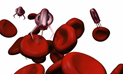
    Robots this small are called Nanobots, which are much smaller than bacteria. Microbots are about the size of a bacterium and can be seen with a microscope.

    One microbot being developed resembles the flagella – a spiral shaped tail that helps a bacterium to swim. These artificial bacterial flagella or ABFs are about half the diameter of a human hair and are made using computer chip technology.

    The process takes indium, gallium, arsenic and chromium and deposits them in layers on an ultrathin sheet. The ABFs are then cut by a complex process called photolithography to create the ultra thin ribbons which curl up to form the tiny spirals.

    A magnetic head is attached to the ABF so that, through a magnetic field, can be made to rotate, and move forward and backward. Once it's directed to a precise location, the robot could deliver medicine that destroys tumors or removes plaque.

    One application is to use an ABF to treat macular degeneration which destroys central vision – the kind you need for reading. Researchers are designing a microbot that once injected into the eye, can stay for months delivering a therapeutic to block blood vessel growth that causes the disease.

    Imagine a future where our bodies contain a variety of tiny robots, keeping us healthy from the inside.

More Information

It is difficult to imagine the size of anything at the nano scale. Nano is one-billionth of a meter. A strand of human hair is 2.5 nanometers in diameter. To help visualize how tiny these objects are, visit the National Nanotechnology Initiative website. This site also has information how nanotechnology works and what nanotechnology is.

To read about the robots we talked about in this episode, visit Science Daily. The Institute of robotics and Intelligent Systems in Switzerland where this innovative research and development is being done has a website at here.

Doctors Chang and Sretavan have published an article in the Journal of Clinical Neurosurgery entitled “Microtechnology I Medicine: The Emergence of Surgical Microdevices”. It addresses the recent advances and future of the microbot and nanobots in healthcare.

The Internet Movie Database has an entry about the 1966 movie, “Fantastic Voyage,” starring Raquel Welch, Stephen Boyd and Edmond O'Brien.


Two individuals wearing headphones stand in a recording booth, speaking into microphones with a music stand holding printed pages between them.

 Medicine...

Medicine is constantly advancing – that is a great thing about life in the 21st century. But it doesn’t just happen. Dedicated biomedical scientists are making discoveries that translate into those new medical advances.

Biomedical science is broad, encompassing everything from social science to microbiology, biochemistry, epidemiology, to structural biology and bioinformatics to name just a few areas. And, it can involve basic fundamental biology, the use of AI and chemistry to clinical studies that evaluate new medicines in patients.

No matter the research focus, the goal is always the same, to advance human health. It may take a few months, a few years or for fundamental science, a few decades. Few people make the connection that biomedical science is medicine and that biomedical scientists are working today on the medicine of tomorrow. Our weekly 500-word newspaper columns and 2-minute radio shows and podcasts provide insights into a broad range of biomedical science topics.

Medical Discovery News is dedicated to explaining discoveries in biomedical research and their promise for the future of medicine.

Podcasts

Alternatively, you can copy and paste the following web address (URL) into iTunes as a new subscription:
https://www.medicaldiscoverynews.com/shows/audio/mdnews.rss

You can also search and subscribe to "Medical Discovery News" in the podcast section of iTunes.

The www.medicaldiscoverynews.com web site and Medical Discovery News radio program (Program) are made possible by The University of Texas Medical Branch at Galveston (UTMB)as a community service and are intended to advance UTMB's mission of providing scholarly teaching, innovative scientific investigation, and state-of-the-art patient care in a learning environment to better the health of society and its commitment to the discovery of new innovative biomedical and health services knowledge leading to increasingly effective and accessible health care for the citizens of Texas.

All information provided on the web site and in the Program is for informational purposes only and is not intended for use as diagnosis or treatment of a health problem or as a substitute for consulting a licensed medical professional. Any information obtained by participating as a web site visitor or program listener is not intended to and should not be considered to constitute medical advice.

Thoughts and opinions expressed on the Program or on the website are those of the authors or guests and do not necessarily reflect the opinions of UTMB. The provision of links to other websites is not to be construed as written or implied sponsorship or endorsement of such websites by UTMB.

Please contact Dr. David Niesel or Dr. Norbert Herzog via email with any concerns, suggestions or comments.

All rights are reserved to information provided on the website or other information sources. No part of these programs can be reproduced stored in a retrieval system or transcribed in any form or by any means for personal or financial gained without the express written permission of Drs. Niesel and Dr. Herzog.




