Recent Episodes
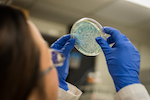
My Bugs Ate My Drug
The human microbiome is a wondrous thing! We are inhabited by a community of microbes that are a part of who we are. These microbiota which include bacteria, fungi and viruses actively communicate with our own cells to define us and keep us healthy. The Human Microbiome Project has sequenced their genomes, cataloging the more than ten thousand different species that call us home.
What's interesting is that we're also learning that these microbes can affect the drugs we take. Recent research has found that microbes were changing the drugs that Parkinson's patients were taking. One drug, levodopa provides a chemical to the brain to stop a patient's tremors but microbiome in the gut was keeping the drug from reaching the brain. So, a second drug called carbidopa was developed to overcome this problem. While it worked in some patients, in others, the bacteria Enterococcus faecalis and Eggerthella lenta produced a chemical that modified the drug which made it ineffective. Now, a third drug, AMFT, finally does allow the necessary chemicals to reach the brains of Parkinson's patients.
So, what we're seeing is that doctors must now take into account a person's microbiome to see if could interfere with a drug's effectiveness. I guess you need your microbiome's permission to use a drug! We predict it'll become routine one day to assess someone's microbiome before prescribing a drug.
More Information
We Finally Have Proof That Gut Microbes Can Actually Eat Our Medications
Dosing medicines can be a tricky process: How much of a medication actually ends up hitting its target can vary a lot between patients, sometimes for mysterious reasons. As it turns out, even the things living in our bodies could be gobbling up our drugs...
How the Microbiome Influences Drug Action
Through their effects on metabolism and immunity, bacteria in the gut affect whether medications will be effective for a given patient...