Medical Discovery NewsBridging the World of Medical Discovery and You

Recent Episodes

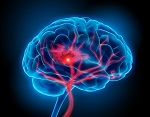
New Therapy Repairs Stroke Damaged Brains

MP3 WAV

  • Even though today's stroke therapies can prevent major damage to the brain, eighty percent of its victims are not able to get to a hospital in time. The treatment window is within hours to twenty-four hours.

    But an experimental drug extends that window to days after a stroke. In tests on mice, it was able to repair damaged brain tissue and reverse cognition, speech and motor deficits. The drug uses a technique called nonviral tissue nanotransfection which takes skin cells and reprograms their genetic code so that they create new blood vessels in damaged areas of the brain. Essentially, it's like replacing clogged pipes in your home with new ones. Blood can start flowing again to deliver oxygen to areas that lost oxygen and restore brain function.

    To change skin cells into cells that will form new blood vessels, researchers introduced a special developmental gene that makes a transcription factor protein. This modifies the skin cells' genetic code and tricks them into believing they are embryonic cells whose job is to form new blood vessels. In mouse brains, these cells went to work and began forming new blood vessels.

    Imagine days and maybe even weeks after a stroke being able to reverse debilitating life changing brain damage. If this cell therapy works, patients' brain cells can regenerate and possibly allow them to live their lives as they used to.

More Information

Cell Therapy Aids Stroke-Damaged Brain Repair, Restores 90% of Motor Function
Most stroke victims don't receive treatment fast enough to prevent brain damage, but scientists at the Ohio State University Wexner Medical Center, College of Engineering and College of Medicine have developed technology that can "retrain" skin cells to help repair damaged brain tissue. The nonviral tissue nanotransfection (TNT) technique effectively reprograms the skin cells to become vascular cells, which generate new blood vessels to help get blood to the damaged tissue. In tests, stroke-affected mice that received intracranial injections of the cells recovered nearly all of their motor function, and exhibited repair to damaged brain areas...

Nanotransfection-based vasculogenic cell reprogramming drives functional recovery in a mouse model of ischemic stroke
Ischemic stroke causes vascular and neuronal tissue deficiencies that could lead to substantial functional impairment and/or death. Although progenitor-based vasculogenic cell therapies have shown promise as a potential rescue strategy following ischemic stroke, current approaches face major hurdles...
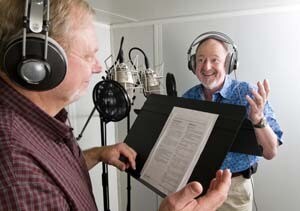

Two individuals wearing headphones stand in a recording booth, speaking into microphones with a music stand holding printed pages between them.

 Medicine...

Medicine is constantly advancing – that is a great thing about life in the 21st century. But it doesn’t just happen. Dedicated biomedical scientists are making discoveries that translate into those new medical advances.

Biomedical science is broad, encompassing everything from social science to microbiology, biochemistry, epidemiology, to structural biology and bioinformatics to name just a few areas. And, it can involve basic fundamental biology, the use of AI and chemistry to clinical studies that evaluate new medicines in patients.

No matter the research focus, the goal is always the same, to advance human health. It may take a few months, a few years or for fundamental science, a few decades. Few people make the connection that biomedical science is medicine and that biomedical scientists are working today on the medicine of tomorrow. Our weekly 500-word newspaper columns and 2-minute radio shows and podcasts provide insights into a broad range of biomedical science topics.

Medical Discovery News is dedicated to explaining discoveries in biomedical research and their promise for the future of medicine.

Podcasts

Alternatively, you can copy and paste the following web address (URL) into iTunes as a new subscription:
https://www.medicaldiscoverynews.com/shows/audio/mdnews.rss

You can also search and subscribe to "Medical Discovery News" in the podcast section of iTunes.

The www.medicaldiscoverynews.com web site and Medical Discovery News radio program (Program) are made possible by The University of Texas Medical Branch at Galveston (UTMB)as a community service and are intended to advance UTMB's mission of providing scholarly teaching, innovative scientific investigation, and state-of-the-art patient care in a learning environment to better the health of society and its commitment to the discovery of new innovative biomedical and health services knowledge leading to increasingly effective and accessible health care for the citizens of Texas.

All information provided on the web site and in the Program is for informational purposes only and is not intended for use as diagnosis or treatment of a health problem or as a substitute for consulting a licensed medical professional. Any information obtained by participating as a web site visitor or program listener is not intended to and should not be considered to constitute medical advice.

Thoughts and opinions expressed on the Program or on the website are those of the authors or guests and do not necessarily reflect the opinions of UTMB. The provision of links to other websites is not to be construed as written or implied sponsorship or endorsement of such websites by UTMB.

Please contact Dr. David Niesel or Dr. Norbert Herzog via email with any concerns, suggestions or comments.

All rights are reserved to information provided on the website or other information sources. No part of these programs can be reproduced stored in a retrieval system or transcribed in any form or by any means for personal or financial gained without the express written permission of Drs. Niesel and Dr. Herzog.