
Medical Discovery NewsBridging the World of Medical Discovery and You

Recent Episodes

snowy mountains

Oetzi Revisited Again

MP3 WAV

  • Every few years, scientists studying the Iceman mummy, Ötzi, learn more about his life 5,000 years ago.  This time his DNA is telling us about his ancestry and illnesses. Ötzi is one of the oldest human glacier mummies who lived during the Copper Age in the Italian Alps. He’s older than the Egyptian Pyramids and Stonehenge.  Hikers found his body in the early nineties. When they analyzed his DNA ten years ago, they thought he had pale skin and brown eyes and that he was related to present-day Sardinians. That’s the largest island off Italy.   

    His genome also suggested steppe ancestry which are ancient herding people from eastern Europe.  But that didn’t make sense since they may not have arrived in Europe until a thousand years after Ötzi died. Now, advances in DNA technology tell us Ötzi is related to farmers in Turkey who migrated to Europe around seven thousand BCE. Then they mixed with the local hunter-gatherer populations.  However, Ötzi’s DNA did not carry much hunter-gatherer DNA which suggests he lived among an isolated Alpine population.   

    The DNA markers for skin pigment suggest that Ötzi had much more melanin in his skin making him darker than first thought.  He also carried genetic markers for dark hair, blood type O, susceptibility to type 2 diabetes, and obesity-related metabolic syndrome.  

    We’ve been writing about Ötzi for so long, I feel I must go see him. Norbert – you may have a date in Italy waiting for you…  

More Information

High-coverage genome of the Tyrolean Iceman reveals unusually high Anatolian farmer ancestry
The Tyrolean Iceman is known as one of the oldest human glacier mummies, directly dated to 3350–3120 calibrated BCE. A previously published low-coverage genome provided novel insights into European prehistory, despite high present-day DNA contamination. Here, we generate a high-coverage genome with low contamination (15.3×) to gain further insights into the genetic history and phenotype of this individual.

Iceman in the cold light of day
The discovery of a Neollthlc corpse In an alplne glacier in 1991 attracted widespread attention. What has happened in the eighteen months since then reflects badly on European science.

Ötzi the Iceman has a new look: balding and dark-skinned (nature.com) 
Improved DNA analysis updates thinking on alpine mummy’s skin colour, ancestry and more.
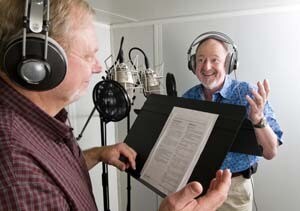
Two individuals wearing headphones stand in a recording booth, speaking into microphones with a music stand holding printed pages between them.

 Medicine...

Medicine is constantly advancing – that is a great thing about life in the 21st century. But it doesn’t just happen. Dedicated biomedical scientists are making discoveries that translate into those new medical advances.

Biomedical science is broad, encompassing everything from social science to microbiology, biochemistry, epidemiology, to structural biology and bioinformatics to name just a few areas. And, it can involve basic fundamental biology, the use of AI and chemistry to clinical studies that evaluate new medicines in patients.

No matter the research focus, the goal is always the same, to advance human health. It may take a few months, a few years or for fundamental science, a few decades. Few people make the connection that biomedical science is medicine and that biomedical scientists are working today on the medicine of tomorrow. Our weekly 500-word newspaper columns and 2-minute radio shows and podcasts provide insights into a broad range of biomedical science topics.

Medical Discovery News is dedicated to explaining discoveries in biomedical research and their promise for the future of medicine.

Podcasts

Alternatively, you can copy and paste the following web address (URL) into iTunes as a new subscription:
https://www.medicaldiscoverynews.com/shows/audio/mdnews.rss

You can also search and subscribe to "Medical Discovery News" in the podcast section of iTunes.

The www.medicaldiscoverynews.com web site and Medical Discovery News radio program (Program) are made possible by The University of Texas Medical Branch at Galveston (UTMB)as a community service and are intended to advance UTMB's mission of providing scholarly teaching, innovative scientific investigation, and state-of-the-art patient care in a learning environment to better the health of society and its commitment to the discovery of new innovative biomedical and health services knowledge leading to increasingly effective and accessible health care for the citizens of Texas.

All information provided on the web site and in the Program is for informational purposes only and is not intended for use as diagnosis or treatment of a health problem or as a substitute for consulting a licensed medical professional. Any information obtained by participating as a web site visitor or program listener is not intended to and should not be considered to constitute medical advice.

Thoughts and opinions expressed on the Program or on the website are those of the authors or guests and do not necessarily reflect the opinions of UTMB. The provision of links to other websites is not to be construed as written or implied sponsorship or endorsement of such websites by UTMB.

Please contact Dr. David Niesel or Dr. Norbert Herzog via email with any concerns, suggestions or comments.

All rights are reserved to information provided on the website or other information sources. No part of these programs can be reproduced stored in a retrieval system or transcribed in any form or by any means for personal or financial gained without the express written permission of Drs. Niesel and Dr. Herzog.