Recent Episodes
Oil Spills & Human Health
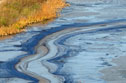
If the oil leak in the Gulf of Mexico is not fully contained this month, the amount of oil released will exceed that of the Exxon Valdes from two decades ago.
You'd like to think that nature, in this case, the Gulf can absorb these types of events but the impact is significant.
The immediate concern is for fish and wildlife in the estuaries and shallow waters. The long-term impact is on life forms in deep waters that are contaminated by the oil or the dispersants being used to break up the oil.
Dispersing the oil will keep it from reaching and destroying the shore - a sensitive and productive natural resource.
Though there may be a safer alternative, some believe the chemical dispersant that the government has allowed is highly toxic to silverfish — a benchmark for measuring toxicity levels to marine life. It is also highly toxic to shrimp — a mainstay of the Gulf fishing industry.
What's little discussed is the oil itself after it has been dispersed. Remember, it doesn't go away but stays in the water column. And the hydrocarbon in the oil can have a damaging effect on ocean-life.
But there is a way to actually get rid of it with a process called bioremediation. While bacteria that can live off oil naturally occur in seawater, scientists have genetically engineered bacteria to become even more efficient at "eating" the hydrocarbon components in oil. These are converted to biomass which enters the food chain.
These bacteria are harmless to humans and sea life and can be easily applied by spraying.
Here is another example of fundamental biological studies helping us with problems that affect our world. It's why basic research needs to valued and continued.
Because the fact is we don't really know the long term impact of this spill. It'll take a lot of dedicated people many years to figure that out.
More Information
Oil spill response techniques
Authorative website from the EPA which provides extensive information on all aspects of oil spill control.
For more information...
BP Criticized for Inability to Assess Oil Flow
Wall Street Journal article about the size of the spill and effects of both the oil and the dispersants being used to prevent the oil from reaching the shoreline.
For more information...
Cleaning Up with Genomics: Applying Molecular Biology to Bioremediation
Technical review by Nature Reviews — Microbiology presents scientific information of the properties of oil metabolizing bacteria and models as to how they effectively can be used practically.
For more information...






