Medical Discovery NewsBridging the World of Medical Discovery and You

Recent Episodes

PET for the Head

MP3 WAV

  • Imagine watching football and someone goes down with a head injury. Rather than wheel him off the field, they bring out a helmet for the guy!

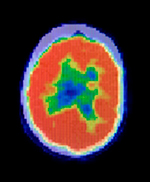
    The helmet is actually a new PET (Positron Emission Scanner) helmet and is basically a mobile PET scan for the head, which has amazing applications for head injuries. This is especially true for stroke victims because every forty seconds, someone in the U.S. has a stroke, and every four minutes, a person dies of one. Since the key to surviving is getting a quick diagnosis, the helmet would shorten that time. Paramedics could begin scanning a patient's head on the way to the hospital.

    The image helps doctors determine which type of stroke occurred so they can know how to treat it. Stroke happens when blood flow to a part of the brain is disrupted by a blockage or a rupture of the blood vessel. Without oxygen, brain cells begin to die rapidly.

    The helmet is the size of a motorcycle helmet. It scans like a regular PET scan and produces detailed images of the brain. Patients inhale, swallow, or have injected small amounts of radioactive materials or radiotracers. The radiotracers put out signals that an imaging PET detector then sends to a computer which integrates them into images. The radiotracers leave the body in about two to ten hours and equate to the radiation from a CT scan.

    The current version of the helmet is a bit heavy. A standard one weighs 6.6 pounds and the upgraded model is a hefty 20 pounds. Scientists have come up with a way to counterweigh the load off someone's neck, however, and we imagine future versions will be a lot lighter.

More Information

Stroke Facts and Statistics
From the Centers for Disease Control and Prevention

Portable Brain-Scanning Helmet Could Be Future for Rapid Brain Injury Assessments
Stroke victims and those felled by head injuries on the sports pitch or battlefield could benefit from a new wearable scanner currently being tested...

PET Scan
A positron emission tomography scan is a type of imaging test. It uses a radioactive substance called a tracer to look for disease in the body...


 Medicine...

Medicine is constantly advancing – that is a great thing about life in the 21st century. But it doesn’t just happen. Dedicated biomedical scientists are making discoveries that translate into those new medical advances.

Biomedical science is broad, encompassing everything from social science to microbiology, biochemistry, epidemiology, to structural biology and bioinformatics to name just a few areas. And, it can involve basic fundamental biology, the use of AI and chemistry to clinical studies that evaluate new medicines in patients.

No matter the research focus, the goal is always the same, to advance human health. It may take a few months, a few years or for fundamental science, a few decades. Few people make the connection that biomedical science is medicine and that biomedical scientists are working today on the medicine of tomorrow. Our weekly 500-word newspaper columns and 2-minute radio shows and podcasts provide insights into a broad range of biomedical science topics.

Medical Discovery News is dedicated to explaining discoveries in biomedical research and their promise for the future of medicine.

Podcasts

Alternatively, you can copy and paste the following web address (URL) into iTunes as a new subscription:
https://www.medicaldiscoverynews.com/shows/audio/mdnews.rss

You can also search and subscribe to "Medical Discovery News" in the podcast section of iTunes.

See all podcasts and radio stations

The www.medicaldiscoverynews.com web site and Medical Discovery News radio program (Program) are made possible by The University of Texas Medical Branch at Galveston (UTMB)as a community service and are intended to advance UTMB's mission of providing scholarly teaching, innovative scientific investigation, and state-of-the-art patient care in a learning environment to better the health of society and its commitment to the discovery of new innovative biomedical and health services knowledge leading to increasingly effective and accessible health care for the citizens of Texas.

All information provided on the web site and in the Program is for informational purposes only and is not intended for use as diagnosis or treatment of a health problem or as a substitute for consulting a licensed medical professional. Any information obtained by participating as a web site visitor or program listener is not intended to and should not be considered to constitute medical advice.

Thoughts and opinions expressed on the Program or on the website are those of the authors or guests and do not necessarily reflect the opinions of UTMB. The provision of links to other websites is not to be construed as written or implied sponsorship or endorsement of such websites by UTMB.

Please contact Dr. David Niesel or Dr. Norbert Herzog via email with any concerns, suggestions or comments.

All rights are reserved to information provided on the website or other information sources. No part of these programs can be reproduced stored in a retrieval system or transcribed in any form or by any means for personal or financial gained without the express written permission of Drs. Niesel and Dr. Herzog.