
Medical Discovery NewsBridging the World of Medical Discovery and You

Recent Episodes

Pet Yeasts

MP3 WAV

  • We've domesticated dogs, cats, and livestock, but did you know we've gotten good at domesticating yeast? Belgian scientists the genome sequences of 157 industrial yeast strains and they all arose from just a few ancestors. In fact, our cultivation of those yeast have made them incapable of surviving in nature.

    The earliest literate people left the first surviving evidence of humans domesticating yeast. They're the Sumerians, who lived in the Fertile Crescent, in modern day Iraq. Evidence that they used barley to make beer are found on pottery with residue of beer fermentation.

    Human selection and breeding of yeast have allowed them to thrive in man-made environments. In the recent study, scientists learned from sequencing all 157 strains that these industrial yeast fell into five groups; Asian strains such as those used to produce sake, and yeast for wine and bread, and two groups for making beer.

    The beer yeasts showed more genetic adaptations, and can be subdivided based on geography. For example the ones in the US split off from those in the United Kingdom sometime between 1607 and 1637. This correlates with the establishment of a brewery in Massachusetts Bay Colony.

    Since beer yeast spend almost all their time engaged in beer fermentation they are more diverse, but they're also less resistant to stress and lose the ability to form spores because they no longer need to survive in nature. On the other hand, many wine yeast spend most of their time in and around vineyards or the guts of insects and only engage in wine fermentation for a short period of time. So they're closer to yeast found in the wild.

    The next time you crack open a brew, think of the amazing history in your hands.

More Information

The Beer Archaeologist
By analyzing ancient pottery, Patrick McGovern is resurrecting the libations that fueled civilization...

Uruk
Uruk was one of the most important cities (at one time, the most important) in ancient Mesopotamia. According to the Sumerian King List, it was founded by King Enmerkar sometime around 4500 BCE...

Sweetness: Brewing Sugars & How To Use Them
Sugars add strength to beer without bulking up the body. John Palmer conducts a survey of sweetness to help you choose when to use sugar and which sugar to use. From Belgian candi sugar to xylose, it's all here...
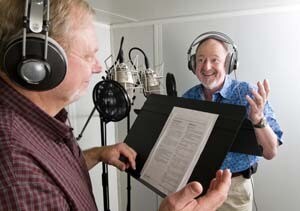

Two individuals wearing headphones stand in a recording booth, speaking into microphones with a music stand holding printed pages between them.

 Medicine...

Medicine is constantly advancing – that is a great thing about life in the 21st century. But it doesn’t just happen. Dedicated biomedical scientists are making discoveries that translate into those new medical advances.

Biomedical science is broad, encompassing everything from social science to microbiology, biochemistry, epidemiology, to structural biology and bioinformatics to name just a few areas. And, it can involve basic fundamental biology, the use of AI and chemistry to clinical studies that evaluate new medicines in patients.

No matter the research focus, the goal is always the same, to advance human health. It may take a few months, a few years or for fundamental science, a few decades. Few people make the connection that biomedical science is medicine and that biomedical scientists are working today on the medicine of tomorrow. Our weekly 500-word newspaper columns and 2-minute radio shows and podcasts provide insights into a broad range of biomedical science topics.

Medical Discovery News is dedicated to explaining discoveries in biomedical research and their promise for the future of medicine.

Podcasts

Alternatively, you can copy and paste the following web address (URL) into iTunes as a new subscription:
https://www.medicaldiscoverynews.com/shows/audio/mdnews.rss

You can also search and subscribe to "Medical Discovery News" in the podcast section of iTunes.

The www.medicaldiscoverynews.com web site and Medical Discovery News radio program (Program) are made possible by The University of Texas Medical Branch at Galveston (UTMB)as a community service and are intended to advance UTMB's mission of providing scholarly teaching, innovative scientific investigation, and state-of-the-art patient care in a learning environment to better the health of society and its commitment to the discovery of new innovative biomedical and health services knowledge leading to increasingly effective and accessible health care for the citizens of Texas.

All information provided on the web site and in the Program is for informational purposes only and is not intended for use as diagnosis or treatment of a health problem or as a substitute for consulting a licensed medical professional. Any information obtained by participating as a web site visitor or program listener is not intended to and should not be considered to constitute medical advice.

Thoughts and opinions expressed on the Program or on the website are those of the authors or guests and do not necessarily reflect the opinions of UTMB. The provision of links to other websites is not to be construed as written or implied sponsorship or endorsement of such websites by UTMB.

Please contact Dr. David Niesel or Dr. Norbert Herzog via email with any concerns, suggestions or comments.

All rights are reserved to information provided on the website or other information sources. No part of these programs can be reproduced stored in a retrieval system or transcribed in any form or by any means for personal or financial gained without the express written permission of Drs. Niesel and Dr. Herzog.