Recent Episodes
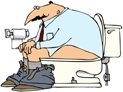
Poo on You
People can get all sorts of transplants today – from nearly every organ to the cornea, and even the face. But did you know you can transplant fecal matter?
It's true, but I'll bet people are asking why anyone would want to. For some people, it may be necessary because of an emerging bacterial superbug called Clostridium difficile or C. difficile. The bacterium invades the lower intestines and can be resistant to most of its prescribed antibiotics.
Often, C. difficile is a side effect of multiple rounds of antibiotics treating one disease but creating another by killing off beneficial bacteria in the intestine. These beneficial microbes protect us from invading disease-causing microbes.
When the good guys are gone, superbugs like C. difficile can invade and set up shop.
C. difficile causes severe diarrhea that can progress to sepsis, colitis and even death. Seven thousand people in the US are hospitalized daily for it. That's why researchers are revisiting fecal transplantation, a therapy developed more than fifty years ago.
The first fecal transplantations were done in 1958 on four people with badly infected colons. Their diarrhea couldn't be tamed with conventional drugs, but after fecal transplantation, they recovered within days.
The rational behind this bacteriotherapy is that reintroducing normal bacteria into the gut reestablishes beneficial microbes that then eliminate C. difficile.
So far, 150 people have had fecal transplantation, with a success rate of 90 percent. The procedure is pretty simple.
Relatives make the best donors. First they're screened for infectious disease, then their fecal matter is filtered and transplanted by enema, and within 24 hours, nearly all recipients reestablish normal intestinal flora and can have normal bowel movements.
Considering the promise of fecal transplantation and the rise of C. difficile, new clinical trials on fecal transplantation are being planned.
More Information
Taboo transplant: How new poo defeats superbugs
Article from the New Scientist by Anil Ananthaswamy that presents information about fecal transplants. Nicely written and easy to follow that covers the essential background. New Scientist - Issue # 2791: pp. 36-37. 2010.
For more information...
C. difficile
Mayo Clinic website that is comprehensive in its coverage of this "superbug". Table of Contents include: Symptoms, Causes, Treatment, Risk Factors, Complications, among other topics.
For more information...
Bacteriotherapy Using Fecal Flora: Toying With Human Motions
Original article in a highly respected scientific journal. "The intestinal flora may play a key role in the pathogenesis of certain gastrointestinal (GI) diseases. Components of bowel flora such as Lactobacillus acidophilus and Bifidobacterium bifidus have long been used empirically as therapeutic agents for GI disorders. More complex combinations of probiotics for therapeutic bacteriotherapy have also recently become available. Journal of Clinical Gastroenterology: July 2004 - Volume 38 - pp 475-483
For more information...